
CSU’s collaborative care approach led to successful treatments for horses with temporohyoid osteoarthropathy (THO)
Honey and Newton were recently diagnosed with temporohyoid osteoarthropathy (THO). Learn how the collaborative care of CSU Veterinary Health System’s equine teams gave these horses a second chance and a path to recovery.


Link copied!
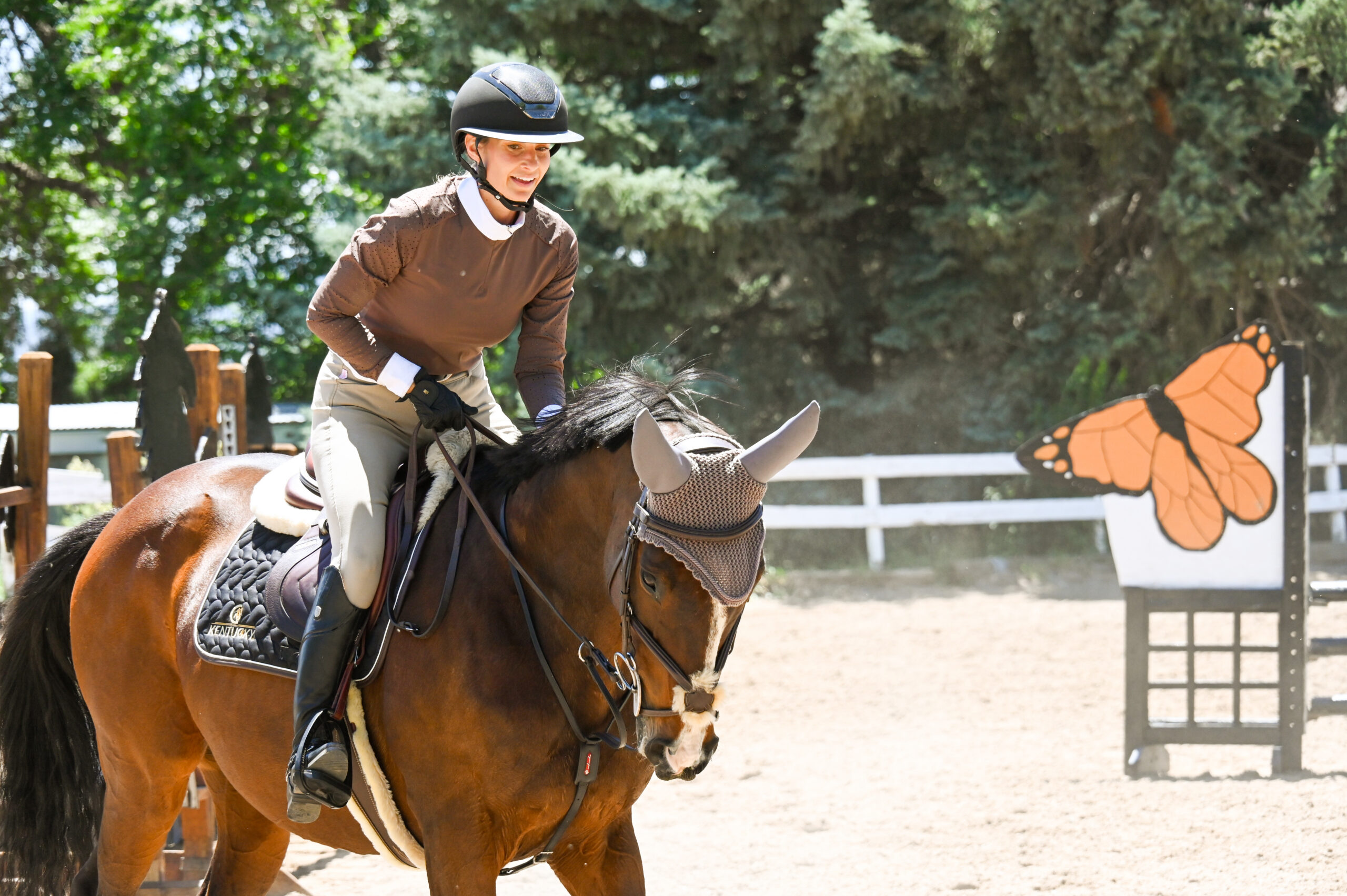
When a horse suddenly begins shaking their head or abnormally chewing, it can be easy to dismiss. In some cases, these changes are the first clues pointing to a serious disease called temporohyoid osteoarthropathy (THO).
THO is an equine disease that causes the throat bones (the hyoid apparatus) to thicken and abnormally fuse to the skull. When this happens, basic everyday movements like chewing and swallowing pull on the skull, which can cause bones to fracture and lead to nerve damage. Early signs of THO include head tossing, ear rubbing, intense sensitivity around the ears, and changes in chewing behavior. Most horses present sudden with worsening neurological signs such as paralysis of one side of the face (facial nerve paralysis) and loss of balance (vestibular disease).
Two horses, Honey and Newton, experienced hallmark THO symptoms, and were able to get their diagnoses and treatment through the CSU Veterinary Health System.
Honey: From competition to THO diagnosis
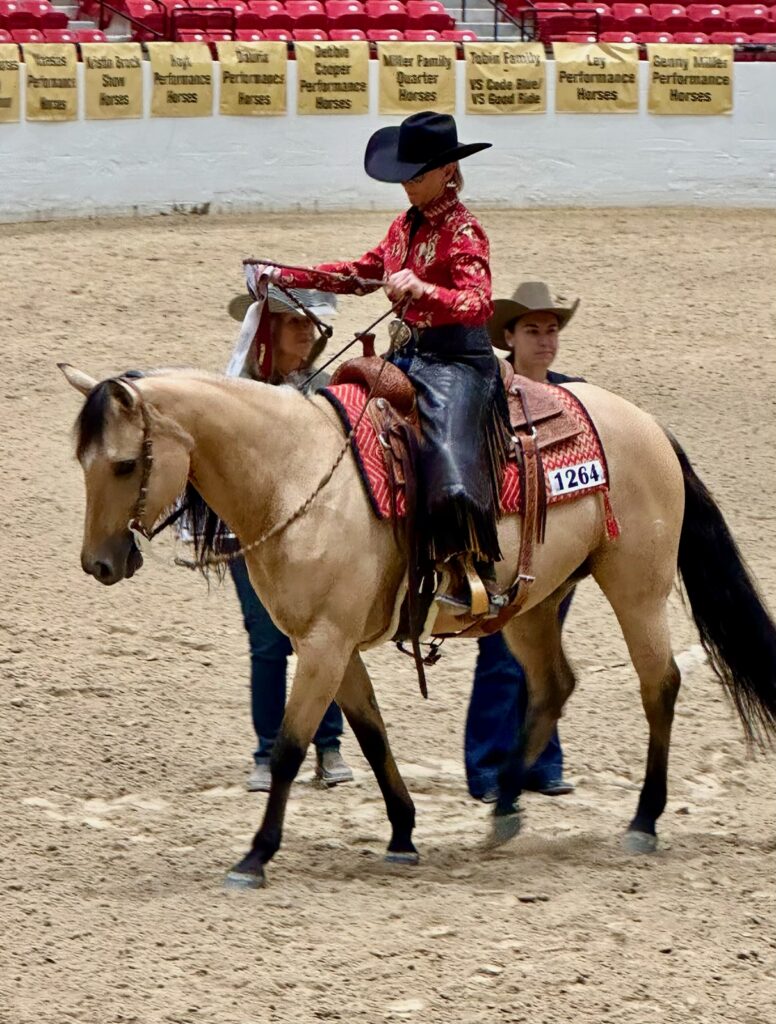
Honey is an 11-year-old show horse who has competed in several events over the years. Earlier this year, under the watchful guidance of her training professional, Jimmy Daurio, Honey competed in circuits across many states and received several successful placings in Ranch Riding and Ranch Trail classes, winning the overall championship in both events at a major competition in June 2026. All the time Honey was preparing to make her way to compete at a world show that August.
In mid-July, Honey unfortunately began showing signs of distress when training in Loveland, Colorado. The next morning, she was found with a flopped right ear, a drooped muzzle, and unable to close her right eyelid.
Honey was initially examined by a local veterinarian which led to a consultation with the Veterinary Health System’s Equine Internal Medicine service. The following day, VHS Equine Field Service team examined Honey at her training facility, where they noticed that the entire right side of her face was paralyzed.
Honey was then brought to the Johnson Family Equine Hospital, where the Equine Internal Medicine team performed a neurologic examination including a cranial nerve exam showing paralysis in her right facial nerve, which explained her face droop and inability to blink her right eye. Veterinarians suspected THO.
“Temporohyoid osteoarthropathy (THO) can affect the eye when nearby bone changes or a fracture damages the facial nerve, which helps control blinking and tear production. The affected eye may not close fully and may become dry, leaving the cornea exposed and vulnerable to ulcers, infection, and – in severe, untreated cases – vision loss,” said Dr. Kathryn Wotman, CSU’s large animal medical director and a board-certified ophthalmologist.
Honey was scheduled for a CT and surgery the following day. The CT confirmed right-sided THO, showing that the bones above her jaw on the right side had fused together.
“We’re fortunate to have access to a CT at CSU,” said CSU equine surgeon Dr. Lauren Luedke. “Diagnosis can be made endoscopically; however, we get more information with a CT regarding the severity of THO and other structures that are affected.”
The most effective long-term treatment to stop THO from getting worse is surgery. CSU’s Equine Surgery and Lameness team successfully removed part of the ceratohyoid bone on Honey’s right side to relieve tension on the skull.
Honey was transferred to the CSU Equine Sports Medicine and Rehabilitation service under the care of Dr. Erin Contino and team, for seven weeks, where she had to learn to chew carefully and was fed moistened feeds. Her rehabilitation routine focused on maintaining fitness, improving core strength and spatial awareness, and restoring nerve function. She also enjoyed acupuncture and underwater treadmill therapy.
Rehabilitation also included care for Honey’s eye. Due to THO, Honey developed a painful corneal ulcer. Under the care of Dr. Wotman and the Equine Ophthalmology team, she received around-the-clock eye treatments and nerve stimulation exercises like tapping the eye corners to encourage blinking.
By late September, Honey’s condition had improved significantly. Her ear no longer flopped, and she was able to blink her right eye again. On Sept. 24, she returned to her long-time training facility in Valley View, Texas.
“I can’t say enough about the quality of the individuals, and you would have thought Honey was theirs,” said Honey’s owner, Terri Bristow. “You could tell everyone really cared about her. She was going through her exercises as she was getting better and it was amazing.”
Recovery from THO surgery looks different for every horse. Today, Honey can fully blink her eyelid, and her range of motion is as good on her right side as it is on her left. She continues healing by wearing a protective visor, receiving eye ointment and lubrication drops in her right eye twice a day and doing neck stretching and walking exercises. Each day, Bristow rides Honey for about 35 minutes, trotting and walking over poles.
“There are remarkable improvements in her almost weekly and with time, I have no doubt we will be trail riding and quite possibly competing again,” said Bristow.
Facial paralysis and unsteady gait led Newton to CSU experts
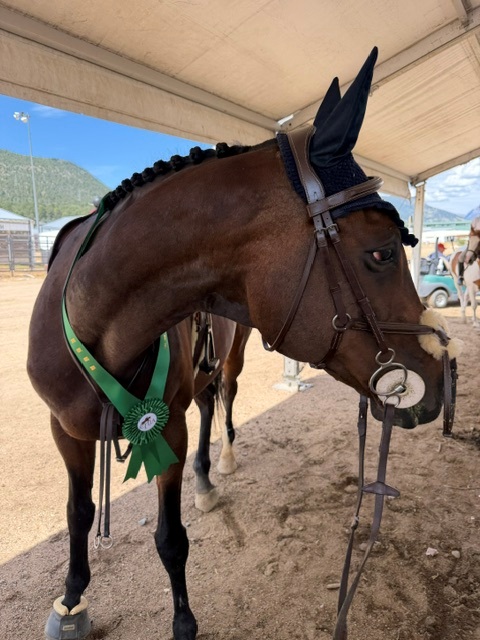
Newton is a 14.5-year-old former racehorse with an impressive winning record in the Midwest and on the East Coast. In fall 2026, his owner, Brandyn Brummond, noticed concerning symptoms. The left side of his face was paralyzed, and he could no longer walk straight.
Dr. Yvette Nout-Lomas, professor of equine internal medicine consulted with Newton’s referring DVM and suspected THO based on the description of clinical signs. Brummond brought Newton to see CSU Veterinary Health System specialists where he was diagnosed with left-sided facial paralysis, a common complication of THO. Because he was unable to close his left eye, he started producing fewer tears. A head CT scan confirmed left-sided THO and a fracture of the petrous temporal bone on the right side of his skull.
“Horses spend about 60-75 percent of their time using their mouth. The pain and neurologic deficits associated with THO can significantly impact their quality of life,” said Nout-Lomas.
Newton was taken to surgery for a left-sided partial ceratohyoidectomy that same day. In just 48 hours following surgery, Newton had fully recovered from his dizziness and loss of balance.
THO surgeries are proven to be successful most of the time. According to Luedke, in a recent study, nine out of ten horses receiving surgery returned to their previous level of work.
Four days after surgery, Newton was transferred to the Equine Sports Medicine and Rehabilitation service to help manage his facial nerve paralysis for one week. Rehabilitation consisted of physical therapy exercises and hand walking while the Equine Ophthalmology service cared for Newton’s eye daily as his tear production fluctuated.
Two months after surgery, Newton is enjoying his daily hand walks. The left side of his face is still paralyzed, though his eye movement has improved, and his overall demeanor is much happier.
“His personality was back to his happy, relaxed self as soon as he came home and was back outside in his paddock with a friend,” said Brummond. “He’s getting so much stronger and gaining weight back quickly. We are still doing his eye ointment two times a day, and he wears a protective eye mask that blocks 95% of UV rays since he lives outside.”
THO recovery takes time, and knowing that gives Brummond the confidence that Newton will eventually regain the muscle in his face.
A whole-horse approach to successful treatment for THO
THO can be agonizing for horses. But the good news is that there is treatment. The collaborative expertise within CSU’s equine team made this level of comprehensive and intentional care possible for both Honey and Newton.
“Regular communication among the teams helped coordinate care, adapt the plan to the horse’s neurologic and ocular findings, and catch complications early,” said Wotman. “This whole-horse approach improved comfort and protected vision while supporting a successful recovery.”
Learn answers to common questions about THO in horses or contact CSU equine services at (970) 297-5000, option 3, if you have concerns about your horse.