
How cataract surgery restored George’s vision
After experiencing vision loss that affected his daily life, George underwent cataract surgery to restore his vision.


Link copied!
It was a Sunday afternoon when Kathryn Van Auken noticed something unusual with George. He had woken up from a nap and was unable to fully open his eyes. He was knocking into furniture and feared the stairs, prompting Van Auken to seek immediate medical care.

“He was squinting and looked like he had lost some sight. We contacted the ophthalmology department at the Veterinary Health System, and they were able to get us in the next day,” Van Auken said. “We are so grateful that they could see him so quickly, especially since the next day he was clearly having problems seeing.”
George, a West Highland Terrier, was diagnosed with diabetes prior to his vision problems. Van Auken knew George’s cataract risk was higher since 75 percent of dogs diagnosed with diabetes mellitus develop this vision impairment within the first year. During his visit, Van Auken learned that George needed cataract surgery to help restore his vision.
What every owner should know about cataracts
Cataracts are a condition in which the eye’s normally clear lens becomes cloudy, impairing sight and sometimes causing inflammation. Early signs include a whitish, opaque appearance in the pupil and changes in vision. This may look like your pet bumping into things and acting unfamiliar with spaces they normally know well.
It is important to keep in mind that haziness in the pupil does not always mean cataracts. Nuclear sclerosis, a bluish white haziness in the pupil, is a normal progressive aging change to the lens. In dogs, this begins around 7 years of age and does not typically significantly impair vision needed for day-to-day activities.
Breeds most affected by cataracts include Siberian huskies, Labrador retrievers, golden retrievers, Boston terriers, bichon frises, American cocker spaniels, and miniature and toy poodles. However, any breed can develop cataracts, so it is something all dog owners should be aware of.
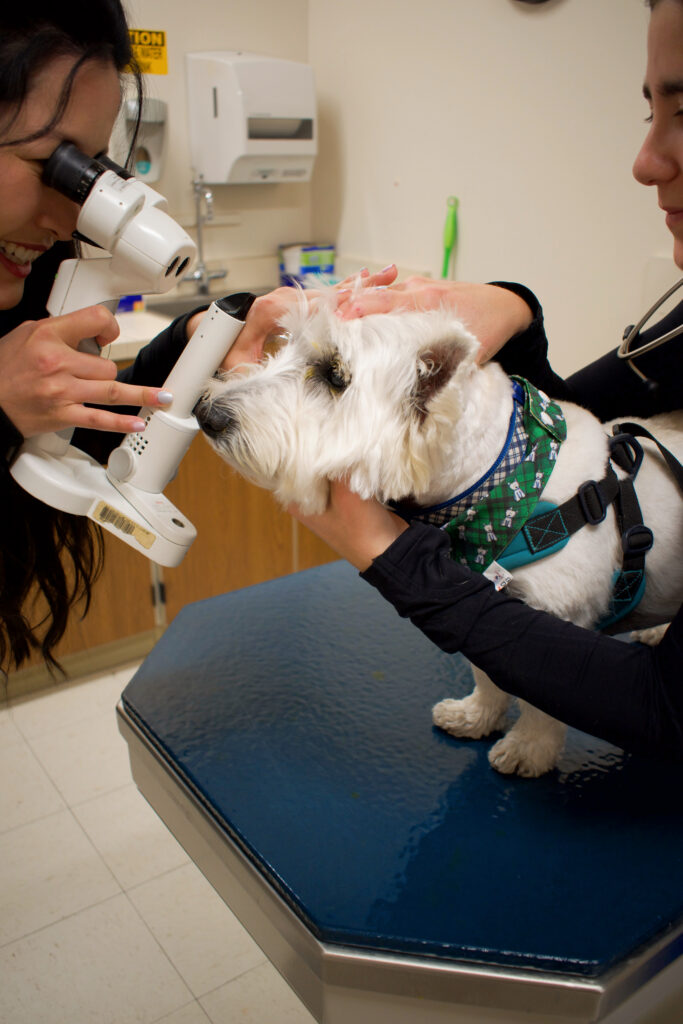
While cataracts in dogs are commonly hereditary, other causes can include trauma, congenital abnormalities, nutritional imbalances, retinal diseases, and chronic intraocular inflammation.
Dr. Yoon recommends that owners should be observant of changes to their pet’s eyes. Any vision or appearance changes to the eyes should be checked by your veterinarian to determine the underlying cause. Though cataracts cannot be reversed, catching them early typically leads to the best outcomes.
Treatment decisions
While surgery is the only way to remove cataracts, it is ultimately an elective procedure. Dogs with limited or no vision can still maintain a great quality of life. We encourage all owners to talk to their veterinarian about which treatment option is right for their pet. Whether or not surgery is elected, your pet may need an anti-inflammatory eye drop long term to decrease risk of complications secondary to the cataract.
Dr. Angela Yoon, a third-year ophthalmology resident at CSU’s veterinary hospital, carefully weighs the risks and benefits of surgery for each individual patient. She considers the family’s lifestyle and capacity for aftercare, in addition to the patient’s eye and overall health, when making the decision to continue with the surgery.
Dogs with cataracts require general anesthesia for the procedure and tend to develop significantly more intraocular inflammation following surgery compared to humans, which puts them at higher risk for post- operative complications. Because of this, postsurgical care is intensive and requires frequent topical and oral medications, activity restrictions for several weeks, and frequent recheck examinations.
“For an ideal surgical candidate, the average success rate in dogs is quite high at 80-90 percent,” Yoon said. “For at-risk breeds, those with diabetes, or dogs used for breeding, routine eye exams can be very valuable. If cataracts are diagnosed, scheduling a consultation with a veterinary ophthalmologist is strongly recommended.”
George’s vision restored
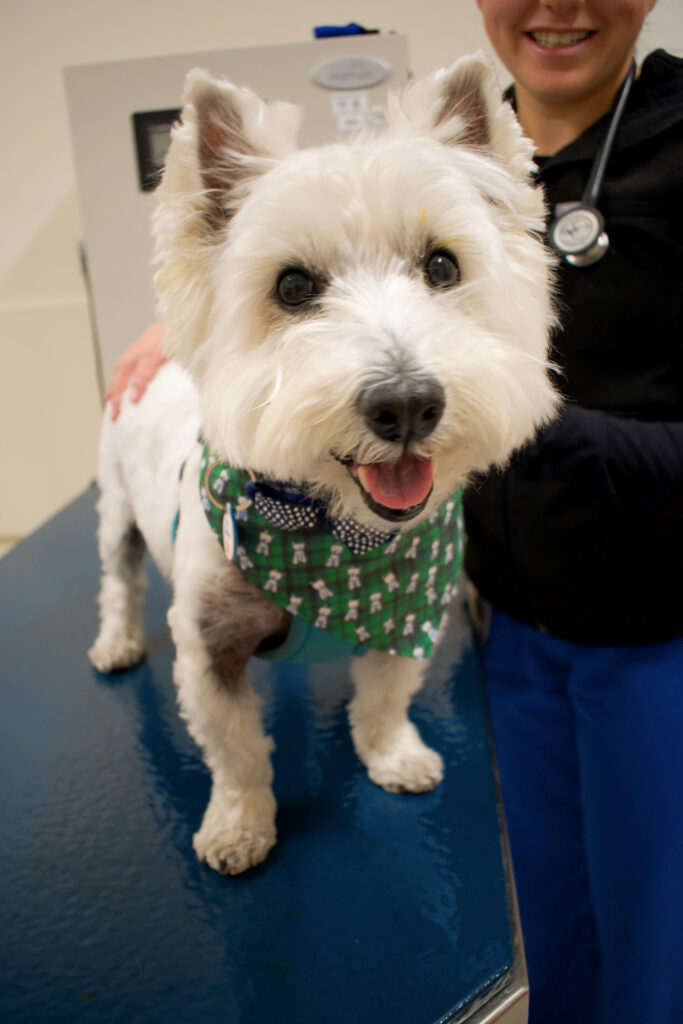
As Dr. Yoon reflects on working with Kathryn and George, she finds joy in restoring his vision and comfort. “Witnessing patient transformations following cataract surgery is one of the most rewarding aspects of my residency. Cases like George’s are a wonderful reminder of why we do this work, and having an owner like Kathryn, who is so committed and attentive, makes all the difference in achieving the best possible outcome.”
Dogs diagnosed with cataracts can significantly improve their quality of life at the Veterinary Health System’s ophthalmology department. Owners have access to veterinarians across disciplines, advanced diagnostics, and surgical capabilities all under one roof. If a patient’s eye condition is tied to an underlying systemic issue like diabetes, specialists can coordinate care seamlessly.
“Canine ophthalmology experts can be hard to find, and we knew we could trust CSU with not only his eyesight, but his life during cataract surgery,” Van Auken said. “When your dog looks at you after surgery and can see again, it makes everything worth it. His quality of life has vastly improved since his cataract surgery, and we would highly recommend it to anyone that’s in that same position.”