
Collaborative care leads to a miniature horse’s full recovery


Link copied!
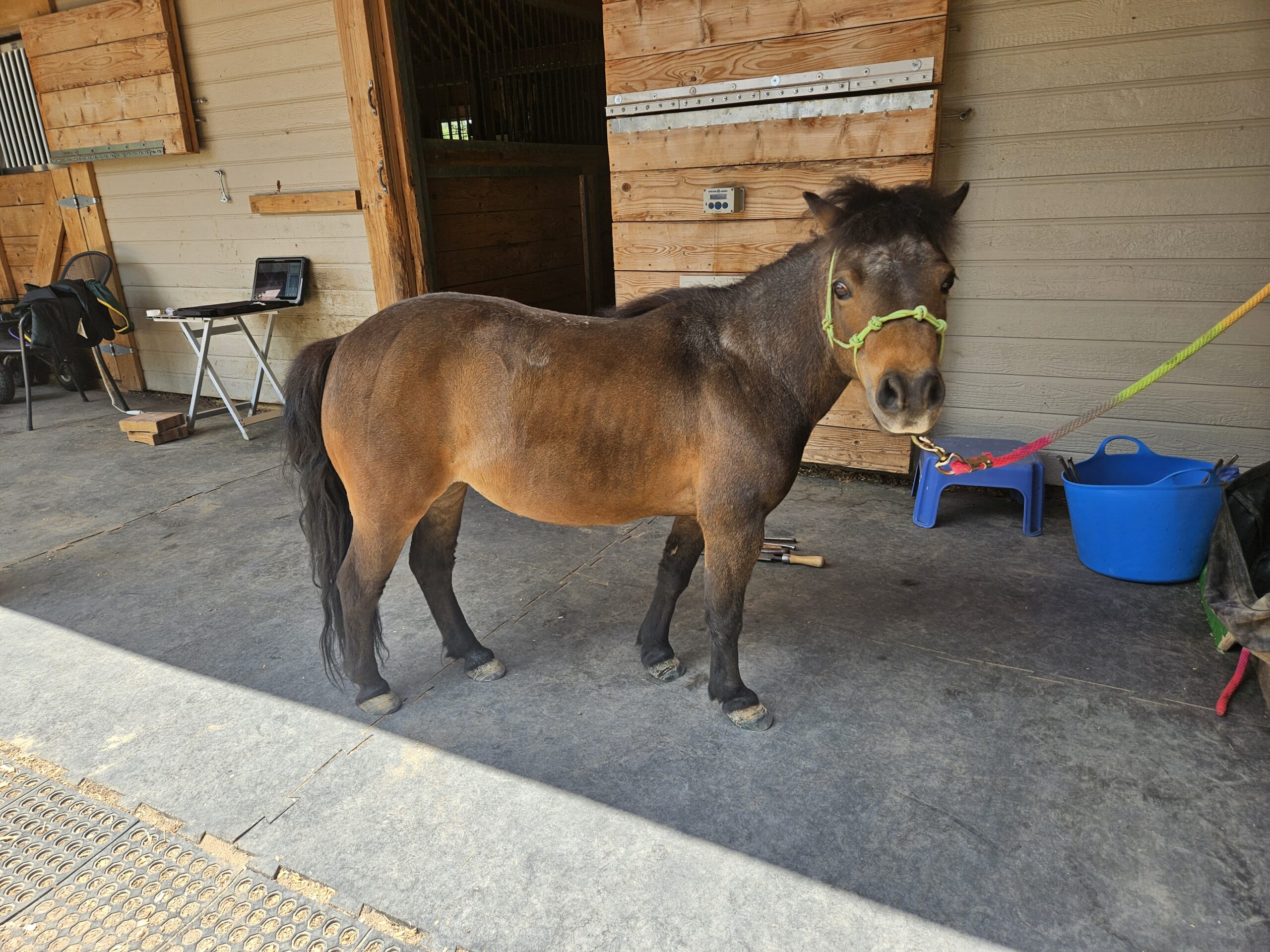
Spice is a miniature horse and patient at the CSU Veterinary Health System’s Johnson Family Equine Hospital.
She arrived at CSU’s Equine Emergency and Critical Care service in early 2025 with a history of colic and acute laminitis that had developed in her front feet. While treating the laminitis, Spice was diagnosed with equine Cushing’s disease and insulin resistance. This means her body was producing too much stress hormone and was not utilizing insulin appropriately, which worsened the inflammation in her hooves.
Soon after she was treated in critical care, Spice was referred to Equine Podiatry for insulin testing and to address her laminitis. Over time, both Equine Podiatry and Equine Field Service worked together to get Spice’s metabolic disease and hoof pain under control to help keep her comfortable.
Dr. Amanda Bowen, an Equine Field Service resident at CSU, would visit Spice at their farm to reassess comfort and work with the owner to improve her metabolic status.
Metabolic issues are common for miniature horses. Bowen suggests that owners should understand the clinical signs and assess the body conditions of their horse, watching for weight gain and fat deposits that develop on their neck, shoulder, and tailhead.
Bowen has had the most success treating high insulin with diet and exercise. In Spice’s case, she was fed hay that contained less than 10 percent sugar. Her diet was altered to contain no grain and decrease overall hay intake. As soon as Spice got comfortable, her owner was able to exercise her more, which helped her lose around 25 pounds.
Spice’s Cushing’s disease was treated with a medication called pergolide. Over the course of only three months of Spice’s treatment, all her blood levels were normal.
“She went from being crippled to trotting around her little paddock. This made me so happy,” said Bowen.
Spice’s recovery became a reality due to the combined effort of services at the CSU equine hospital.
“Each member of our team has specialized knowledge in their respective fields, and by working together we were able to address the complexity of the case comprehensively,” said Kathryn Wotman, medical director of equine and livestock clinical services.
Collectively, these services helped Spice live a happier and healthier lifestyle.
“From emergency and critical care to surgery, sports medicine, and advanced imaging, we offer an integrated approach to equine health. This ensures that horses receive timely, precise diagnoses and treatments tailored to their individual needs,” said Wotman. “For owners, this means peace of mind, knowing their horse is receiving care from a team of leading experts who collaborate to deliver the best outcomes possible.”