Equine Sports Medicine and Rehabilitation
 Equine
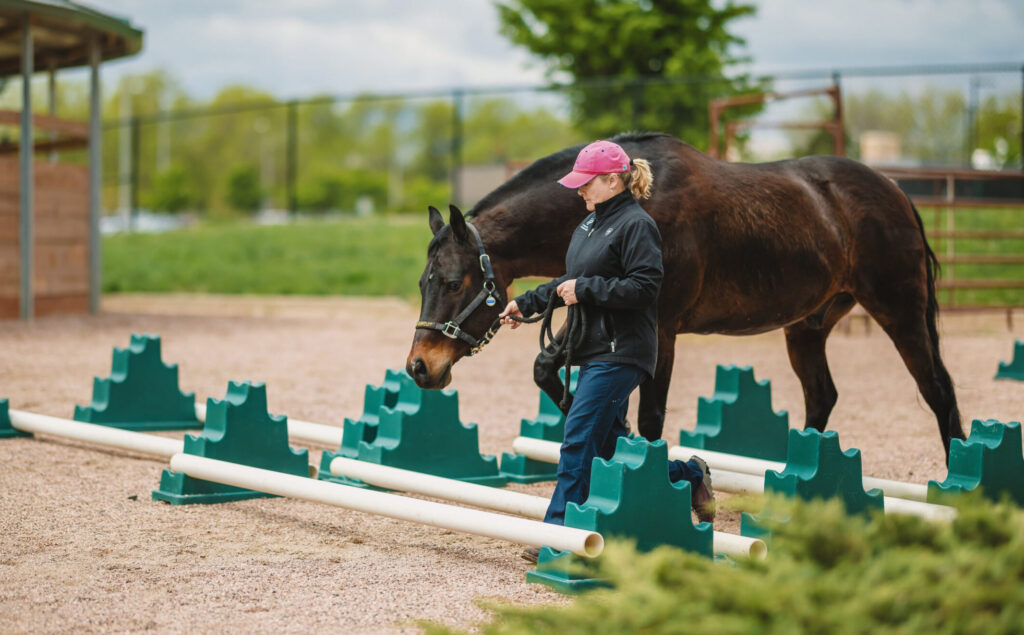
Our board-certified veterinary sports medicine and rehabilitation specialists offer care and support of the equine athlete with the latest diagnostic, therapeutic, and rehabilitation techniques from birth through retirement; training through competition; and injury through rehabilitation. Offering both in-house and on-farm services, we come equipped with the latest knowledge, equipment, and technology for comprehensive care of your equine partner.
We also offer a full-service inpatient equine rehabilitation service for horses needing post-operative rehabilitation or musculoskeletal recovery. If your horse requires inpatient care, a rehabilitation specialist will walk your horse through exercises and applied therapies daily, tailoring their care routine to their progress.
Contact Us
For appointments, consultations, and referrals, call us at (970) 556-3931 or email us at [email protected].
Equine Sports Medicine and Rehabilitation services
- Acupuncture
- Assistance with physical or behavior issues that limit your equine athlete
- Chiropractic
- Diagnosis and treatment of musculoskeletal injuries
- Joint injections
- Lameness work-ups
- Mesotherapy
- Pre-purchase examinations
- Poor performance evaluations
- Regenerative therapies (IRAP, PRP, ProStride, and bone marrow-derived stem cells)
- Rehabilitation consultations
- Rehabilitation services (in house)
- Saddle fit
- Therapeutic management of neck and back pain
- Ultrasound-guided procedures
Specialized technology
- Blood flow restriction therapy is being safely used as a progressive clinical rehabilitation tool in the process of return to heavy-load exercise for a variety of human conditions including knee osteoarthritis, soft tissue injuries, and geriatric sarcopenia. Use in horses has demonstrated increases in growth hormone release, muscle mass, short-term muscle oxidative capacity, and tendon stiffness.
- Cryotherapy helps horses working through injury recovery by decreasing blood flow to the affected area, cooling soft tissues, slowing the inflammatory response, and reducing pain.
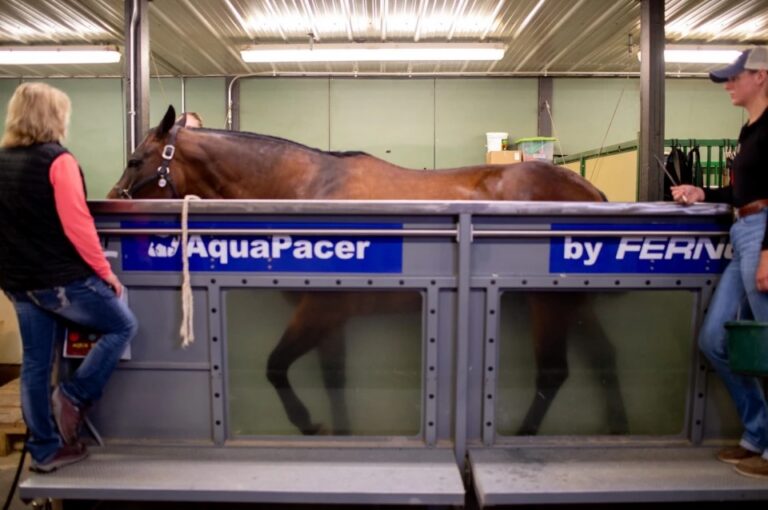
- Equine underwater treadmill: Helps horses with various injuries to improve muscle and core strength, decrease weight bearing on an injured healing limb, and increase joint range of motion, playing an important role in individualized musculoskeletal rehabilitation.
- EQ Press: A pneumatic compression device that works to move swelling and edema out of the limb, reducing inflammation.
- Kinesiotape: Kinesiology tape is an elastic therapeutic tape that has been used in the treatment of sports injuries and for relieving pain in humans and is being used increasingly in horses.
- Laser therapy can be used for wound healing, tendon/ligament injuries, pain modulation, muscle tears, and to decrease inflammation and swelling.
- Neuromuscular electrical stimulation (NMES) is a small, battery-operated device with electrodes applied directly to the horse’s skin to stimulate muscle contractions, treating muscle loss and weakness.
- Percussion massage minimizes muscle soreness and tension, increase circulation, improve flexibility, and promote relaxation.
- Rapid release therapy releases myofascial trigger points to increase circulation, relax muscles, and reduce pain.
- Shockwave therapy: A therapeutic modality that uses sound waves to stimulate healing in wounds, tendons, ligaments, and bony structures by increasing blood flow, growth of new blood vessels, and production of natural healing factors.
- Therapeutic ultrasound increases circulation, contractility of muscle fibers, and extensibility of tissue, and enhances cellular repair and decreases inflammation.
- Transcutaneous electrical nerve stimulation (TENS) is a small, battery-operated device with electrodes applied directly to the horse’s skin that uses electrical energy to modulate pain, providing acute and chronic pain relief.
We partner with the hospital’s Equine Diagnostic Imaging service to provide advanced imaging technologies and services to our clients.
To schedule an appointment or consultation, call us at (970) 556-3931 or email us. Once your appointment is scheduled, email us pertinent patient records (including X-rays).
An initial examination consists of a review of your horse’s history, a detailed musculoskeletal palpation, and a thorough lameness examination including flexions. We will discuss and/or show you our findings and explore with you our recommended next steps, taking the time to ensure that all of your questions and concerns are addressed along the way. Each horse will receive an individualized management plan including recommendations for treatment, rehabilitation, nutrition, exercise, and/or training as appropriate.
Follow-up appointments for further diagnostics, treatments and/or progress evaluations will be scheduled as needed.
If you are a referring veterinarian looking to schedule a referral appointment or consultation, call us at (970) 556-3931 or email us.
Equine Sports Medicine and Rehabilitation team
Specialists in care and support of equine athletes.
Equine Sports Medicine and Rehabilitation clinical trials
View currently enrolling trials.
Location
Any in-hospital appointments take place at the Johnson Family Equine Hospital.
Taking care of your animal