
Boots beats the odds and survives cancer: How CSU is contributing to cancer care for goats
Specialists at the CSU Veterinary Health System came together to help Boots beat cancer and live a longer life.


Link copied!
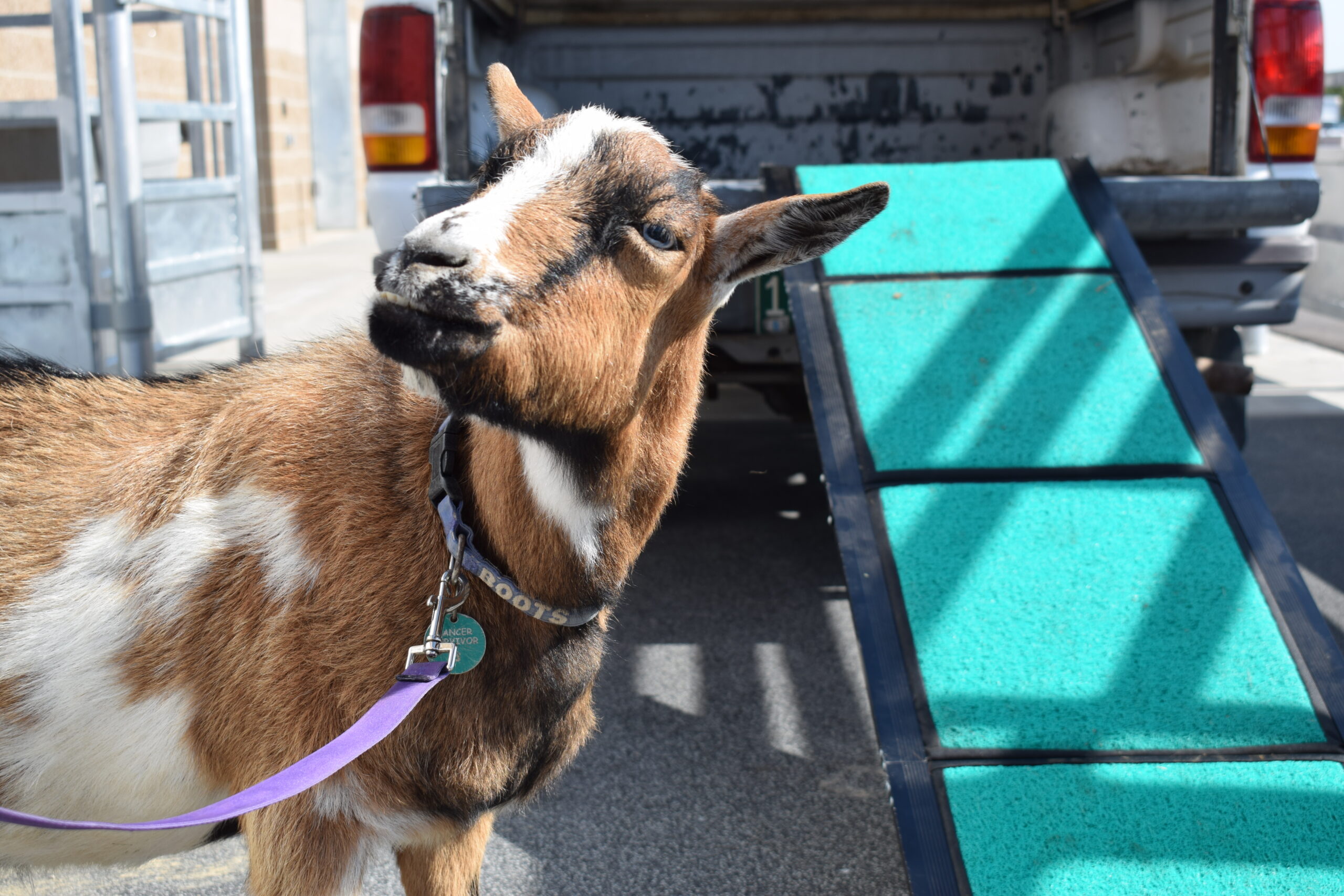
Two years ago, Boots, a 13.5-year-old Nigerian dwarf goat, came to the CSU Veterinary Health System with an external mass on his lower neck, believed to be a thymoma.
When his veterinarian told Boots’ owner Leslie Ewy that he would require specialty care, she contacted CSU’s Livestock Veterinary Services team.
Through multiple appointments, Boots received a biopsy, radiographs, and a CT scan to determine a definitive diagnosis. Tests confirmed that Boots had a cervical thymoma that had also grown within his chest (in front of his heart).
A thymoma is a tumor that forms on the thymus gland, located within the chest and along the neck in ruminants. Thymomas are a common type of cancer in older goats. This type of tumor often develops near major blood vessels and can compress the trachea, increasing the risk of severe complications if not treated.
Surviving cancer
Boots underwent palliative radiation, a type of cancer treatment that uses targeted radiation to shrink tumors and help Boots feel better for as long as possible. Radiation is often effective when treating thymomas but requires multiple visits. That year, Boots received six treatments. Over time, his tumors reduced significantly in size, leaving little remaining thymoma tissue in his external neck area.
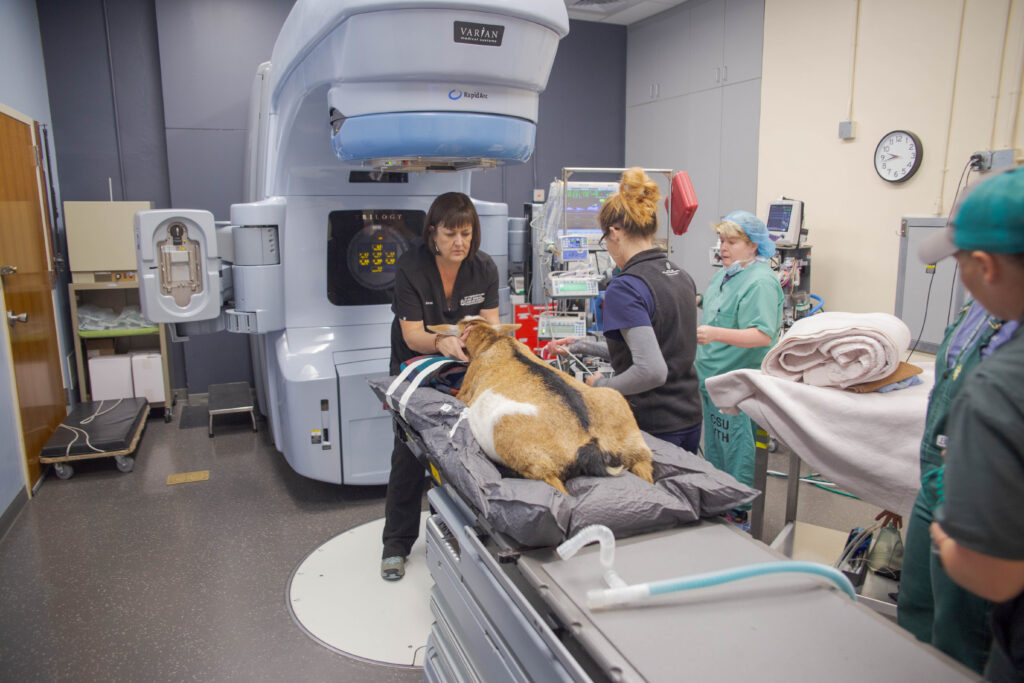
“Our goal is significant partial remission so that Boots has a better quality of life and a lower risk of developing complications,” said Dr. Sarah Raabis, a veterinarian with CSU’s Livestock Veterinary Services. “Since Boots responded well to radiation therapy, we considered him to be a cancer survivor. We received the best possible response you can get for this type of tumor.”
The VHS livestock team worked alongside the radiation oncology and anesthesiology teams to care for Boots, a collaboration unique to the Veterinary Health System. With very little data on radiation in goats, the two teams determined together what cancer care could look like for future patients.
“When Boots was diagnosed with cancer, I was concerned; I rarely had an animal survive cancer,” said Ewy. “I was amazed at how well he tolerated the radiation treatments.”
Recheck appointment to assess cancer
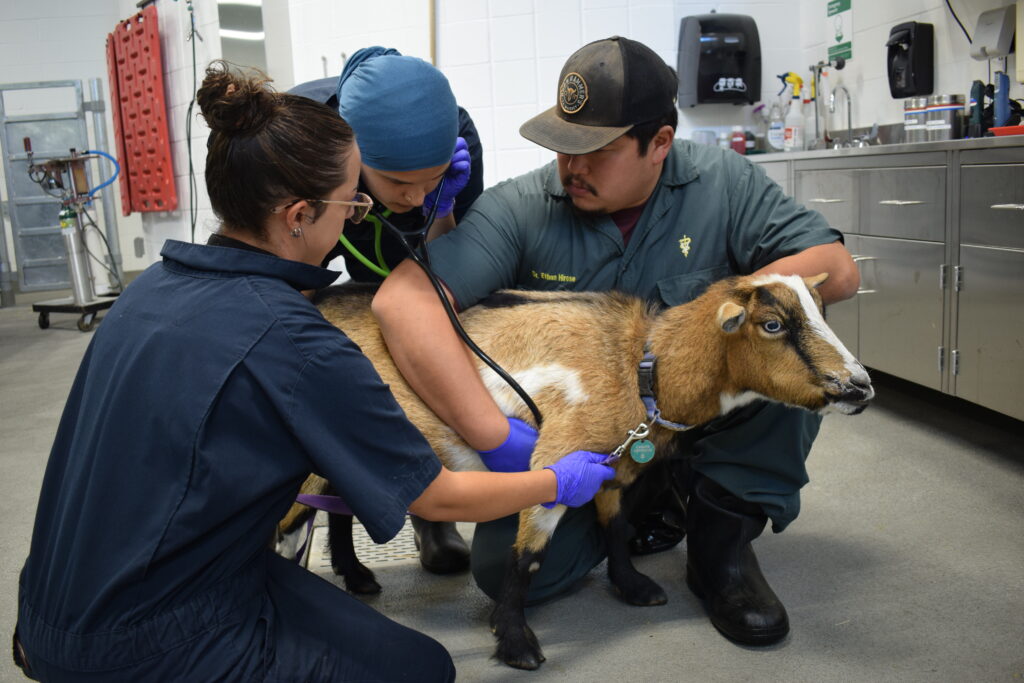
Boots returned in June for a recheck appointment to assess the growth of the remaining thymoma tissue and to investigate a heart murmur that was found at his checkup in fall of 2025.
The Cardiology and Cardiac Surgery team was concerned that the heart murmur could have come from a tear in the wall of his aorta from exposure to radiation.
“During Boots’ initial evaluation, we identified the source of the murmur: he has a leak of his aortic valve, which is not uncommon in older or aging goats. The heart murmur prompted us to perform an echocardiogram which fortunately showed that the valve leak itself was not causing significant problems. However, we saw something that raised concern for a possible tear in his aorta,” said cardiology fellow Dr. Bruna Del Nero. “Despite our best efforts with the echocardiogram, we couldn’t completely rule out an aortic tear, so we recommended a cardiac CT scan. The CT was extremely helpful and is one of the very few dedicated cardiac CT studies that have been performed in a goat – the first one using the CT technology we have available at CSU.”
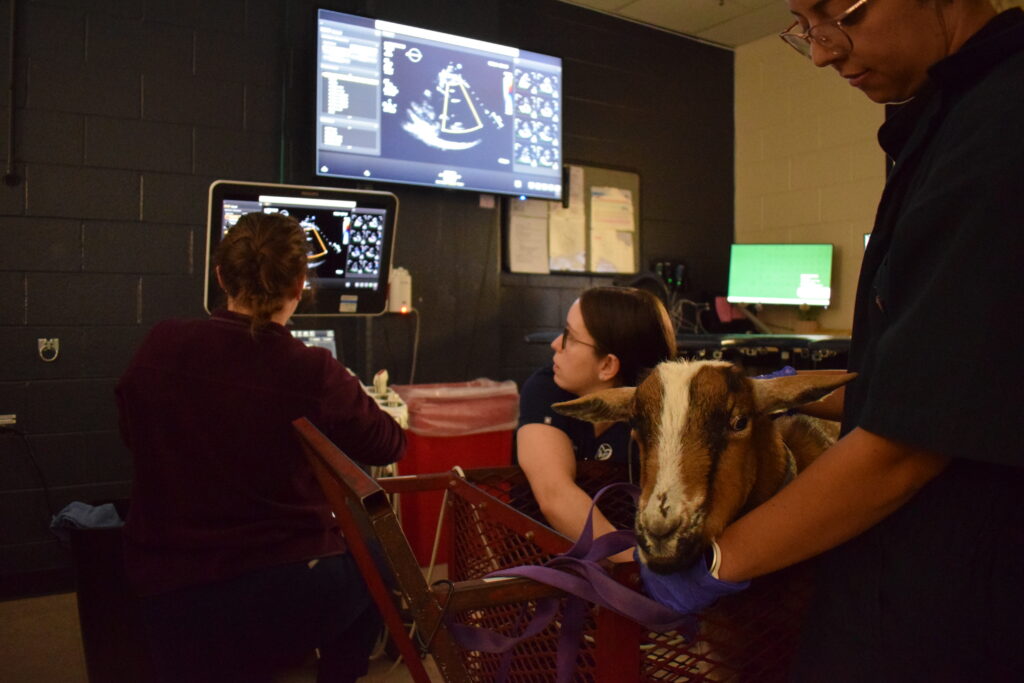
The echocardiogram and CT provided a visual of the heart and its blood flow, and results showed no evidence of a tear. The team concluded that degenerative valve disease may have contributed to the development of Boots’ murmur.
“We were very relieved to confirm that Boots did not have an aortic tear. Boots is a very lucky boy, and he taught all of us a tremendous amount during his visits to CSU,” said Del Nero.
Boots also received a CT scan to check for regrowth of his cancer. Results showed that the external mass was stable, and there was no evidence of a tumor inside his thorax.
“Boots seems to be doing very well; he is the ‘herd leader’ and bosses [everyone] around,” said Ewy. “He wins every head-butting contest.”
A hopeful path forward for goats
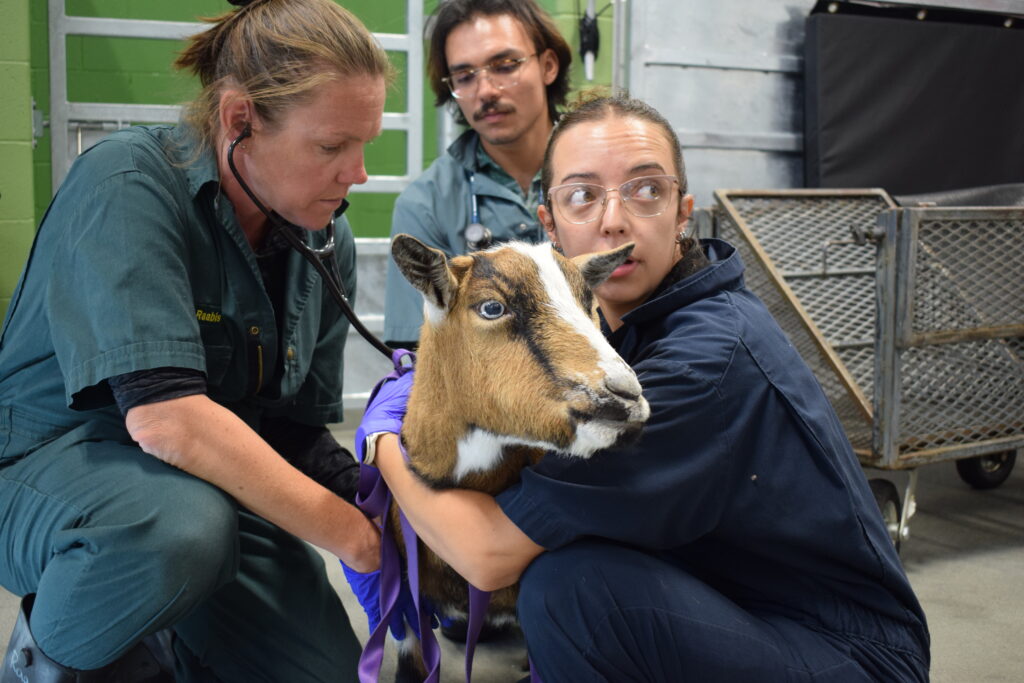
Treating cancer for goats continues to be underexplored. Boots’ journey shows what could be possible for goats and offers hope for the future.
“When it comes to echocardiograms or for CT, we just don’t have as much data as we do for dogs, for example. We know that radiation is possible for thymomas in dogs and so a lot of it is taking from what we know about cancer in small animals,” said Raabis. “We also reach out to clinicians at other universities that deal with similar situations because we know that the more cases like this that we do, the more we learn and help goats in the future.”
Bringing specialties together
Boots will return in a few months to check the size of his external mass to ensure everything is well. The care that Boots received would not have been possible without the help of multiple specialty services at the VHS.
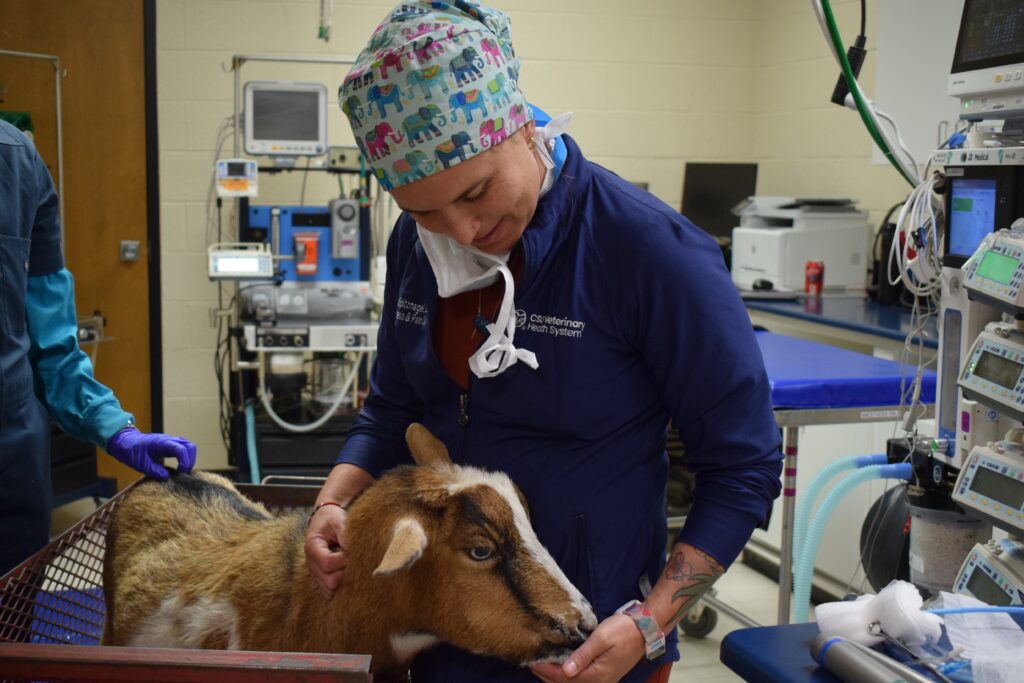
“Collaboration with the Livestock Veterinary Services team is essential to the care of critters like Boots. They provide us with all the relevant health information, pre-anesthetic bloodwork, and they often place a jugular catheter for us. They then transport the animal across campus and accompany us for the whole anesthetic journey, including recovery. We love getting to work with the livestock team,” said anesthesiology resident Dr. Katya Spitznagel.
“One of the highlights of CSU is that we do have all of the specialties in one place, and they want to take part in caring for livestock patients,” added Raabis.