
How a high-risk surgery saved a horse from a life-threatening joint infection
After a heel bulb injury, Chenoa’s owner faced a tough choice that led to an inspiring outcome.


Link copied!
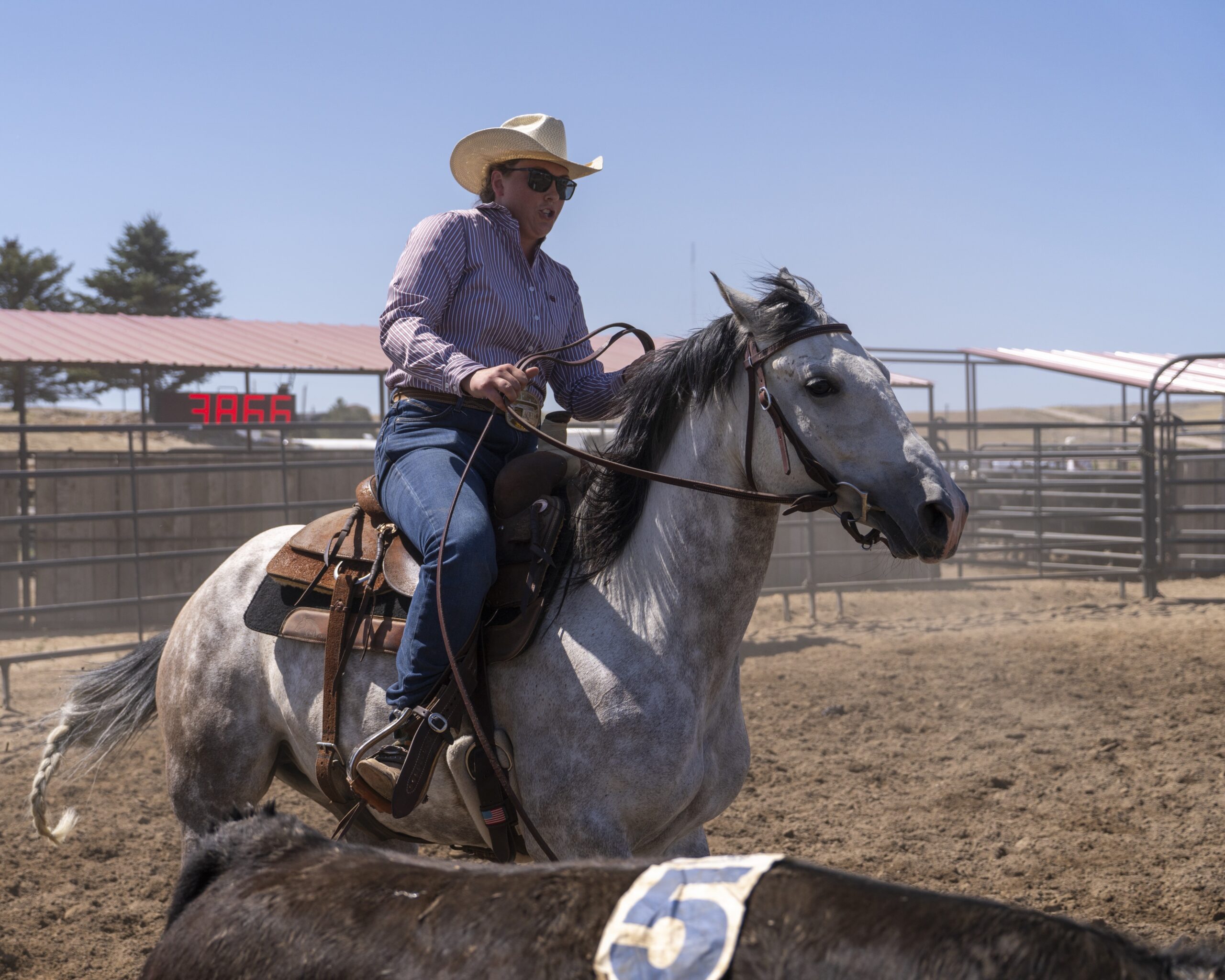
In the summer of 2023, Chenoa, a four-year-old quarter horse, was boarding in Nebraska when her owner, Becca Carlson, got the call that she had suffered a severe laceration (a deep cut) to the heel bulb of her foot. The injury happened during the night while Chenoa was walking across the pasture, though the exact cause remained a mystery. She was immediately taken to a local veterinarian where she was hospitalized for a week to manage her wounds, showing no signs that caused further worry.
Carlson was in Colorado at the time and drove to Nebraska to bring Chenoa home. She had been doing well until she stopped putting weight on her injured leg. Carlson brought Chenoa to the Johnson Family Equine Hospital to be evaluated by the Equine Emergency and Critical Care Service where they examined the limb and discovered the cut may have gone deep enough to allow bacteria into the pastern joint. They conducted a joint tap to analyze the joint fluid microscopically to look for infection.
Unfortunately, the results showed that the wound and joint had become septic, indiciating a severe reaction to a bacterial infection in the bloodstream. Immediate medical care was critical because the untreated bacteria could rapidly degrade joint cartilage, risking permanent lameness and fatal complications.
Weighing the risks
Given the seriousness of the injury, the team had to act fast. They consulted with their colleagues in Equine Surgery and Lameness who presented Carlson with a couple of options. Chenoa could undergo an arthroscopy to help clear out the infection, but the success rate would only be 50/50 due to the gravity of the infection.
The other option was humane euthanasia. This was heavy news for Carlson.
“I was an emotional wreck trying to make that decision and driving home with the empty trailer was just really hard. It really hit me how much I loved this horse. She was already a huge part of our family,” Carlson said.
Because it had been two weeks since the injury, the infection had become life-threatening, lowering the odds for a successful surgery. “In the case where infection has already taken hold, our success is largely contingent on what bacteria are growing and their susceptibility to the antibiotics we are using, and how deep they have invaded the tissues. The longer bacteria have had a chance to seed into the tissues, the harder it is to treat,” said equine surgeon Dr. Lauren Luedke.
After receiving support from family, friends, and the equine team, Carlson decided to move forward with the surgery. Chenoa was transferred that morning for her procedure. Although it was a risk, Carlson knew it was one worth taking.
Tackling the infection
A race against the clock, Chenoa had surgery to clean out the infected tissue of her lower leg, flushing out the pastern joint and trimming away the damaged tissue.
“The surgery went great,” said Luedke. “Once the infected tissue was removed from the joint and wound, the remainder of the cartilage in the joint looked good, which signaled that Chenoa had a fair shot at recovery.”
After the procedure, Chenoa received antibiotics in her leg every other day for a week and monitored for comfort (lameness), inflammation, and healing of the tissue. She stayed with CSU’s equine team for a couple of weeks to ensure the wound was healing well.
“The wound started looking a lot better,” said Carlson. “I was able to go over at one point and watch the bandage change, and it was just incredible to see how well she had healed within just a week of surgery.”
Road to recovery
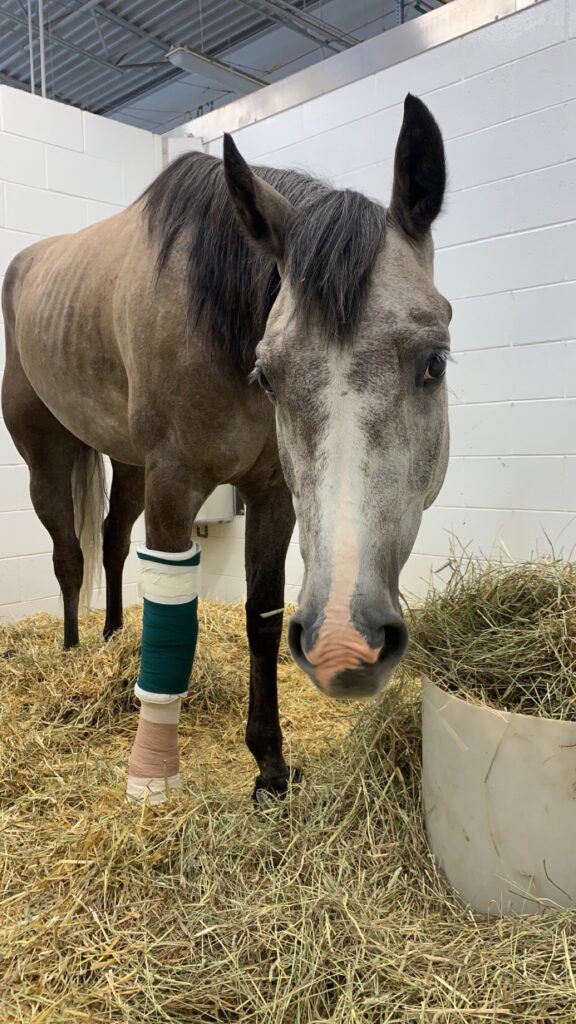
After two weeks, a cast was placed on Chenoa’s leg to help immobilize the area, and she was able to return home. Carlson continued changing Chenoa’s bandages and CSU’s Equine Field Service visited to ensure everything looked healthy. After only a month, she was doing a lot better.
“I was just so thankful for CSU and for the continued care that they provided,” said Carlson. “They saved her life. She wouldn’t be here today without them. It’s really special to think about where we were then and where we are now. You wouldn’t know that she had suffered such a bad injury and had such a grave prognosis unless you looked at the scar on her leg. And in all reality the scar on her leg is very minor. They did such a great job with her, it healed beautifully.”
Today, Chenoa is completely healed.
“I’ve ridden her multiple times a week and taken her to sorting shows,” said Carlson. “I’ll watch her run across the pasture and she looks totally sound. She’s just living her best life, just being ridden and hanging out with her friends, and she is just so happy.”
As a clinic coordinator at the CSU Veterinary Health System, Carlson’s own experiences with Chenoa have given her a new perspective on the situations clients face with their animals. She focuses on providing the same compassion and understanding that she was given during her challenging season with those she interacts with every day.
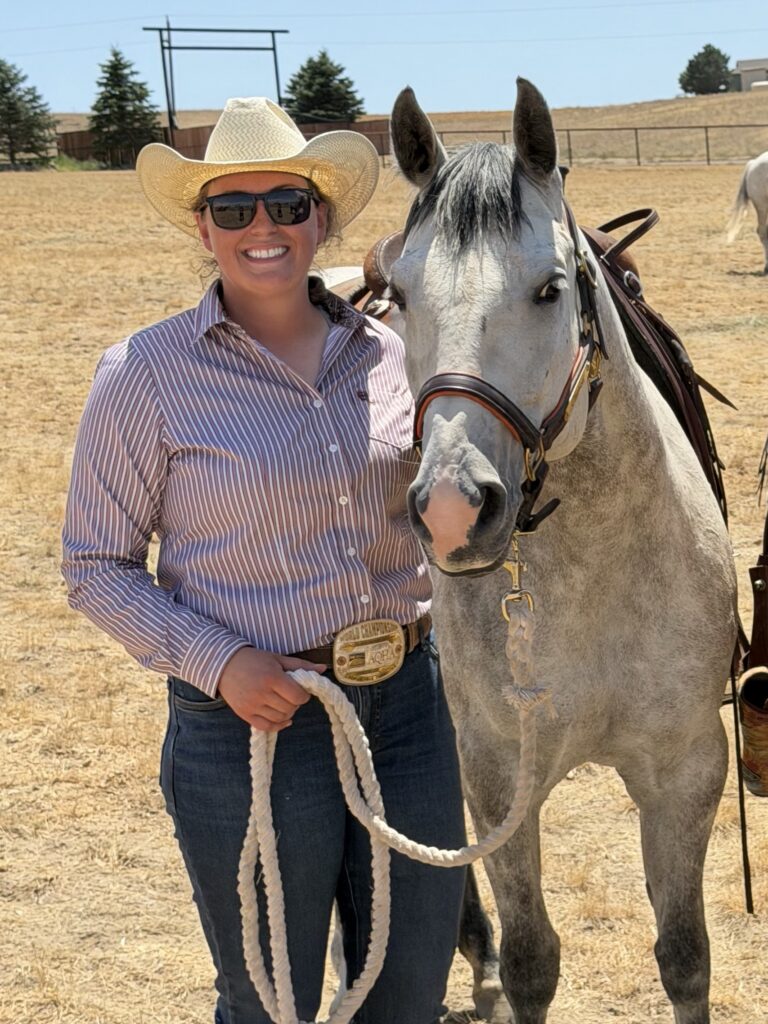
At CSU, Luedke is grateful to have a team of students, registered veterinary technicians, interns, residents, and doctors of different specialties looking after each patient. Every case is different, but with aggressive management, she can give horses the best shot at success. “It is a very rewarding experience to be part of a case that beats the odds, and so much better when it is for patients/clients as wonderful as Chenoa and Becca.”
Learn more about how equine services at the Veterinary Health System can care for your horse.