
CSU orthopedic surgeon gives dachshund puppy two new custom legs to stand on
When Kelly Cvanciger and Shannon Washburn noticed their dachshund puppy Chunk’s hind legs weren’t growing properly, they sought help from Colorado State University’s Veterinary Teaching Hospital.


Link copied!
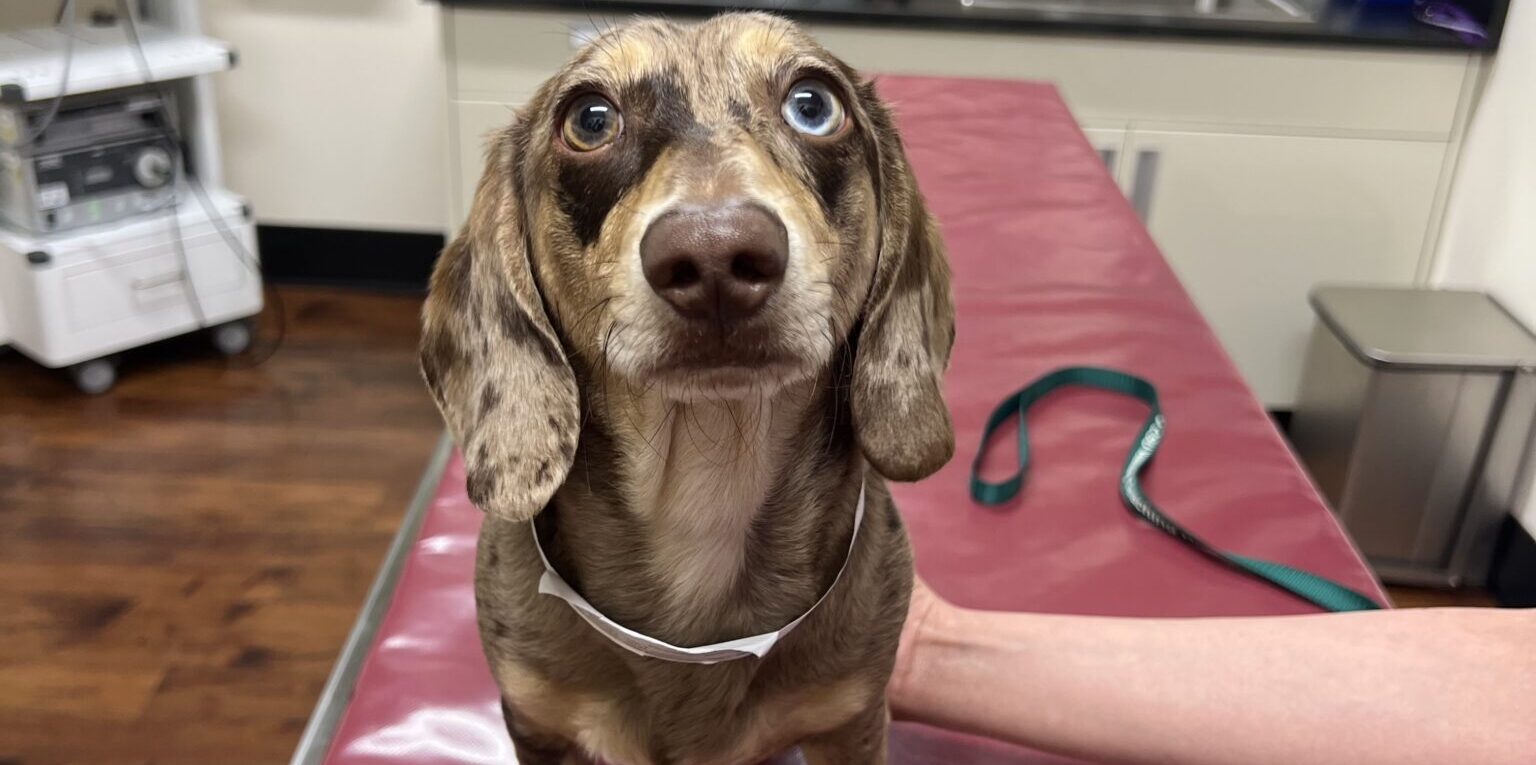
Kelly Cvanciger and Shannon Washburn have had seven dachshunds, so when their “wildest” puppy, Chunk, started having problems with his hind legs, they knew something was wrong.
“He was totally normal, but at about four months, we noticed his legs weren’t growing right,” Cvanciger said. Their veterinarian diagnosed lateral patellar luxation, a condition that causes the kneecap to slip out of place, and suggested they consult with the orthopedics team at the Colorado State University Veterinary Health System for further diagnostics.

“We did our research on the matter and did not want to wait,” Cvanciger said. So they made the trip from Lakewood to Fort Collins to consult with CSU’s Small Animal Orthopedic Surgery service about Chunk’s options. The CSU orthopedic team is unique, comprising three integrated teams of orthopedic surgery, orthopedic medicine and mobility, and rehabilitation for comprehensive care.
Dr. Jason Bleedorn, associate professor of small animal orthopedic surgery, examined Chunk, and credits Cvanciger and Washburn for noticing the problem early on. “When it’s bilateral, it makes it harder to see the limp. These owners are very astute and they were able to pick up on the difference, and then their veterinarian was able to send Chunk to CSU for evaluation,” Bleedorn said.
A CT scan in the hospital’s Small Animal Diagnostic Imaging service showed deformity of the tibiae consistent with pes varus, a condition that causes a bow-legged appearance and can cause pain and difficulty walking. Pes varus (from the Latin, “foot” and “inward”), is a genetic condition that usually appears in dachshunds before they are a year old. This can result in lateral patellar luxation in 50% of dogs. Asymmetric closure of the growth plate at the end of the tibia causes the bone to grow unevenly, giving the legs a bowed or lopsided appearance.
They agreed Chunk needed surgery to correct the deformity, so Bleedorn worked with Dr. Bill Oxley of Vet3D, a 3D consulting company in the United Kingdom, to create custom 3D-printed surgical guides and titanium plates.
“You can import the CT into the computer-aided design (CAD) software, so you can look at the bones and their alignment on the computer,” Bleedorn said. “Then we can actually do a virtual correction rehearsal surgery all on the computer where I cut the bones and manipulate them, so I know precisely what my target plan will be. Once I’m happy with the plan, then I will build a guide that ensures I can make the cuts in the right spot in surgery.”
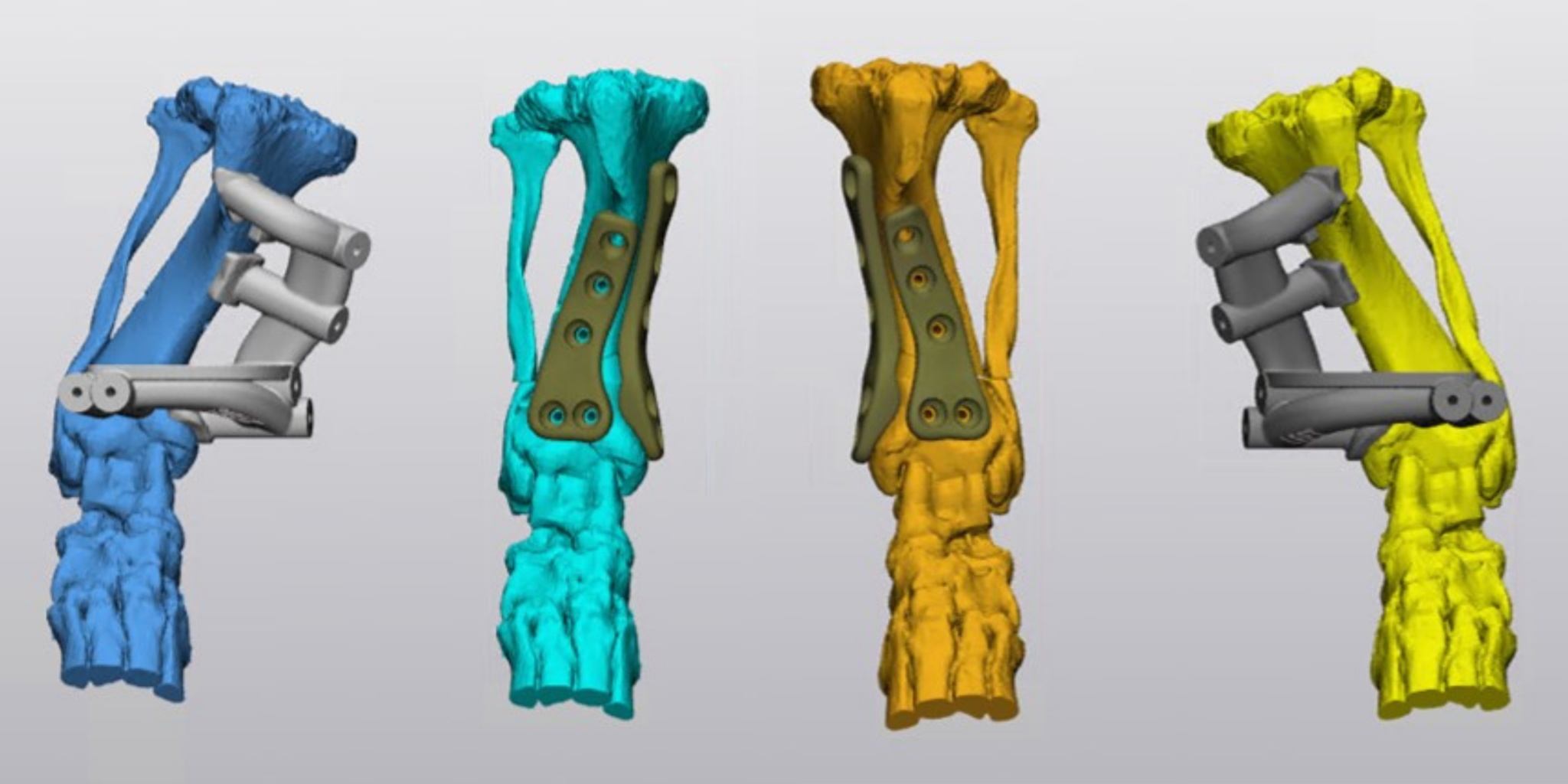
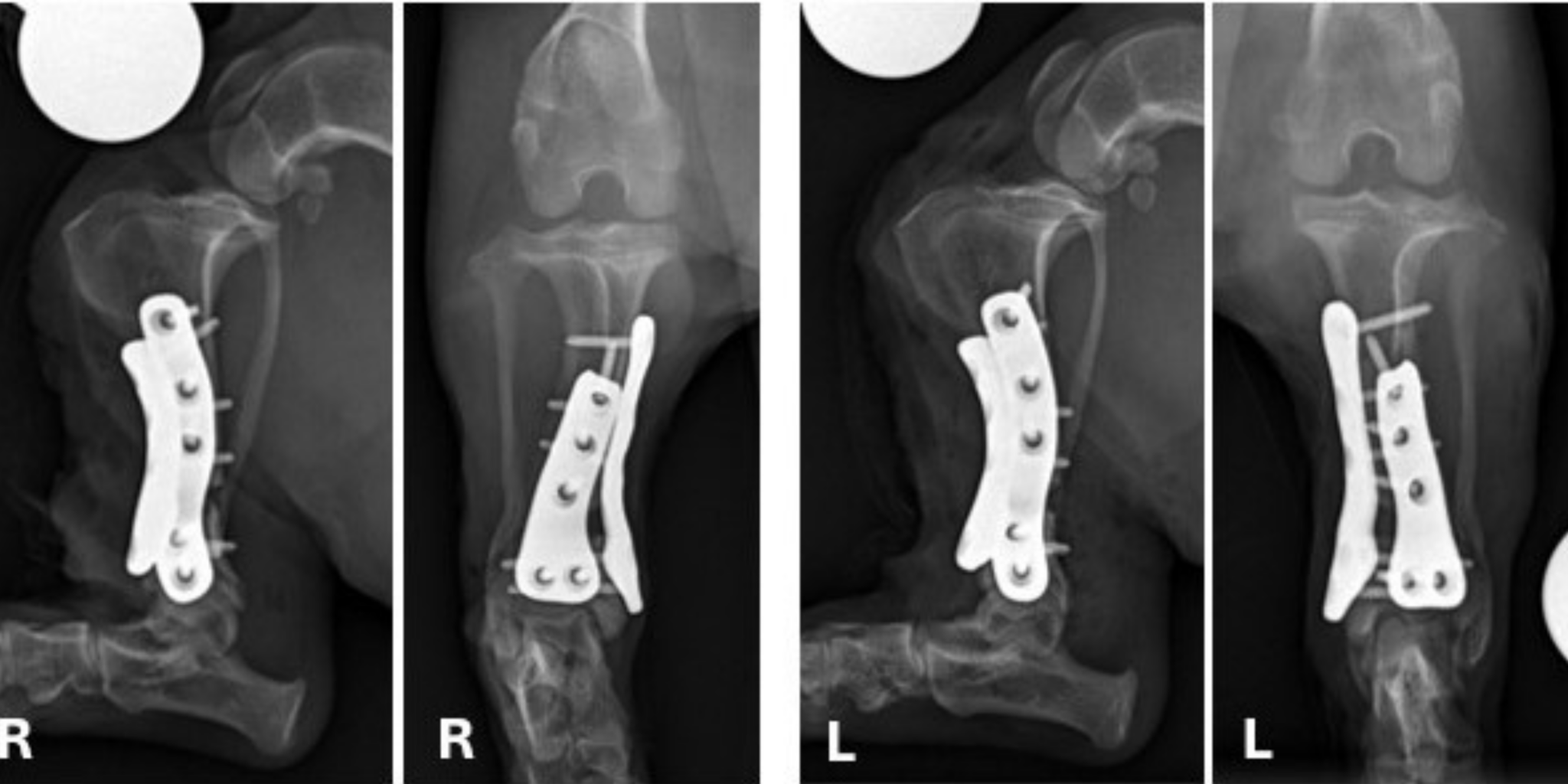
It sounds futuristic, but the technology has been in use for about 20 years in veterinary medicine. “The guide is printed, sterilized, and then physically placed on the tibia and secured with pins onto the bone and we basically cut on the guides like a 3D template,” Bleedorn said. “Custom metal printed plates are a more recent addition to this approach but allow tremendous opportunity for improvements in challenging cases such as Chunk.”
In May, Bleedorn, CSU orthopedic surgeon Dr. Joey Sapora, and resident Dr. Zach Wund performed the procedure. They cut and fixed the bones with custom 3D-printed guides and two tiny titanium plates in each leg. “The repair is very strong because the plates fit perfectly on Chunk’s tibiae,” Bleedorn said.
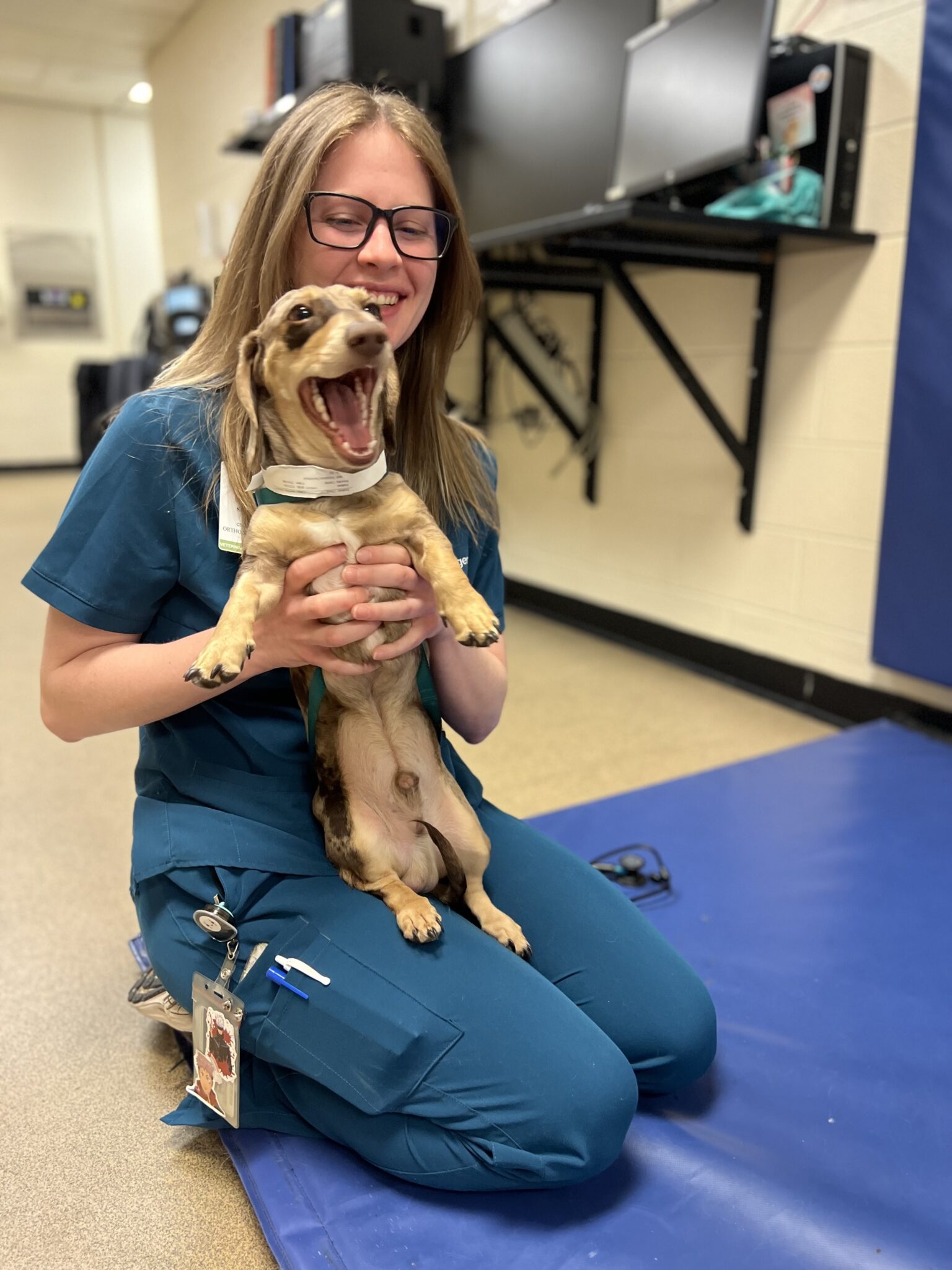
The Small Animal Anesthesia and Pain Management team ensured Chunk was comfortable throughout the procedure. Chunk recovered in the intermediate care unit, and the Small Animal Rehabilitation and Physical Therapy team worked with him while he was in the hospital. The day after surgery, Chunk was walking well and able to go home.
He bounced back remarkably well, and six weeks later, his bones were healed with no signs of infection.
How the cookie doesn’t crumble
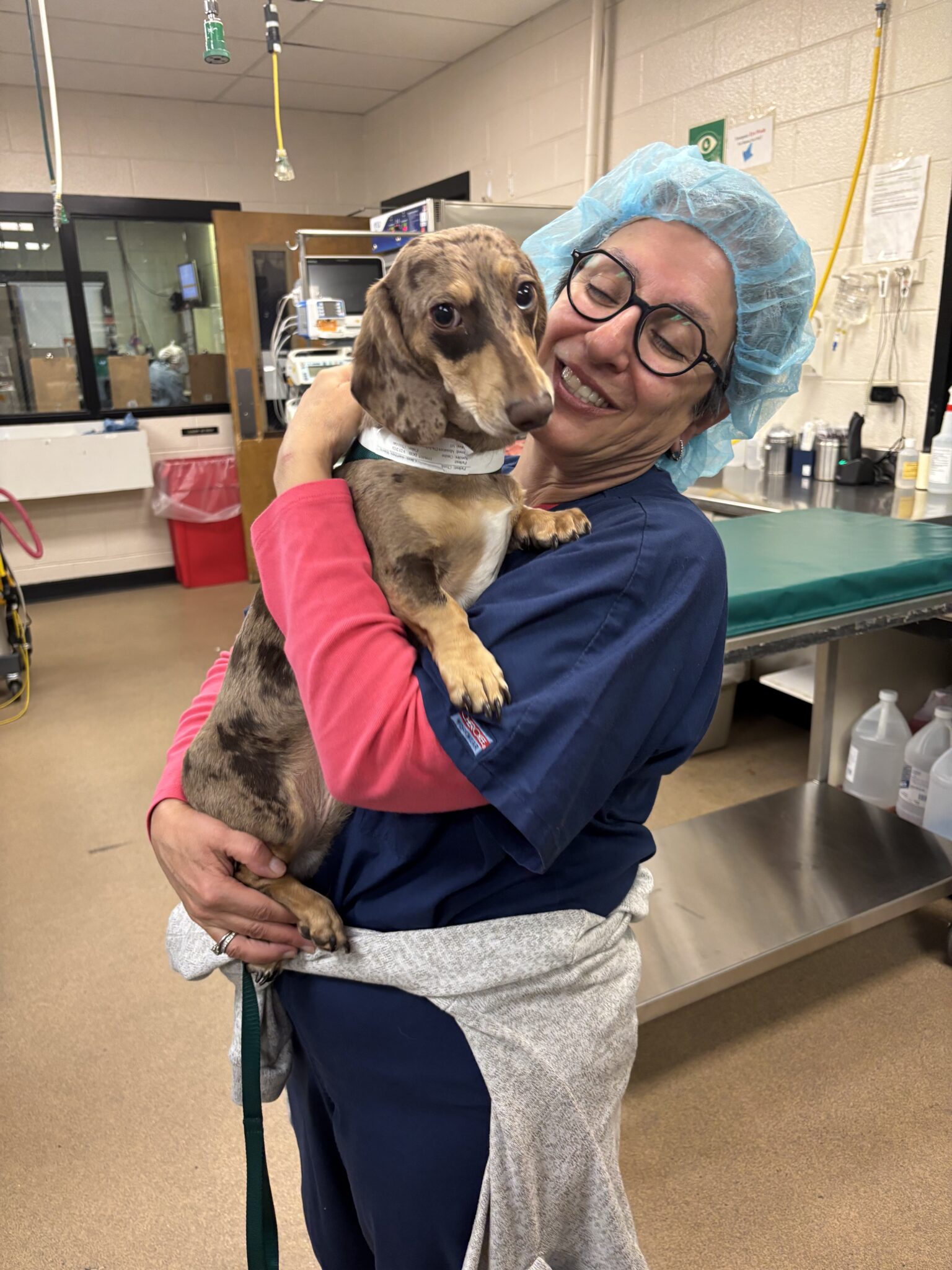
Chunk got his name because he looks like a chocolate chip cookie. “He is very sweet, but with all the dachshund traits rolled into a compact package, good and bad. He’s a screamer – digging, howling, and extremely protective of his mom. He loves all animals, playing with his toy Lamb Chop, and his head tilt can melt your heart,” Cvanciger said.
“In my opinion, they’re the best dog there is. They’re loyal, they’re affectionate. They’re not too big. They’re not too small. They’re like the perfect blend of all the breeds,” she said.
With both his back legs now in working order, Chunk is more perfect than ever.
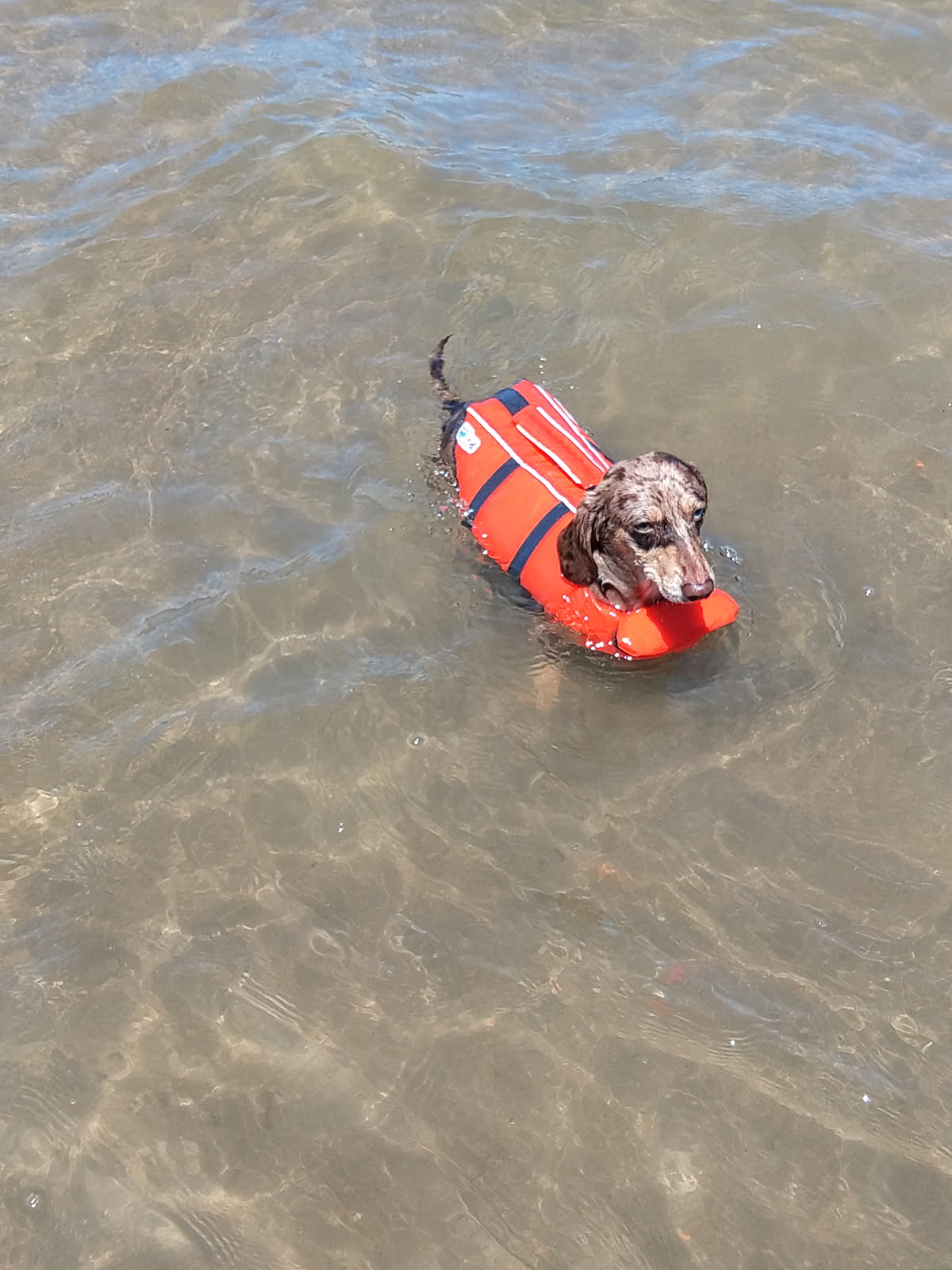
“Chunk is completely healed, off of crate care, and allowed to resume normal puppy life,” Cvanciger said after taking him swimming in July.
Clinical cases contribute to ongoing research
For Bleedorn, a board-certified orthopedic surgeon, the unusual case offered an opportunity to merge his two passions: orthopedic surgery and research into bone deformity correction and 3D modeling and printing. The use of technology, collaboration, and research in these areas led to a clinical success in this case, and others.
“This is an uncommon condition and only the second dachshund pes varus correction that I’ve done despite 15 years of orthopedic practice and hundreds of other deformity cases. We have a paper in progress with Vet3D on this exact topic, so the clinical cases contribute to research developments and publications on this topic,” Bleedorn said.
At his last checkup at three months post-surgery, Chunk “looked fantastic,” Bleedorn said, with a normal gait, good mobility, and complete healing, thanks to his owners’ diligence.
“He thinks nothing happened,” Washburn said. “He’s totally normal.”
The couple is glad they did their research, came to CSU, and addressed the problem quickly.
“I think CSU should be the first place people look statewide when it comes to orthopedics,” Cvanciger said. “You have a whole team there that doesn’t exist anywhere in the state. They’re on the ball with everything. It was great to work with the orthopedic department. They were pretty phenomenal. The whole team is incredible.”
Veterinary Health System
Colorado State University’s Veterinary Health System is a community of veterinary professionals dedicated to providing exceptional service with passion and purpose. Our experts are animal and public health leaders working together to apply their diverse skills in veterinary care, diagnostics, and education. As a partner of CSU’s top-ranked academic veterinary program, the clinical team works with researchers and educators to advance the future of veterinary medicine.