
A dog’s journey after a diabetes diagnosis
Minimus was diagnosed with diabetes. Adjusting to his new normal wasn’t easy, but his owner and CSU veterinary team provided the care and support to help him return to his playful self.


Link copied!
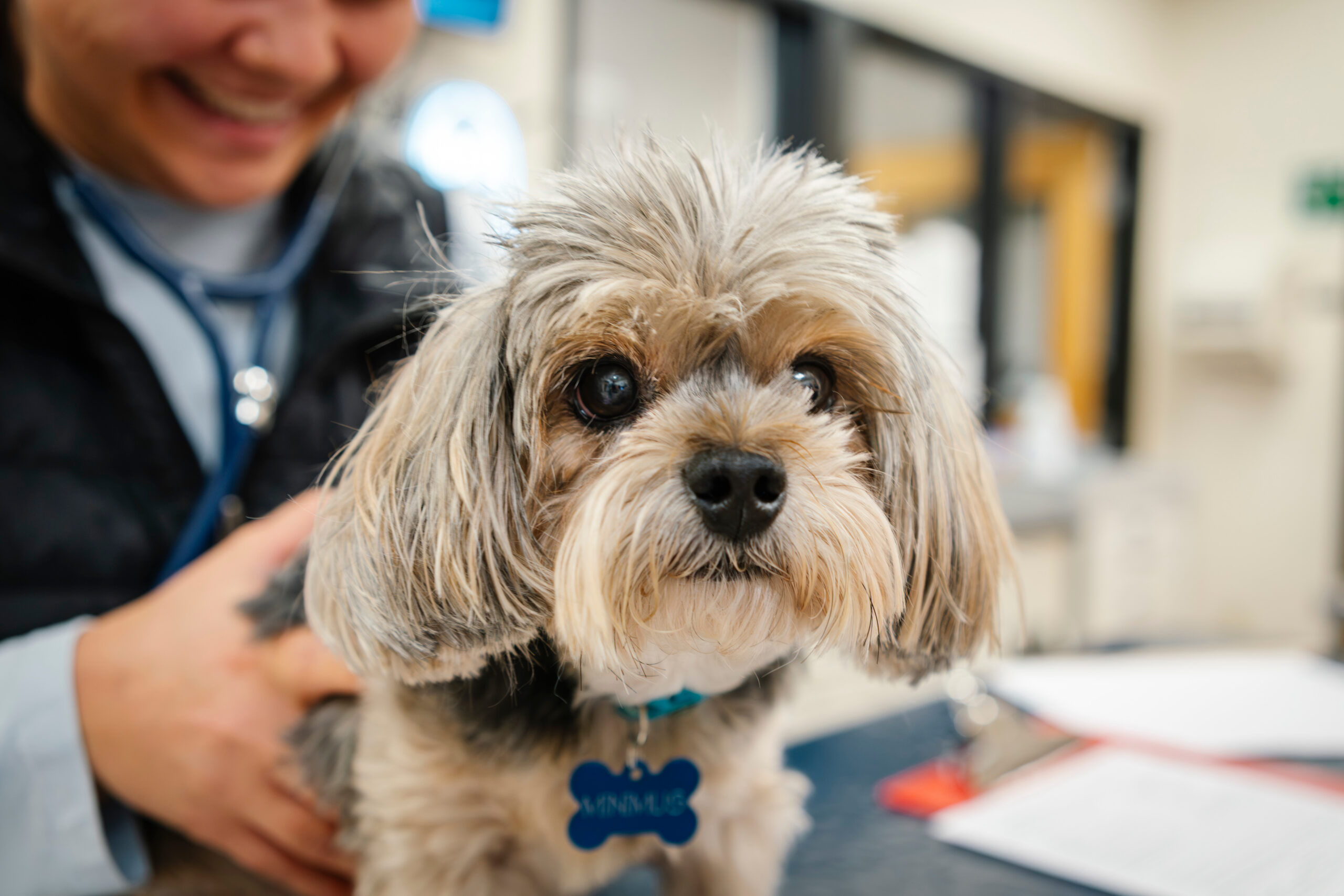
Living with diabetes has not always been easy for Minimus. As a 9-year-old Yorkie/Maltese mix, his daily routine changed almost overnight following his diagnosis.
As a playful pup, Minimus enjoys going on walks, meeting other dogs and people, and playing fetch for hours. On a hot summer day in 2025, Brenda Trujillo, Minimus’ owner, noticed that he had been drinking a lot of water. Trujillo attributed it to the heat. But when his thirst persisted, along with frequent trips to the bathroom, the Trujillo family knew something was wrong.
After an appointment with Minimus’ local veterinarian, he was diagnosed with diabetes. There the family realized each day was going to look different than before. Trujillo had no prior knowledge of diabetes management and felt intimidated as she realized she would need to navigate this new reality.
Learning to manage diabetes in dogs
Minimus struggled to adjust to the changes of his new routine.
He was receiving two insulin shots per day administered by a very thin needle, and his diet had to be strictly regulated. Minimus had previously been a free feeder, but after his diagnosis, he had to eat prescribed food on a fixed schedule.
The needles upset him, and being denied his usual treats didn’t help. Twice a day, at 6:00 a.m. and at 6:00 p.m, he was fed a veterinary-approved meal formulated to help regulate his blood glucose levels.
“We struggled with the shots; Minimus wasn’t having it, and we weren’t used to doing them. He required two per day, 12 hours apart, and it wasn’t easy. In the beginning, it took us 30 minutes to give him his shot,” said Trujillo.
Minimus was given Vetsulin, a veterinary insulin, to lower his blood sugar levels.
“High blood sugar levels in dogs are dangerous because they can make them feel ill or dizzy, result in infections, and lead to life-threatening complications such as diabetic ketoacidosis,” said Dr. Sarah Shropshire, internal medicine specialist.
Three weeks after his diabetes diagnosis, Trujillo noticed Minimus was struggling to urinate. They returned to their local veterinarian, where an X-ray showed that Minimus had a blockage in his urethra, and he needed surgery. Trujillo lived in Denver and wanted to bring Minimus to see CSU Veterinary Health System specialists for his care. Minimus had received care from CSU in the past, and she felt most comfortable bringing him somewhere familiar. The following day, Minimus had a successful surgery performed by CSU’s General Surgery team.
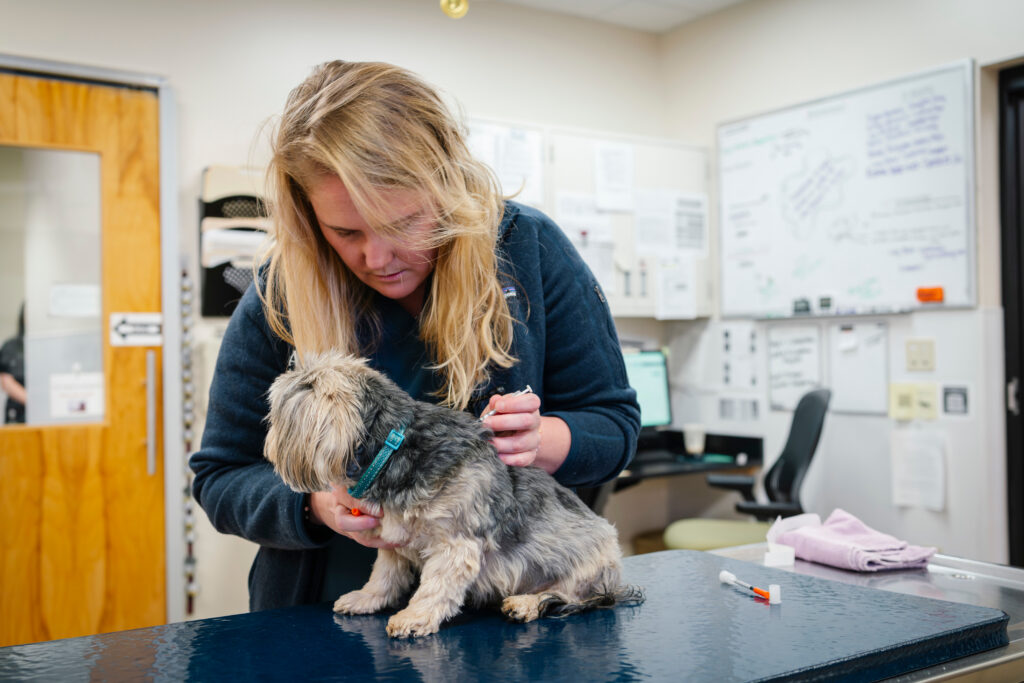
“At that time, we decided to continue treating the diabetes at CSU because we wanted the ultimate care for Minimus and we had been struggling with the shots. We gained so much knowledge and better techniques from CSU staff when it comes to dealing with diabetes and your pet. We had several visits back and forth trying to come up with the correct number of units of insulin that Minimus needed,” said Trujillo.
During the visit, Trujillo shared Minimus’ ongoing difficulty when giving insulin due to his distress around injections. CSU’s Internal Medicine team introduced them to a once-daily insulin pen option called degludec (Tresiba) and recommended a routine to help ease the process of giving shots. This made injecting the insulin so much easier for Minimus and Trujillo. Minimus eventually got used to one shot per day, and an injection that used to take 30 minutes now only took a few seconds.
According to Shropshire, insulin pen injections use tiny needles that often go unnoticed by dogs when combined with a distraction. Positive reinforcements like giving praise, rubbing their heads, massaging their shoulders, or giving them their favorite toy or approved treat can ease their fears. The key is to give them a positive experience.
Six months after Minimus’ diagnosis, he experienced yet another setback caused by the diabetes: he had trouble seeing. He would run into walls and not be as excited to go outside like he used to. Trujillo returned to CSU where she was informed that he had cataracts, a common vision complication in diabetic dogs. After an evaluation from the Ophthalmology service, Minimus underwent cataract surgery.
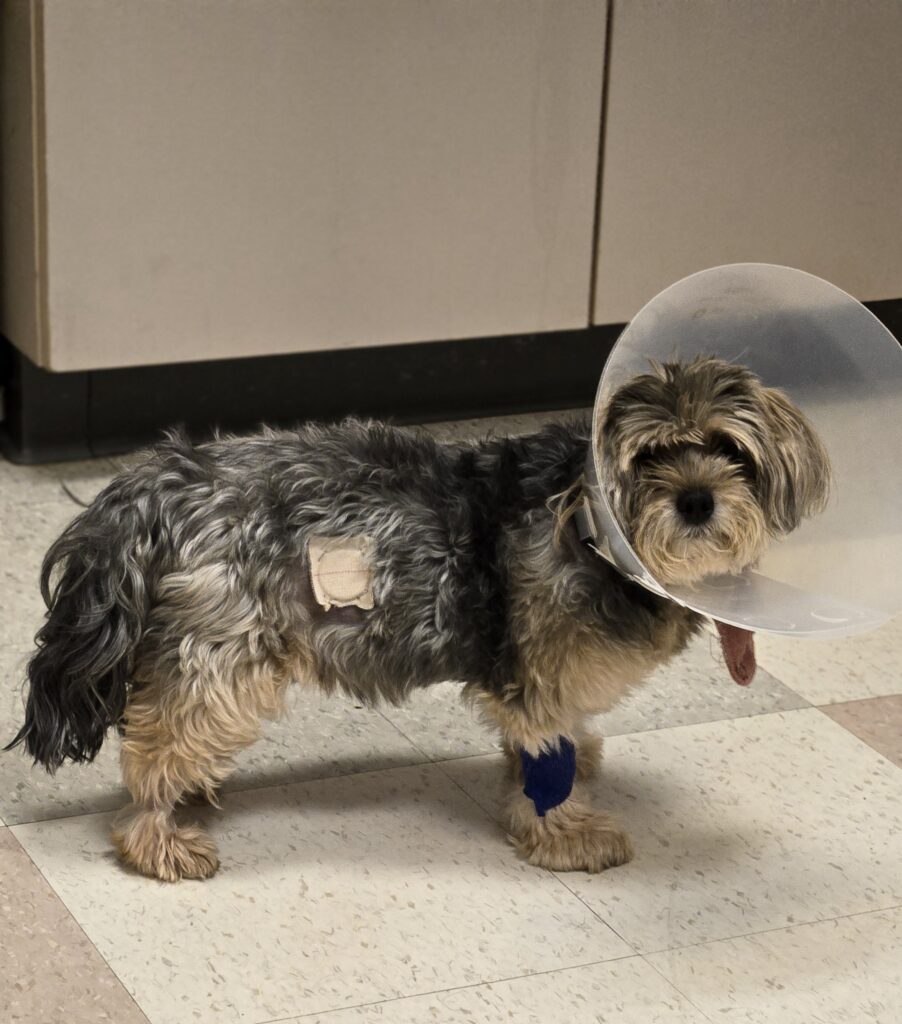
“Surgery was successful and by February he was able to see again thanks to the great ophtho doctors and staff at CSU,” said Trujillo.
After his cataract surgery, a FreeStyle Libre was placed to determine if adjustments needed to be made to his insulin dose. This continuous glucose monitoring (CGM) system tracks Minimus’ blood sugar levels and is the same device used by humans with diabetes. Unlike people, dogs only wear them temporarily, for up to two weeks at a time, to help track daily blood sugar patterns. Minimus wore a CGM about four to five times after his diagnosis.
“A continuous glucose monitor is a device that we can use to understand how the blood sugar is changing over time and can watch trends over multiple days without having to get a needle poke at all! It’s a great low stress way to help monitor our patients and help optimize patient care,” said Shropshire.
Finding a new normal
Today, Minimus is back to his playful self, full of energy, and his diabetes appears to be well controlled.
Trujillo shares that if it hadn’t been for his excessive drinking and bathroom trips, she probably wouldn’t have caught that something was wrong. Although a diabetes diagnosis for your pet can feel intimidating, Trujillo says, “Just to hang in there, it eventually gets better and easier especially with the help of the wonderful staff at CSU – we couldn’t have managed this without them!”
Together with Trujillo, the CSU teams worked to address his health challenges and support Minimus throughout his journey.
“He is doing great and has continued to be the cutest little man!” said Shropshire.
If you are concerned your pet might have diabetes or have questions about diabetes management, contact [email protected] or call (970) 297-5000 to schedule an appointment.