
Allergies might be the reason your pet won’t stop itching
Four out of five itchy pets are reacting to something in their environment; CSU’s dermatology veterinary technician explains why your pet won’t stop itching.
Veterinary insights from: Cassidy Clendenning, VHS Dermatology Veterinary Technician


Link copied!
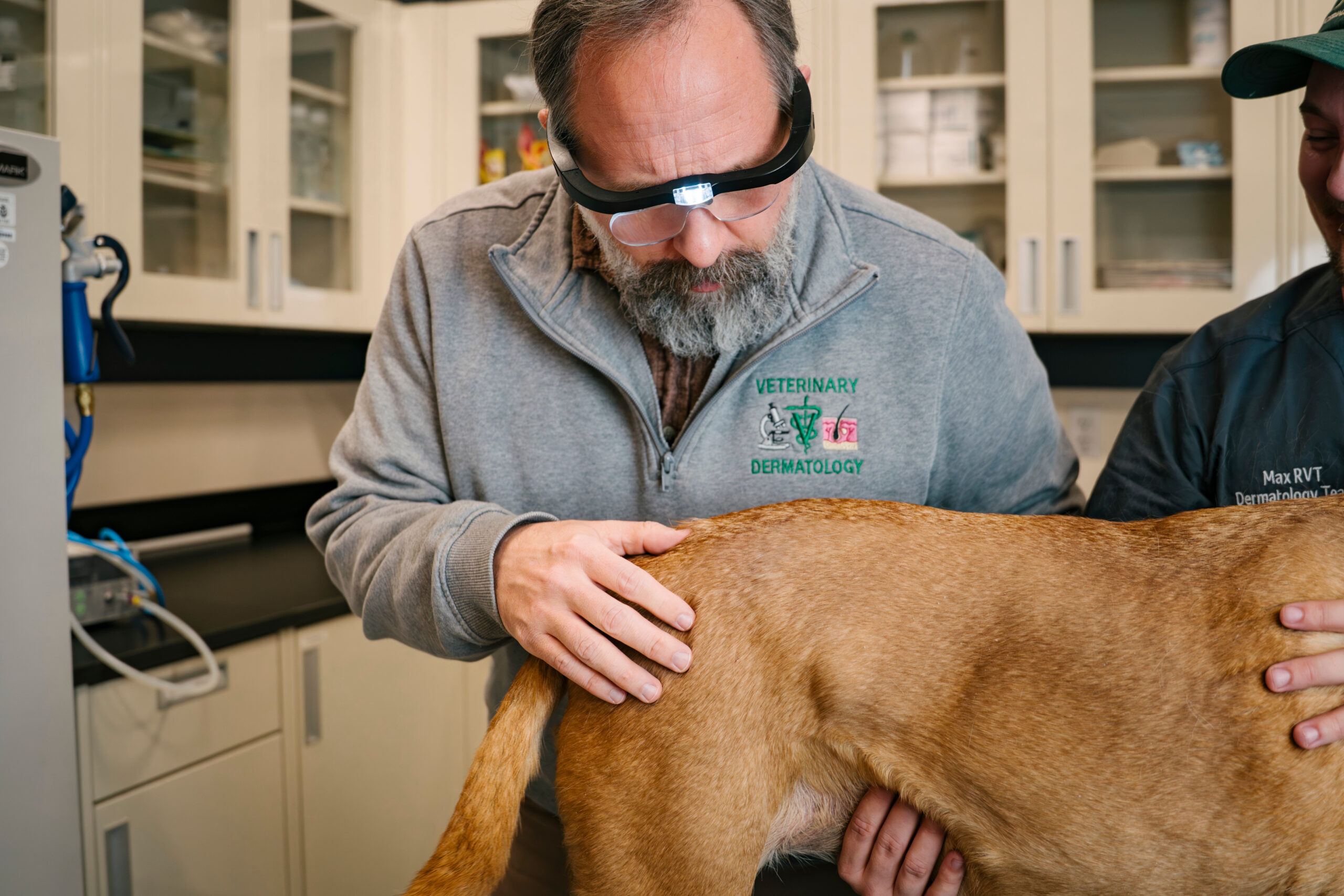
Occasional scratching and grooming are normal for dogs and cats, but if your pet is constantly scratching, it might be time to visit your veterinary dermatologist.
Very often, pet owners associate dry skin with itchy skin, but that is not always the case. Allergies are actually the predominant cause of itching in both dogs and cats.
Causes of itching
Allergies are the most common cause of chronic itching in pets. Puppies and breeds such as German shepherds, pit bull mixes, and poodle mixes tend to develop allergies more frequently. If your pet is perpetually scratching, they might be experiencing one of three types of allergies: environmental, food, or flea.
- Environmental allergies: approximately 80% of pet allergies are triggered by environmental factors like pollen, mold, fungi, and climate changes. The CSU Veterinary Health System sees a rise in these allergies during warmer seasons.
- Food allergies: Pets can develop allergies to the food they eat every day. Long-term exposure to proteins such as chicken, beef, or dairy can trigger an allergic reaction.
- Flea allergies: Flea saliva from a bite can lead to an allergic reaction
Environmental or food allergies usually present as scratching around the face, ears, and belly, as well as paw-licking. Flea allergies primarily trigger severe scratching along the lower back, tail base, and back legs.
If your pet is scratching during hot, high-pollen seasons compared to year-round, they might be allergic to their environment.
The second most common reason for an itchy pet is parasitic infections caused by mites. These include Demodex, scabies, Otodectes, and Cheyletiella (walking dandruff).
Otodectes, or ear mites, are commonly found in cats, while scabies, another type of mite, are found in dogs that visit high traffic dog areas like dog parks or groomers. Demodex target animals with weaker immune systems (puppies and older dogs). Cheyletiella lives on the surface of the skin and are highly contagious to other dogs.
- Otodectes cause dark black or brown fluid leakage in the ears; ear debris resembles coffee grounds.
- Scabies trigger redness, hair loss, and thick crusting all over the body.
- Demodex naturally occurs on skin and is usually an issue in older pets, immune-suppressed pets, or allergic pets on medications, resulting in redness and hair loss.
- Cheyletiella produces thick and widespread white scaling on the back of the pet.
Recognizing itching in your pet
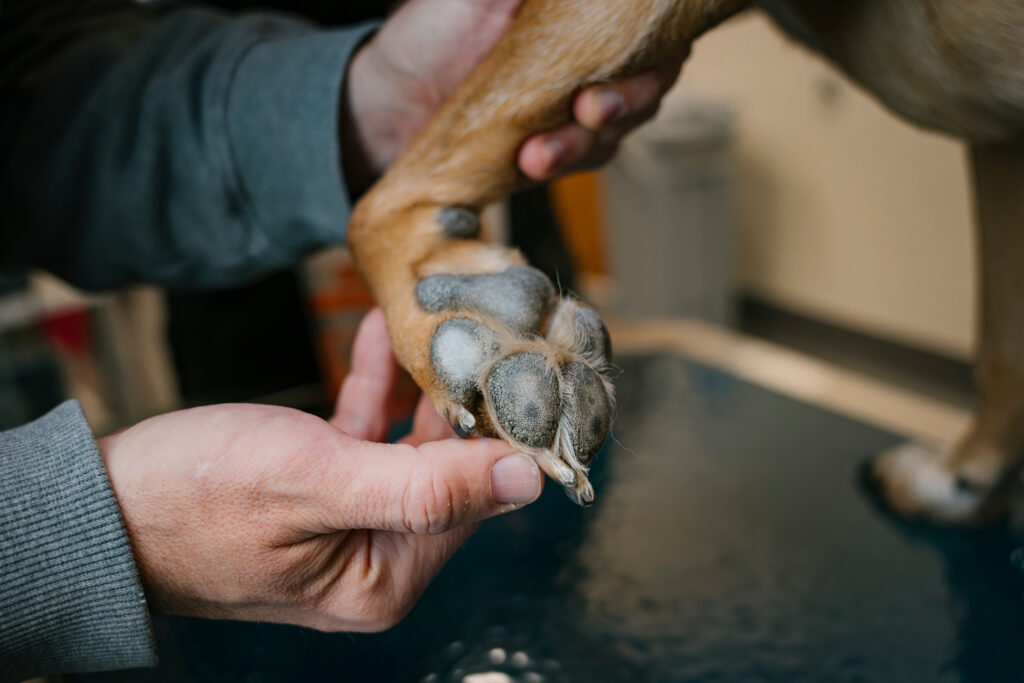
Common signs of itching in dogs include licking, chewing, or nibbling between paw pads and around the toes as well as scratching at the neck, shoulders, and face area.
Common signs of itching in cats include excessive licking, overgrooming and barbering. This leads to hair loss down the back legs and base of the tail, and self-inflicted wounds or scratches around the head, neck, and face.
If untreated, persistent scratching can cause open wounds, redness, swelling, and discomfort. Secondary infections can also develop, and bacteria and yeast are the biggest culprits.
Itchy Pet Scale
The itchy pet scale helps pet owners measure their pet’s itchiness on a scale of one to ten based on how much the pet scratches.
The canine itch scale begins at one (dog itches once a week) to ten (dog perpetually scratching to the point of hair loss and wounds).
The feline itch scale measures both licking and scratching. A healthy cat spends about one hour of grooming and one minute scratching a day. Similar to dogs, one represents mild scratching and licking whereas ten represents nonstop scratching and licking, causing hair loss and skin lesions.
Diagnosing your pet’s itch
A trip to your primary care veterinarian is a good place to start. From there, they can refer you to a veterinary dermatologist to find what’s causing your pet’s itch. CSU’s Dermatology Services team begins the diagnostic process by reviewing your pet’s history including travel history, food, medications, seasonality, and overall behavior.
This is followed by an examination of the full body and ears of the pet, collecting skin and tissue samples via tape prep, impression smear, and ear cytology. Collecting these samples helps identify and manage secondary infections before tackling the allergies. This is always done as a workup prior to allergy testing.
Environmental allergies
To diagnose an environmental allergy, a blood or skin test is administered to find out what is causing the allergies. The results are then used to create an immunotherapy treatment.
- Serology blood test: A small blood sample is tested for proteins that cause your pet to react to harmless things like pollen or mold.
- Skin test: Diluted allergens are injected into the epidermis to look for an allergic skin reaction, presenting as red, raised bumps.
Food allergies
There is no reliable testing for food allergies other than a strict eight-week elimination diet. Owners will purchase either a novel protein, a meat source your pet has never eaten before, or a hydrolyzed protein, a standard meat like chicken or soy, to give your pet for eight weeks, avoiding treats and food scraps. During the elimination diet, our Dermatology team observes whether the scratching improves. Afterwards, either your pet’s old diet is reintroduced to see if that triggers a flare up or if introducing standard proteins, like chicken, soy or beef, makes them itchier.
Flea allergies
Flea allergies are diagnosed by looking for intense scratching and hair loss in the lower back and tail base area. The diagnosis is confirmed when the pet’s itch stops after being placed on flea control medication.
Treatments and long-term management
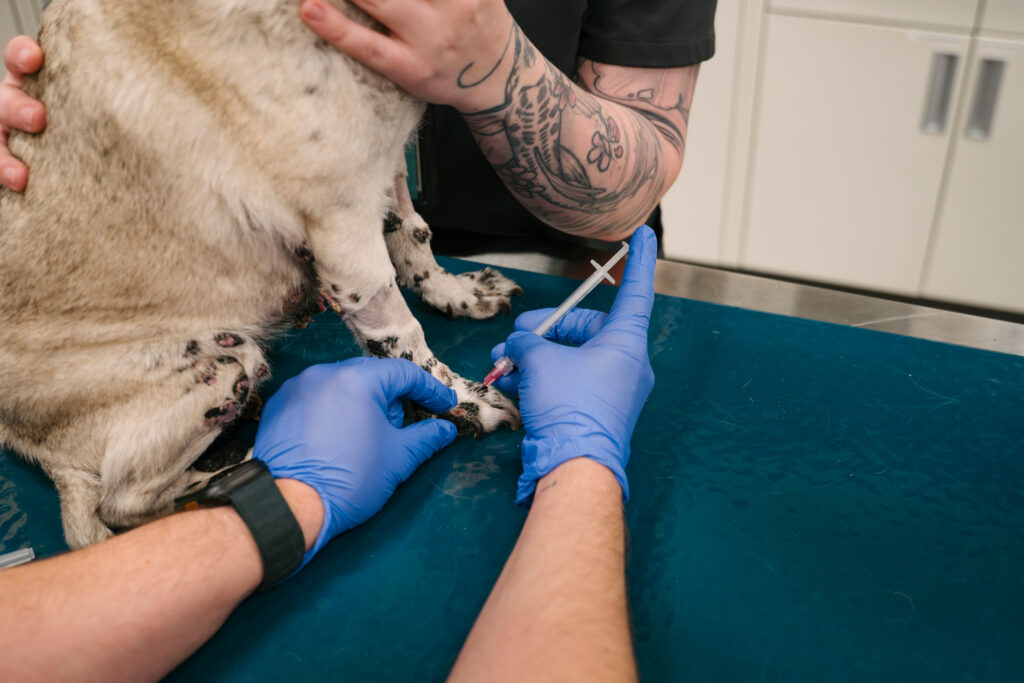
Treatment options vary depending on the cause.
Environmental allergies are typically treated with anti-itch medications and immunotherapy, a long-term treatment where a mix of allergens your pet is allergic to is administered to train their immune system to tolerate those specific allergens. Food allergies are treated by maintaining a specialized diet, while flea allergies and mites will require flea, tick, and mite medications.
Once your veterinary dermatologist has found the cause to your pet’s itch, they will guide you towards the best treatment option.
Managing your pet’s allergies takes time, and while there is no cure for an itchy pet, sticking to a treatment plan long-term can help your pet itch less and live a happier life.
When to see your dermatologist
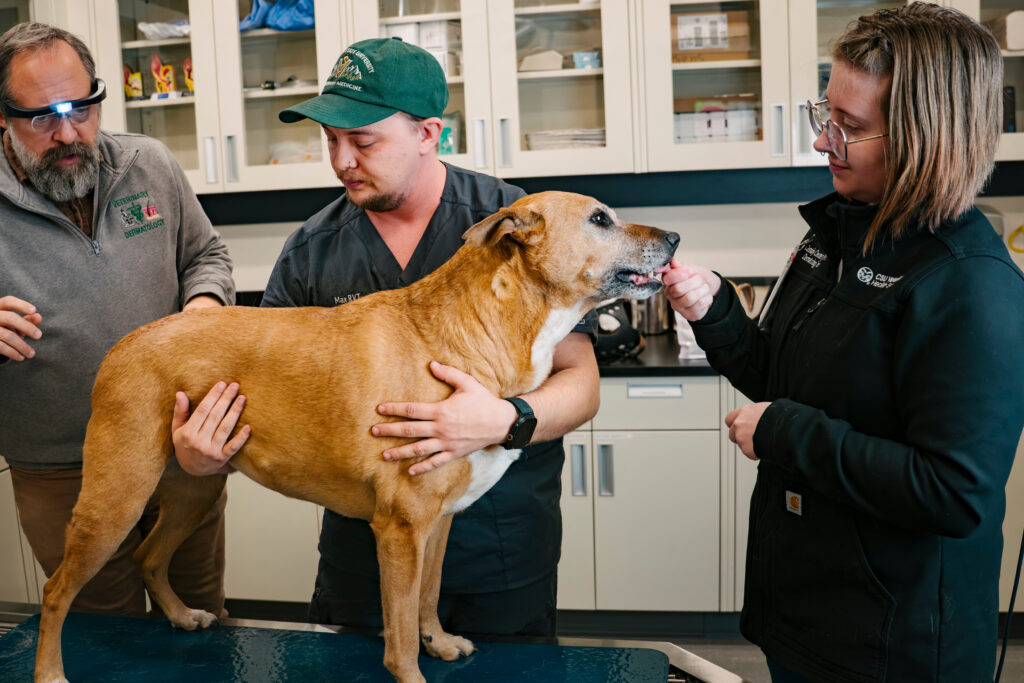
If it’s been more than six months and your dog or cat won’t stop itching, visit the VHS Dermatology service. To make an appointment, call Dermatology at (970) 297-4460 or complete the appointment request form.