
How drought impacts forage feed and can cause laminitis in horses
Learn how drought, cool weather, and low humidity increase non-structural carbohydrates (NSCs) in your horse’s hay, causing insulin spikes that can trigger laminitis.


Link copied!
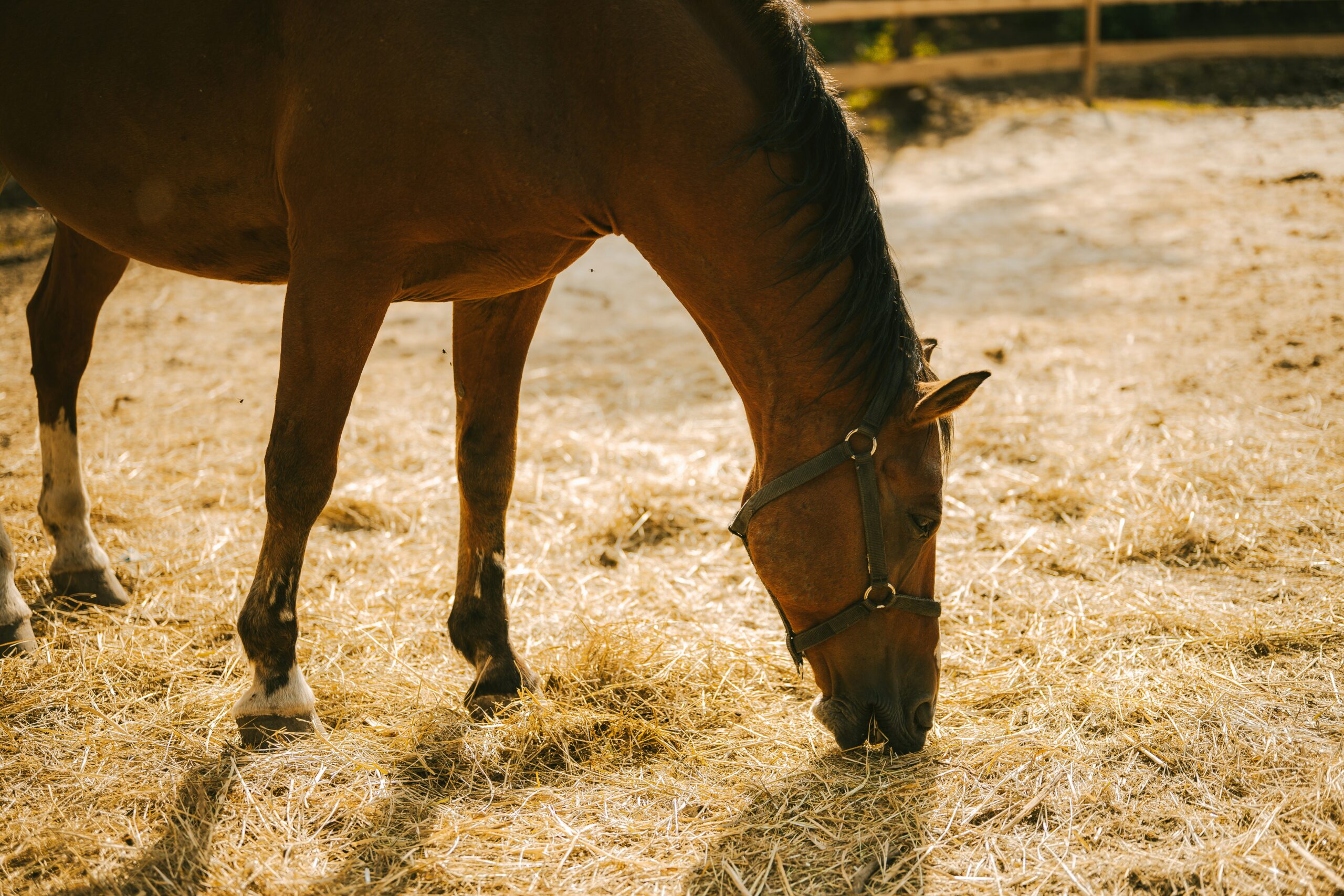
Colorado’s low snowfall and record-breaking temperatures in 2026 have led to a significantly dry year. While many of the impacts are obvious, what may be less obvious to horse owners is the impact of drought on your horse’s hay, and how that can lead to problems.
Carbohydrates and healthy horse digestion
Plants take in carbon dioxide from the air, water from the soil, and light from the sun to create energy via photosynthesis. This energy is produced as simple sugars, which are used by the plant to build more complex carbohydrates like cellulose, pectin, and lignin, which are the structural carbohydrates that make up the “skeleton” of the plant. These structural compounds are the fiber that is required for healthy digestion in the horse.
Nonstructural carbohydrates, or NSCs, are simple sugars that are stored within the lower stem of the plant and allow the plant to survive stressful events – like mowing or grazing – that remove the leaves. The plant will rely on stored NSCs to initiate regrowth.
While NSCs are vital to the survival of the plant, they can be problematic for horses with metabolic disorders like insulin dysregulation. When these horses are eating feeds with high amounts of NSCs, it can cause spikes in their insulin levels that can directly lead to episodes of laminitis. It is recommended to maintain horses with insulin dysregulation on feeds that have 10% or less NSC content, to minimize the impact of simple sugars on their insulin levels.
Climate impact on hay
Cool temperatures and low humidity limit the ability of the plant to convert simple sugars into structural carbohydrates, especially during times of limited day length or cloudy conditions when photosynthesis is less efficient. Irrigation to increase growth rates will reduce the NSC content, because the plants will expend their energy into growth rather than storage of NSCs. Forage grown at higher elevation will generally have higher NSCs, because the cooler temperatures reduce the plant’s ability to convert the simple sugars into structural carbohydrates.
Because of Colorado’s sunny conditions, locally grown forage is able to produce those simple sugars, but the lack of moisture and cool nighttime temperatures mean that these plants are more likely to retain them as NSCs. Under drought conditions, this effect is amplified, and forage will have an even higher concentration of NSCs.
The impact on your horse
Drought conditions mean that the same fields are likely to produce forage with higher NSC levels than in years without drought, so even horses that have not changed environments or forage sources may be eating feed with higher NSCs than intended. When there is drought, CSU Equine Field Service often sees an increase in cases of laminitis that are attributed to metabolic disorders, and it is very likely that this is partly due to the higher concentration of NSCs in local forage.
What to do: Testing forage for NSCs and limiting NSCs in your horse’s diet
The only way to know the NSC content of your hay is to have it tested by a lab certified by the National Forage Testing Association. If your horse has, or is suspected to have a metabolic disorder, there are ways to limit the amount of NSC they are consuming, even if you cannot change their forage source. Simple things like limiting their pasture access to morning instead of afternoon can help, because the NSC content will be higher later in the day after hours of light. Moving horses to dry lots or having them wear a grazing muzzle can also limit their access to higher NSC forage. Soaking hay for 30 minutes before feeding it will reduce the sugar content of the hay, as well.
If your horse is an “easy keeper,” has a known metabolic disorder, or has shown signs of discomfort in their feet, the CSU equine team can help come up with a strategy to keep them healthy when we’re all hoping for some much-needed moisture. Email [email protected] or call (970) 297-5000, option 3, to learn more.