
Tofu proves he’s got more lives to live after heart surgery at CSU
Tofu, rescued by Matt Rovero, faced severe medical challenges, including a liver shunt. Thanks to dedicated veterinarians and multiple surgeries, Tofu recovered and returned home, showcasing incredible resilience.


Link copied!
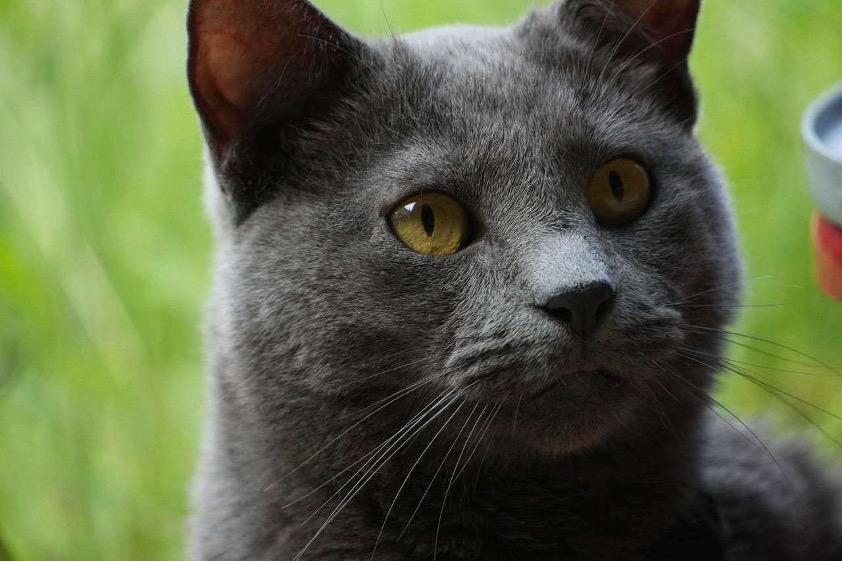
No one knows how many lives Tofu used up before Matt Rovero rescued him and his brother, Miso, on a visit to a Texas lake house.
But once settled with the Roveros in Oklahoma, the kittens were living their best lives.
That was until Tofu, now 4, developed bladder crystals and a build-up of fluid in his abdomen.
“Tofu’s always been really sweet but has no survival skills whatsoever,” said Rovero, who credits his amiable nature for putting up with the many medical procedures he faced.
“In September of last year he started looking kind of plump,” Rovero said. “We thought maybe it was heart disease so we took him to a specialist in Tulsa but his heart looked great.”
Luckily for Tofu, that internal medicine specialist was Dr. Derek Nestor, who not only diagnosed a liver shunt, but happened to have worked with CSU cardiologist Dr. Brian Scansen, who was a veterinary student at Michigan State University when Nestor was a resident. Nestor referred Tofu to Scansen, now head of the Cardiology service at the CSU Veterinary Teaching Hospital.

“Tofu had a blockage in the major vein (vena cava) bringing blood back to his heart, which was further complicated by an abnormal blood vessel from the liver that connected to the vena cava at the site of this obstruction,” Scansen said. “This caused fluid to build up in his belly and he was requiring taps to remove this fluid every one to two weeks since last October.
“Dr. Nestor sends me unique and complicated vascular and cardiac cases,” Scansen said. “He reached out to see if there was anything we could do, and I felt it was worth a try to open the obstructed vessel and close the abnormal one.”
A surgical challenge
Rovero and Tofu made the trip to Fort Collins in January to see the CSU Cardiology service. The case proved complicated, to say the least. Scansen planned to insert a stent in the obstructed vein, but it was completely blocked. “Nothing was getting through. I tried to perforate it with many different wires but was unsuccessful. We went down from a vein in the neck and up from a vein in the leg and could get them to nearly touch, but never cross from one to the other,” Scansen said.
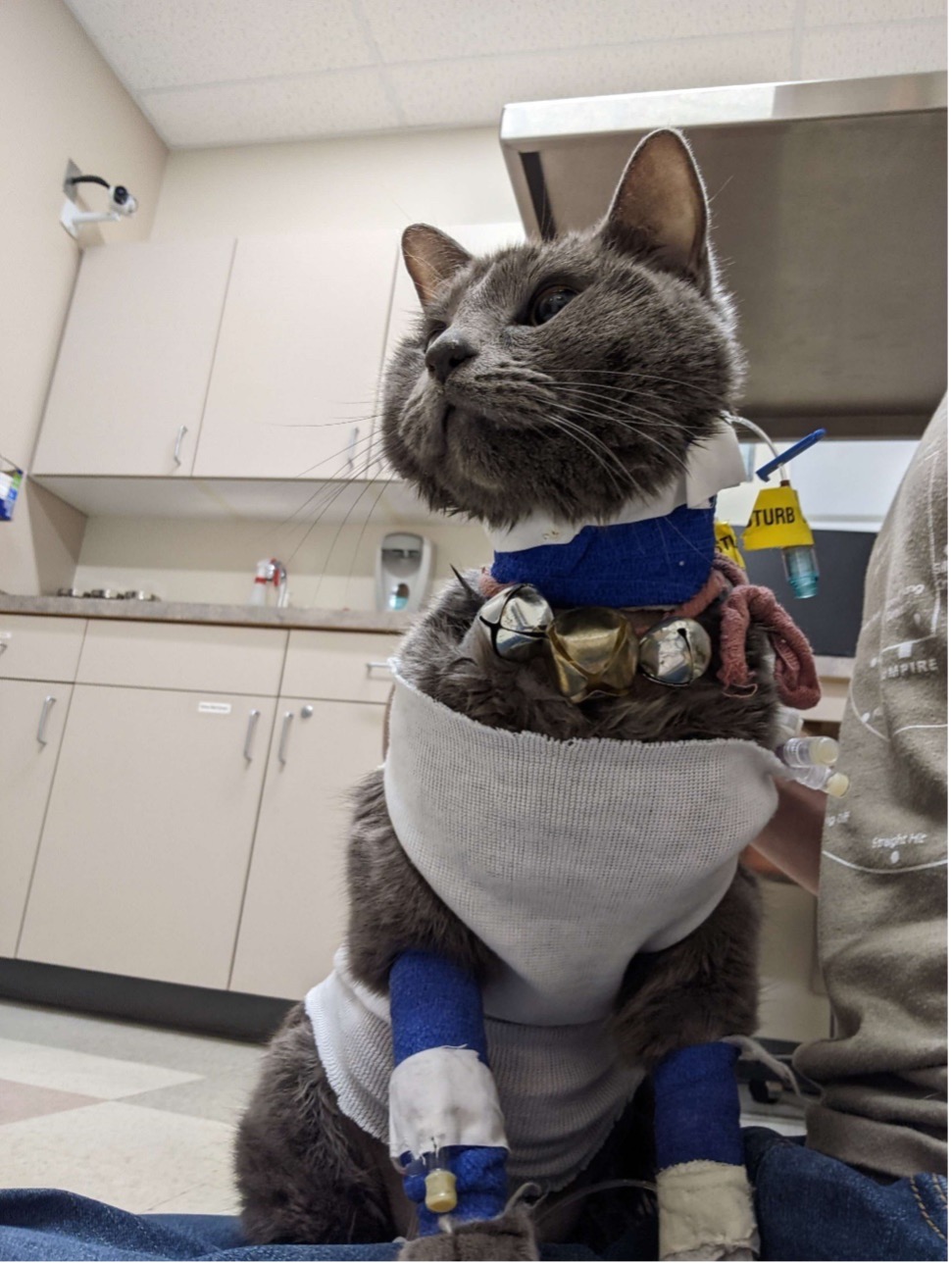
CSU surgeons attached a graft around the obstruction to bypass the area and close the abnormal vessel, but the surgical graft formed a clot soon after surgery. “I took him back to the cath lab to try to open up this clotted graft and when I was unable to do so, tried again to get across the original obstruction,” Scansen said.
After many hours in the operating room, he was able to cross the obstruction and place two metallic stents to hold the vessel open, allowing blood to return to the heart normally.
Tofu recovered in the Critical Care Unit and was ready to go home when he developed a hernia at his abdominal incision, which required a fourth procedure to repair.
Just to complicate things further, Tofu lost a lot of blood throughout his many surgeries, so he required donor blood. “Unfortunately he also has a rare blood type so finding donors was a challenge — the CSU Veterinary Blood Bank did an amazing job providing the resources needed to get him through multiple major vascular surgeries,” Scansen said.
“He seemed like he was dying,” said Rovero, who had to take extra time off work to be with Tofu. “But he got another unit of blood from a different cat, and then he bounced back, which was reassuring.”
“The most resilient cat in the world”
Down a couple more lives, Tofu called on his considerable charisma to charm the critical care staff, especially the two cardiology residents, Dr. Cassidy Coats and Dr. Riley Ellis-Reis, who cared for him (and learned from his case) during his recovery.
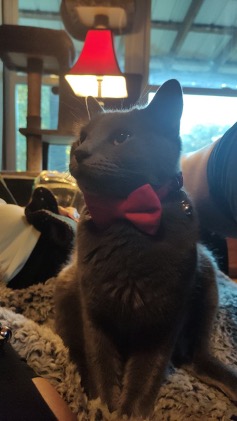
“There were a lot of obstacles along the way, but Tofu is a great sport, like probably one of the best cats ever. He was purring and happy despite everything,” Ellis-Reis said. “Matt was so understanding and so dedicated to him too, even the things that we weren’t expecting and always just trusted us. He was Tofu’s best advocate. What we did probably wouldn’t have been possible without his dedication.”
That dedication was augmented by financial assistance from the Chief Lockton Compassionate Care Fund, which supports the Cardiology service. “The first bill alone was going to be tight on our expenses, but was manageable,” Rovero said. “But once I got the second estimate, we started trying to cut costs. I was skipping lunch most days, usually because I was worried about Tofu. I really can’t express how much of a difference it made, that I could just be excited for Tofu’s recovery and not have any stress associated with paying the bills I already had… It made me appreciate all the work that everyone had done, and how important it was for our family that we couldn’t get anywhere else.”
Back in critical care, Coats took time from her research rotation to make sure Tofu was pulling through. “I literally was just hovering around the hospital making sure everything was okay. We definitely grew very attached to him,” she said. “He’s just he’s a resilient guy — Tofu is the most resilient cat in the world.”
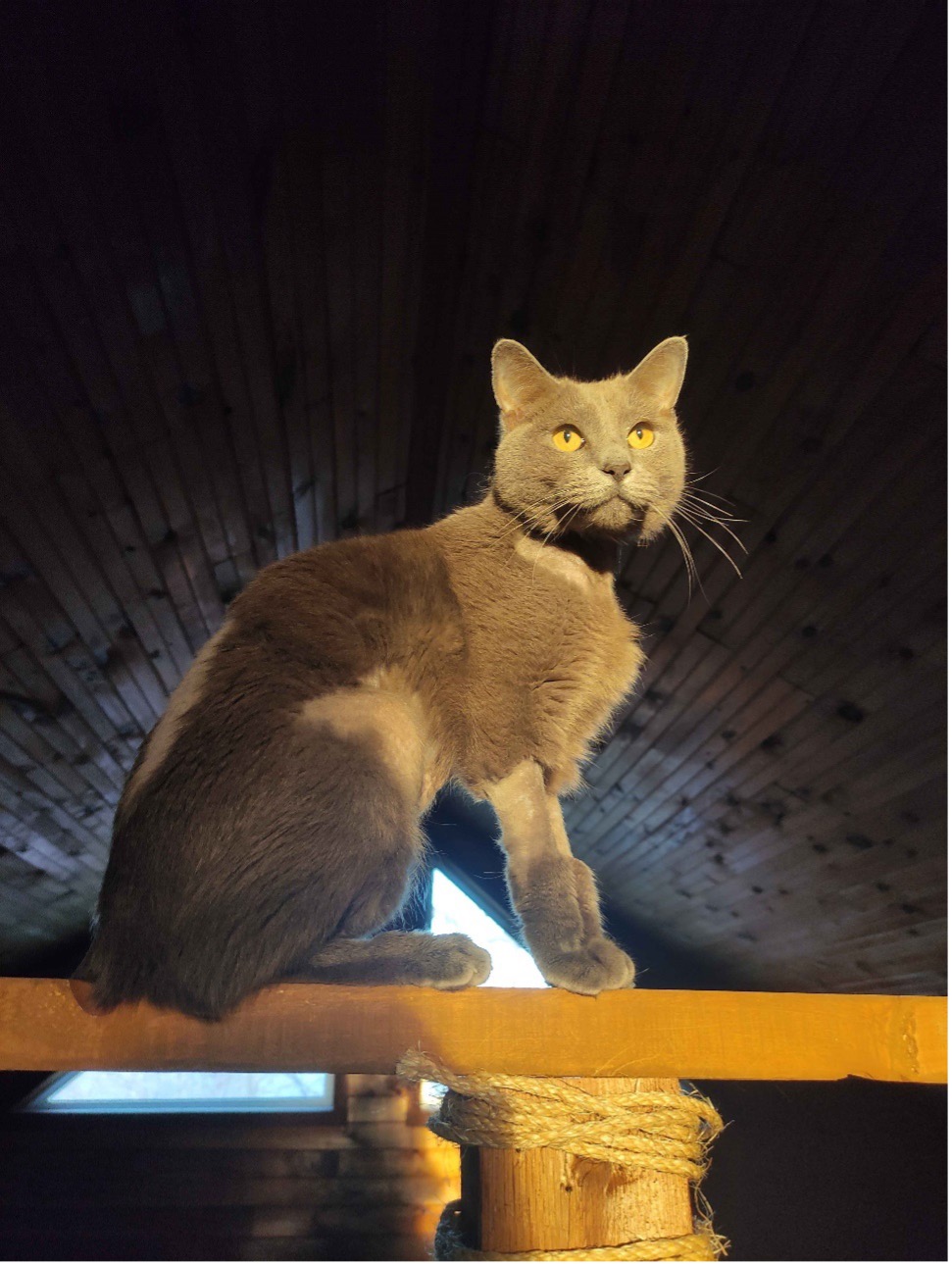
Rovero credits the CSU team for taking care of Tofu, and his human. “They helped me make it through and they helped Tofu too, they took him out for walks every day.”
He’s now back home taking walks in Oklahoma, playing with Miso, and storing up his remaining lives.
“To my knowledge this is the first time a completely obstructed vena cava has been opened by catheterization in a cat. We learned it is challenging, but possible. And most importantly, Tofu is the better for it. His prognosis is very good,” Scansen said. “We have him on blood thinners to reduce the risk of anything closing down again but are optimistic this gives him a normal life.”
But Tofu is anything but normal, said Coats. “Charisma, right? I mean, Tofu’s got it to the nines.”
Just like his many lives.
Veterinary Health System
Colorado State University’s Veterinary Health System is a community of veterinary professionals dedicated to providing exceptional service with passion and purpose. Our experts are animal and public health leaders working together to apply their diverse skills in veterinary care, diagnostics, and education. As a partner of CSU’s top-ranked academic veterinary program, the clinical team works with researchers and educators to advance the future of veterinary medicine.