
Advancing care for dogs with arthritis
After being diagnosed with elbow arthritis, Daisy’s vet recommended she participate in one of CSU’s Orthopedic Medicine and Mobility clinical trials to treat her joint pain.


Link copied!
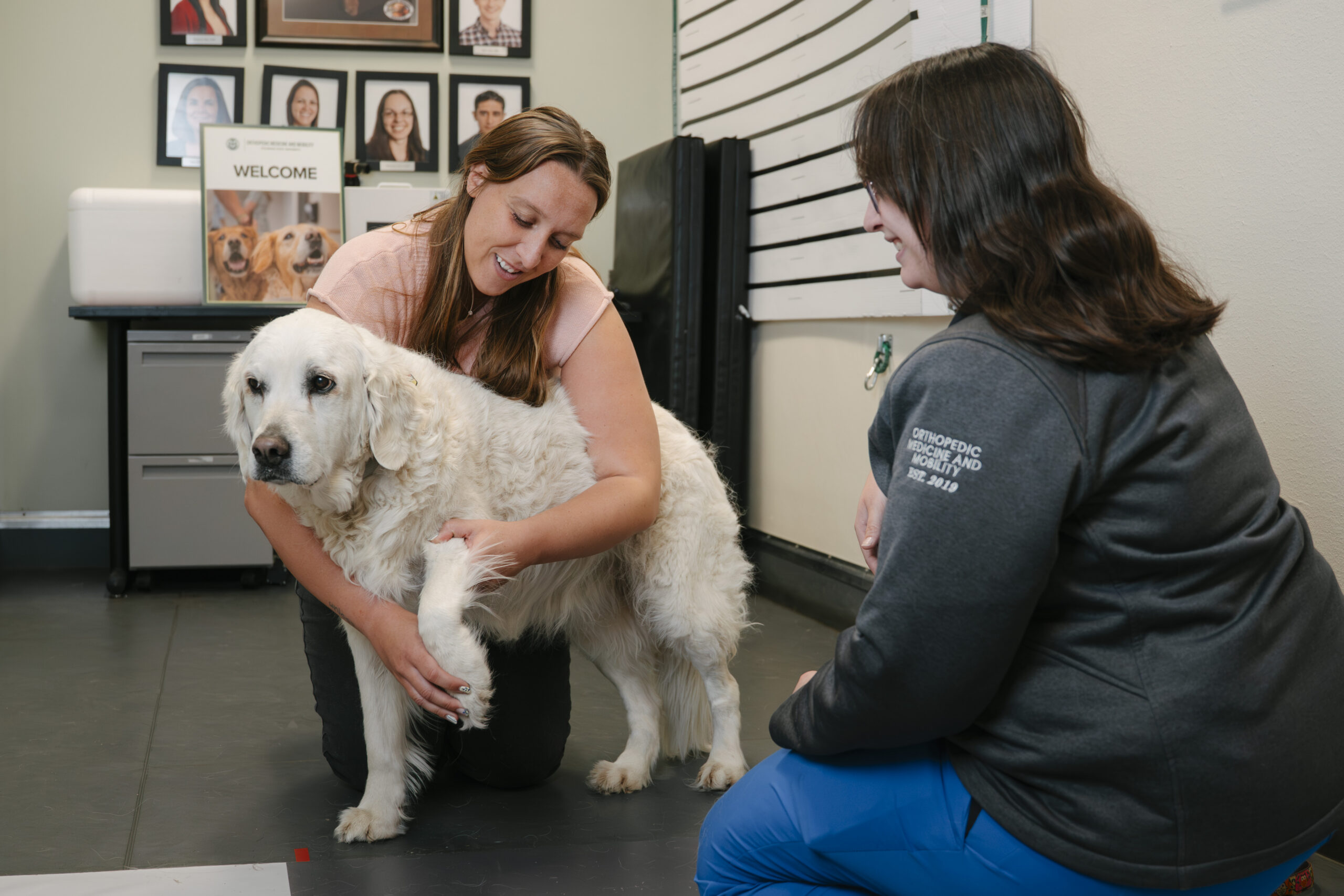
Daisy is an 8-year-old golden retriever and patient in a CSU Veterinary Health System clinical trial.
In 2022, Daisy’s owner, Kelly Kane, noticed a limp in Daisy’s front legs. After being diagnosed with elbow arthritis, her vet recommended she participate in one of CSU’s Orthopedic Medicine and Mobility (OMM) clinical trials to treat her joint pain.
OMM clinical trials largely focus on finding effective treatments to improve comfort, mobility, and quality of life in patients with arthritis. Treatments are evaluated for their effectiveness to determine which are most beneficial.
To qualify for the clinical trial, Daisy had to pass an evaluation for enrollment. Each clinical trial has a different set of criteria to decide if a patient qualifies to participate. An example of this could be fitting within a specific weight range or having arthritis in a specific joint.
The screening process begins with the clinical trials team reviewing the dog’s medical records and the client completing a set of surveys unique to the study, asking questions like how much the dog’s limp impacts day-to-day activities like going for walks or jumping in and out of the car.
Daisy successfully qualified for a 2022 study where she received injections for her elbow pain. During the trial, Daisy’s owner saw improvements in her comfort and noticed she was more willing to play with other dogs. However, there is no cure for arthritis in people or dogs, so she still needed treatment for her elbow discomfort after the study ended in 2023.
Understanding the clinical trial process
This year, when the OMM clinical trials team were reviewing potential candidates for a study using stem cell injections for arthritis, they reached out to Kelly to see if she’d be interested in bringing Daisy back for an evaluation to assess whether she may benefit from the trial.
At the assessment, the team noted some progression of Daisy’s limping and arthritis, not uncommon for patients over time. Daisy successfully met all the criteria and was officially enrolled as the first dog in this new and ongoing clinical trial.
Most OMM trials include various evaluations such as objective gait analysis, orthopedic examination, diagnostic imaging (e.g., X-rays), and activity monitors. This data allows the team to measure baseline effects of arthritis and track the outcomes of the intervention in a more scientific manner.
Daisy began the trial in March and was enrolled in a study group that received X-rays of the elbows, an MRI, and CT scan, all at no charge to the client. Following this imaging, Daisy received stem cells in both her elbows as part of the study.
While Daisy is still midtrial, the owner feels she has become more active and willing to go on longer walks since receiving the injections.
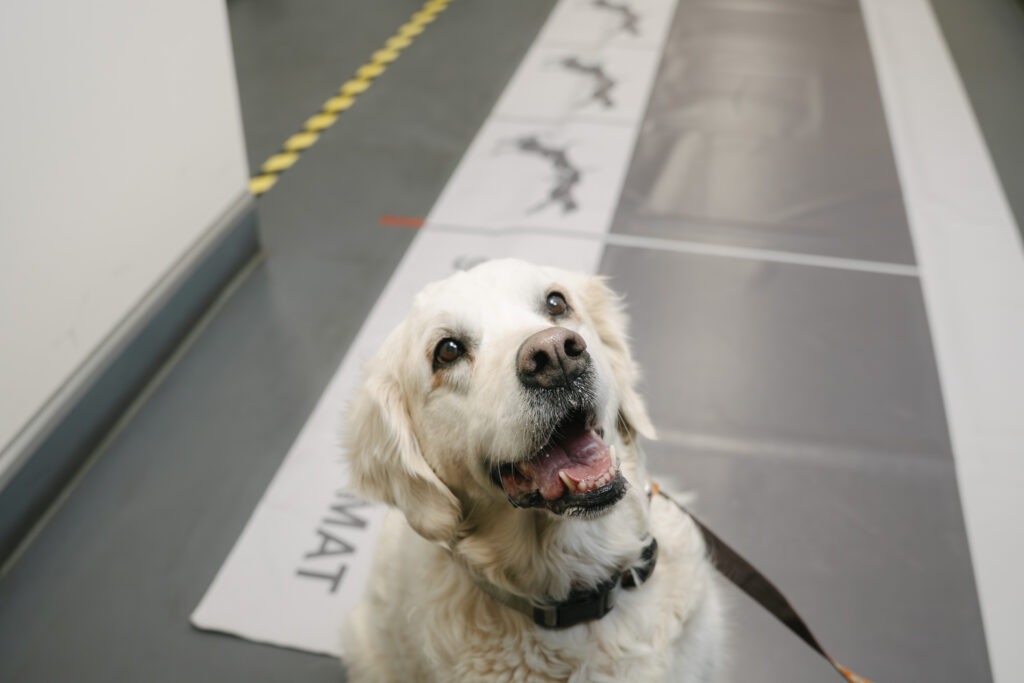
“There’s a little more pep in her step, and I’m already seeing improvements from her,” Kane says. “We come here [to the Veterinary Health System] for treatment, drive back home and walk her twice a day. I am really proud of her when she wants to go on longer walks.”
Daisy will continue with recheck evaluations for the next several months to monitor her response to the injections and document how long these effects last.
“If you are thinking about involving your pet in a clinical trial, I absolutely recommend CSU. Not only because of the trials, but because of the team. These people are dedicated, committed, and have such love for animals that your pet is going to be in the safest of hands,” Kane says.
Dr. Bryce Roberts, orthopedic medicine and mobility instructor at the CSU Veterinary Health System, has found clinical trials to be core advancements in veterinary medicine. “By studying different therapies, we are better able to understand what is helping and not helping our pets,” Roberts said. “Not only can this benefit the individual pet receiving the treatment, but it can have translational benefits and help us explore therapies that might help humans one day as well.”
Kane’s overall hope for the stem cell clinical trial is to help slow the progression of Daisy’s arthritis and help all dogs who are in different stages of arthritis. “The more we can do to help them lead healthier lives, and hopefully longer lives, I’m all for it.” Kane says.
Interested in learning more about clinical trials?
Joining a clinical trial opens avenues that may help improve the quality of life or health of your pet and contribute to an understanding of better treatment options for all pets.
The Orthopedic Medicine and Mobility service is currently studying a few different treatments for arthritis in dogs. If you are interested in participating in a clinical trial and your dog has been diagnosed with arthritis or think your dog might have arthritis, you can reach out to the OMM clinical trials team at [email protected]. Or, learn more about the clinical trials underway at the CSU Veterinary Health System.