
Watched like a Hawke: Horse injured during wildfire recovers thanks to dedicated CSU veterinarians
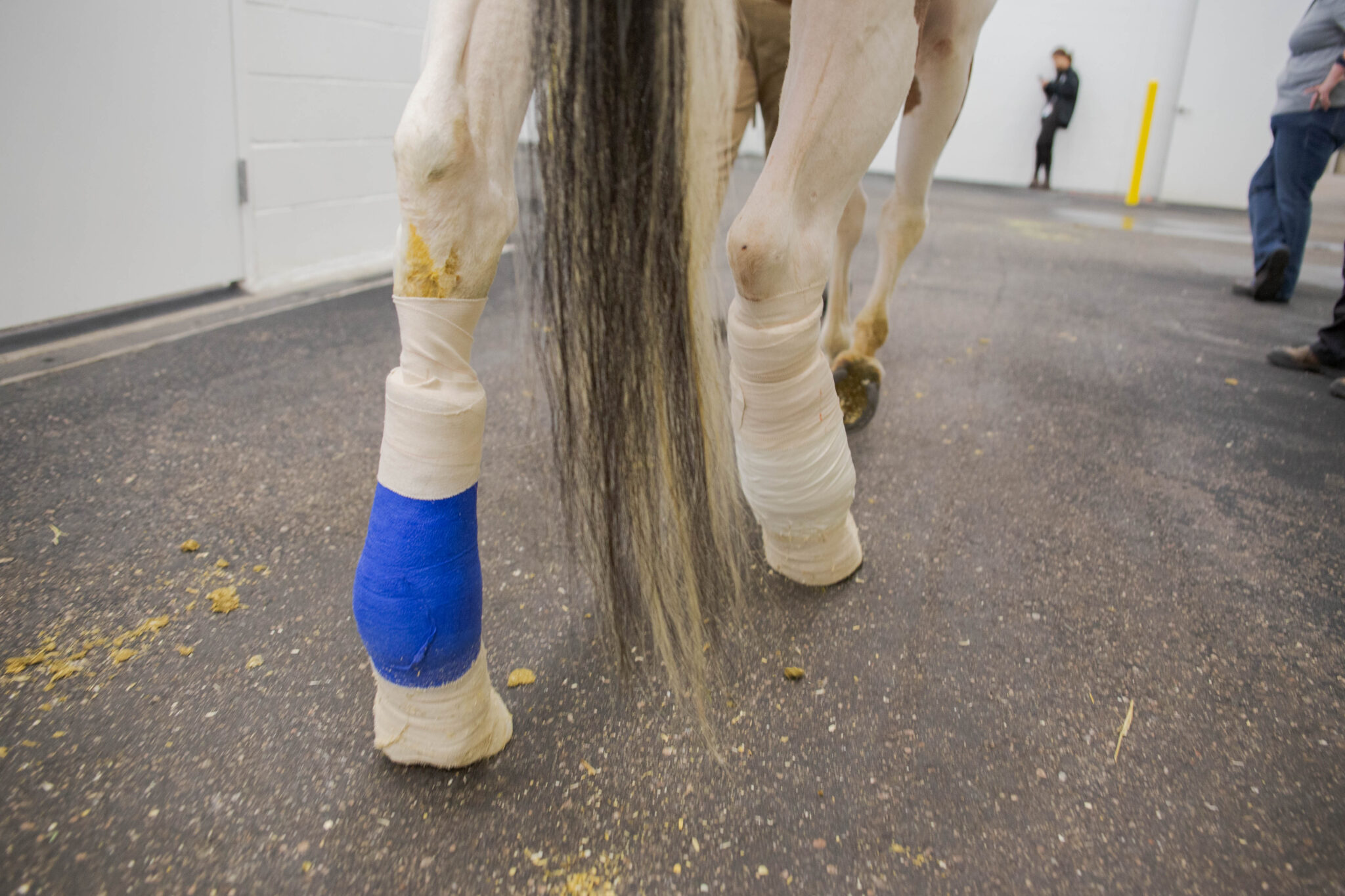
Following a severe fetlock injury sustained during an emergency evacuation related to the Alexander Mountain Fire, Hawke, a seven-year-old horse, received two months of care at CSU’s Johnson Family Equine Hospital.


Link copied!
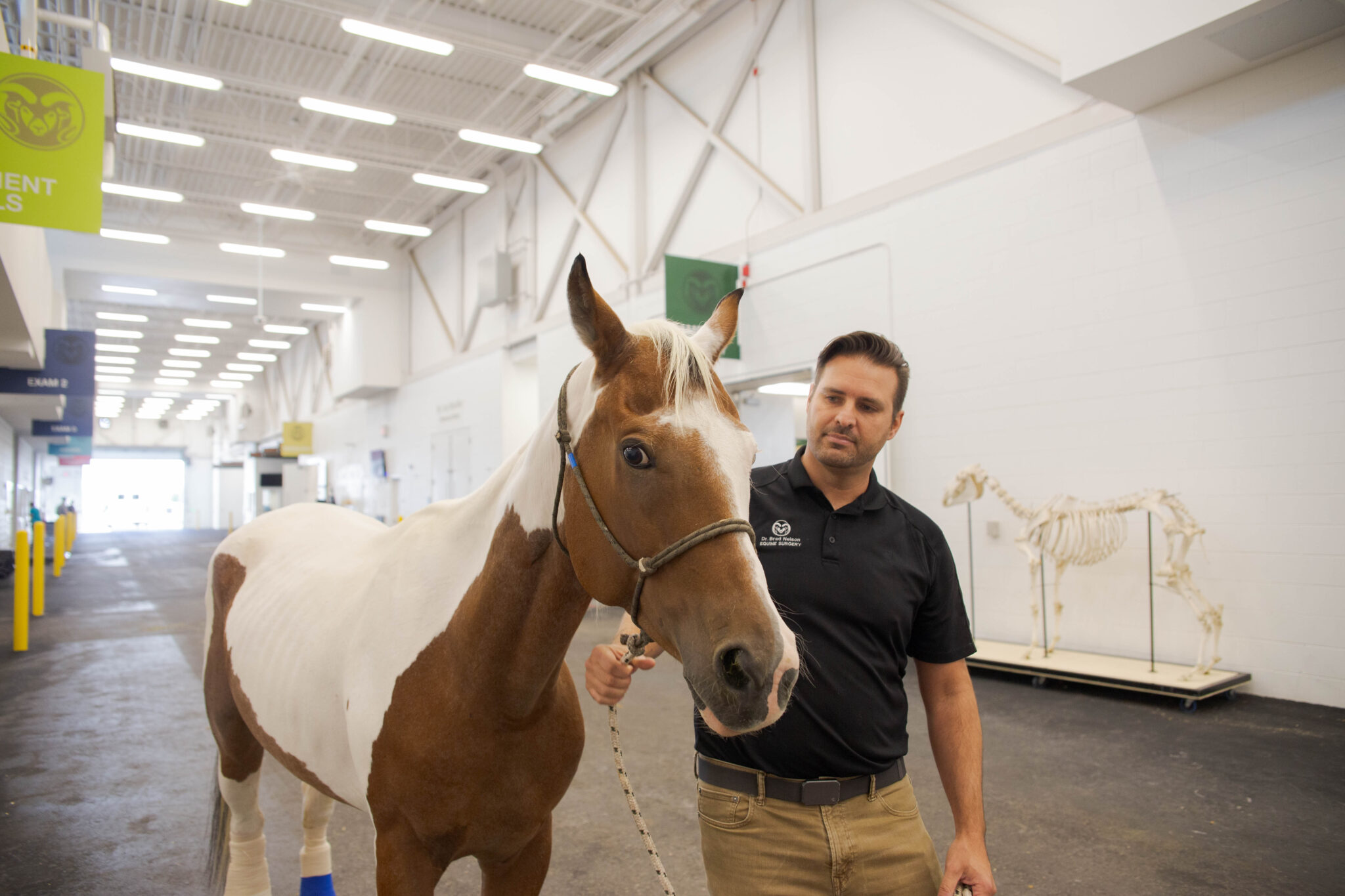
Following a severe fetlock injury sustained during an emergency evacuation related to the Alexander Mountain Fire, Hawke, a seven-year-old horse, has moved to a rehabilitation facility after receiving two months of care at CSU’s Johnson Family Equine Hospital.
The events began July 29 when the Larimer County Emergency Communications Center received a 911 call at 10:38 a.m., reporting smoke rising in the mountains near Sylvan Dale Guest Ranch. On that day, Sylvan Dale evacuated around 90 horses, including Hawke, who unfortunately sustained significant leg injuries after falling through the floor of a trailer during the evacuation.
“Our immediate concerns were with trying to get an assessment of how compromised and impacted his joints were. We were unsure if we could get him stable enough to be transported to the hospital. We were very lucky to have multiple veterinarians on scene to get them splinted well enough to be transported,” said Michael Guthrie, the horse operations foreman at Sylvan Dale Guest Ranch. “From working with CSU in the past, I knew upon arrival our horses would get the best possible care and have the best chance of survival.”
After Hawke’s arrival, he underwent arthroscopic surgery to clean the wounds in his joints and address the intricate injuries that he sustained. Dr. Brad Nelson, assistant professor of equine surgery in the Department of Clinical Sciences, emphasized the innovative and cutting-edge pain management strategies utilized throughout Hawke’s treatment. “Initially, we employed traditional pain relief methods like oral medications, IV treatments, and epidurals; however, Hawke continued to show signs of discomfort,” Nelson explained. “Adding the neurostimulator allowed us to provide longer-lasting pain management without some of the adverse effects typically associated with epidurals, such as constipation,” he added. The neurostimulator device delivers mild electrical pulses to stimulate the nerves and alleviate pain.
“Dr. Nelson and the team at CSU put together a great plan from the start. It was a fluid situation, and they were always incredible at communicating any changes to treatment and the situation as a whole,” Guthrie added. “They were very gracious with their time to explain procedures and steps moving forward with us via phone calls or during visitation.”
The approach to pain management was critical because maintaining weight distribution across all four legs is vital for horses. Nelson highlighted the importance of managing pain effectively to facilitate healing and prevent further complications. “When a horse experiences pain in one leg, it can lead to uneven weight distribution, resulting in complications like laminitis, which can significantly impact their health and recovery,” he noted.
Collaboration among various specialized services within the Johnson Family Equine Hospital was essential to Hawke’s care. “Through teamwork and combined expertise from different specialties, we arrived at the best solutions for Hawke’s complex injuries. Each veterinarian brought unique insights, allowing us to develop comprehensive plans tailored to his needs,” Nelson said. This team approach was complemented by the fourth-year veterinary students and registered veterinary technicians who provided continuous support, enabling the staff to monitor Hawke’s progress closely.
Dr. Kathryn Wotman, medical director of equine and livestock clinical services, highlighted the “whole-horse approach” that guided the treatment plan. This approach involves looking beyond the visible injuries and continuously assessing Hawke’s overall status, adjusting treatments as necessary. “It was crucial for us to focus on his mental and physical well-being hour by hour. This approach ensured uninterrupted patient care regardless of the circumstances,” she said. Integrating the expertise of those in pain management, nutrition, and rehabilitation fostered an environment that prioritized Hawke’s comfort.
The Johnson Family Equine Hospital has access to advanced imaging technology, such as MRI and CT scans, and highly specialized resources like neurosurgical translational research. “Our connections in neurosurgical translational research provided insights and techniques not typically available in veterinary settings. This enables us to offer an exceptional standard of care that directly benefits patients like Hawke,” Nelson said. The ability to utilize state-of-the-art resources contributed significantly to the effectiveness of his treatment.
Hawke has been receiving support from HeartSong Equine Rehabilitation as he continues his healing journey. Nicole Linke, who manages the center, shared her enthusiasm about working with Hawke. “We want to give back to the community and ensure this horse thrives,” she said. Reflecting on the entire experience, the contributions of the broader support system become evident.
“Nicole and her team at HeartSong are doing a phenomenal job with his rehabilitation,” Guthrie said. Individuals from Sylvan Dale have been able to visit Hawke at HeartSong, “he looks happy and healthy there. He’s showing good weight gain and progress thanks to her and her team,” he added.
Setting a new standard in veterinary care
The impact of this experience transcends Hawke’s recovery. Wotman believes that the integrated care model demonstrated in Hawke’s case sets a standard for veterinary practice. “Human hospitals have embraced a holistic approach to patient care, and we are doing the same here,” she explained. “By having specialists from various fields, we can collaboratively provide the best possible outcomes for our patients.”
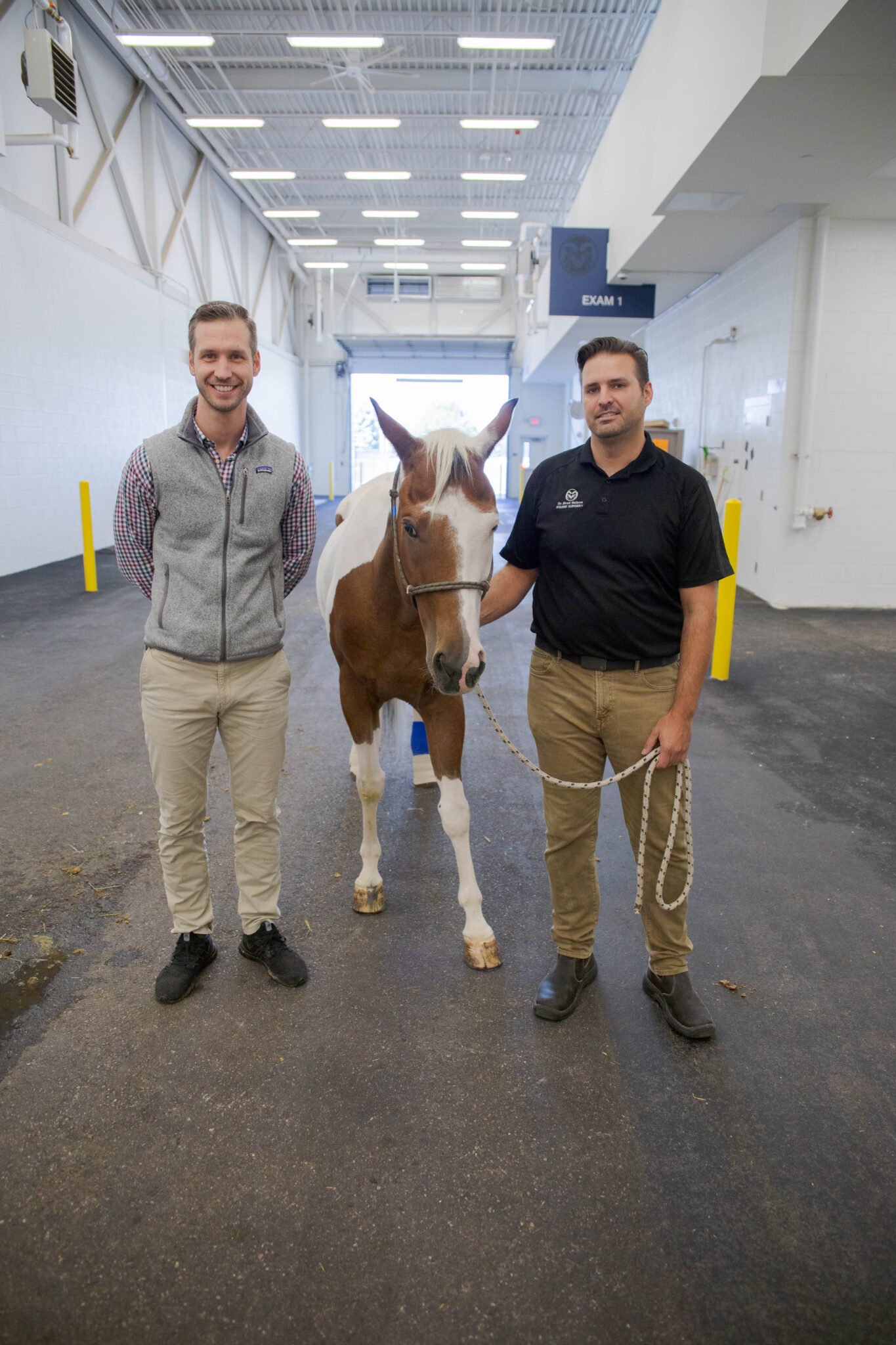
Hawke’s recovery journey is a testament to the remarkable capabilities of the team at the Johnson Family Equine Hospital and the commitment to excellence in equine veterinary care. By combining advanced techniques with a dedicated support network, the hospital can facilitate the healing process for equine patients. This case illustrates the exceptional veterinary care provided and the resilience of the bond between equines and their caretakers.
“We’re all so grateful for everyone that worked and continues to work on his case, the veterinarians and volunteers in the field on the day it happened, the folks that volunteered to transport him, all of the doctors and staff members at CSU, the team at HeartSong, and everyone that loved on him while he was at the hospital and now during his rehabilitation, we are grateful for,” Guthrie said.
The collaborative efforts during Hawke’s care exemplify CSU’s ongoing commitment to pushing the boundaries of veterinary medicine. At the Johnson Family Equine Hospital, the faculty and staff strive to adopt innovative practices that enhance the quality of care provided to patients. Every member of the team, from veterinarians and technicians to students, plays a vital role in ensuring that the highest standard of care is delivered.
Hawke’s case highlights the seamless integration of advanced treatments and compassionate care that defines the mission at Colorado State University. CSU’s dedication to the health and recovery of equine patients remains strong and is prepared to meet the challenges of veterinary medicine head-on.
Veterinary Health System
Colorado State University’s Veterinary Health System is a community of veterinary professionals dedicated to providing exceptional service with passion and purpose. Our experts are animal and public health leaders working together to apply their diverse skills in veterinary care, diagnostics, and education. As a partner of CSU’s top-ranked academic veterinary program, the clinical team works with researchers and educators to advance the future of veterinary medicine.