
How one pet’s donation can help save another’s life
As demand continues to rise, the blood donor program needs more canine and feline donors.


Link copied!
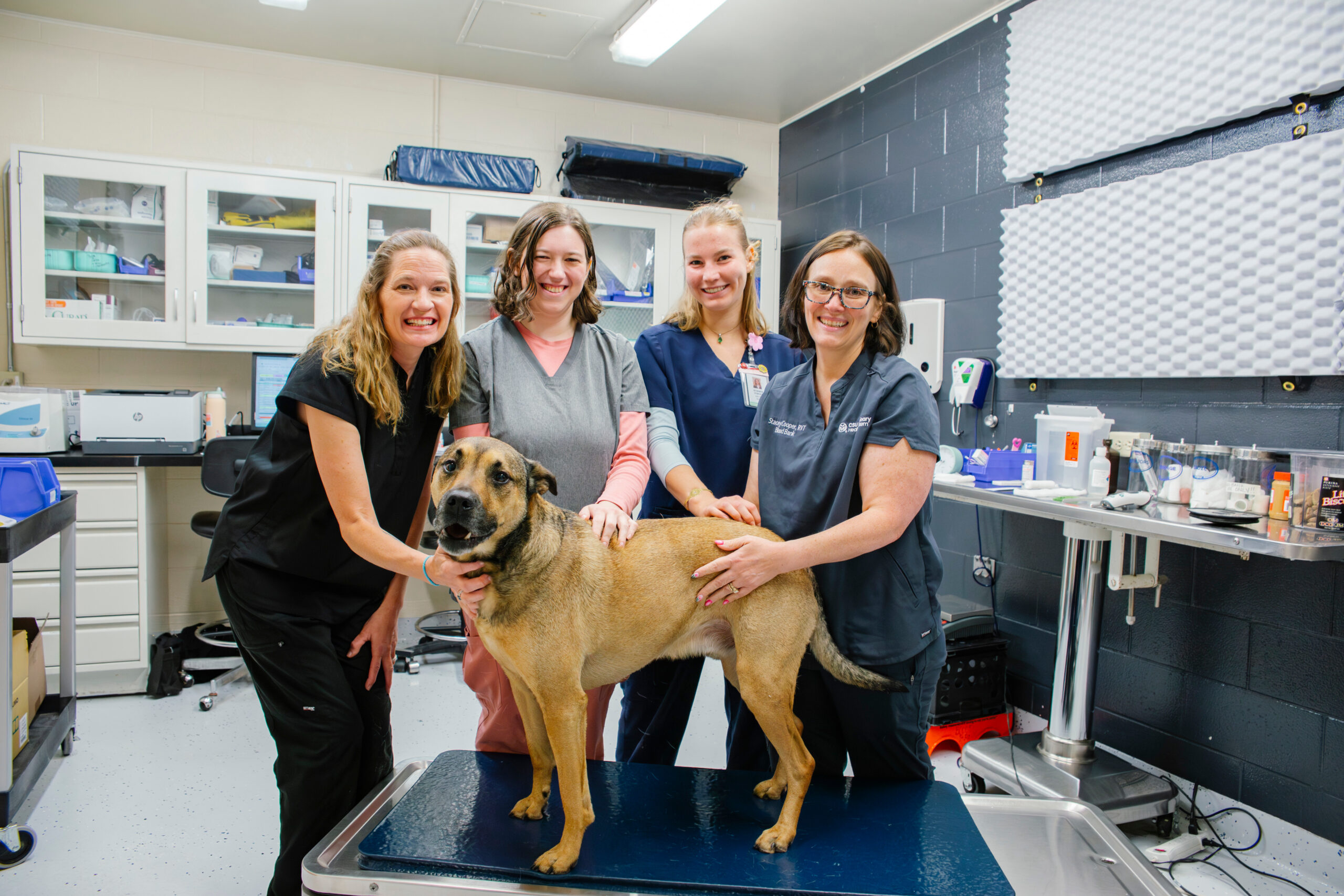
Just like in human hospitals, veterinary medicine relies on blood donations to treat pets with life-threatening injuries and illnesses. The CSU Veterinary Health System Blood Bank administers over 700 canine and feline blood and plasma transfusions each year. With the increase in demand for blood products as pets undergo major surgeries, emergencies, and ongoing clinical trials, more blood donations are needed to support these patients.
The VHS Blood Bank is currently in need of additional canine universal donors and feline blood donors to keep up with its demand.
“On top of the satisfaction of helping save other pets’ lives, the Blood Bank offers complimentary annual physical exams and blood work, echocardiograms every three years, and flea, tick, and heartworm prevention for your pet, along with a large bag of pet food with each donation,” says Blood Bank Program Coordinator Stacey Cooper.
It’s easier than you think to become a donor. Here is a little bit about how the blood donation process works and how your pet can play a part in saving another pet’s life.
Blood types
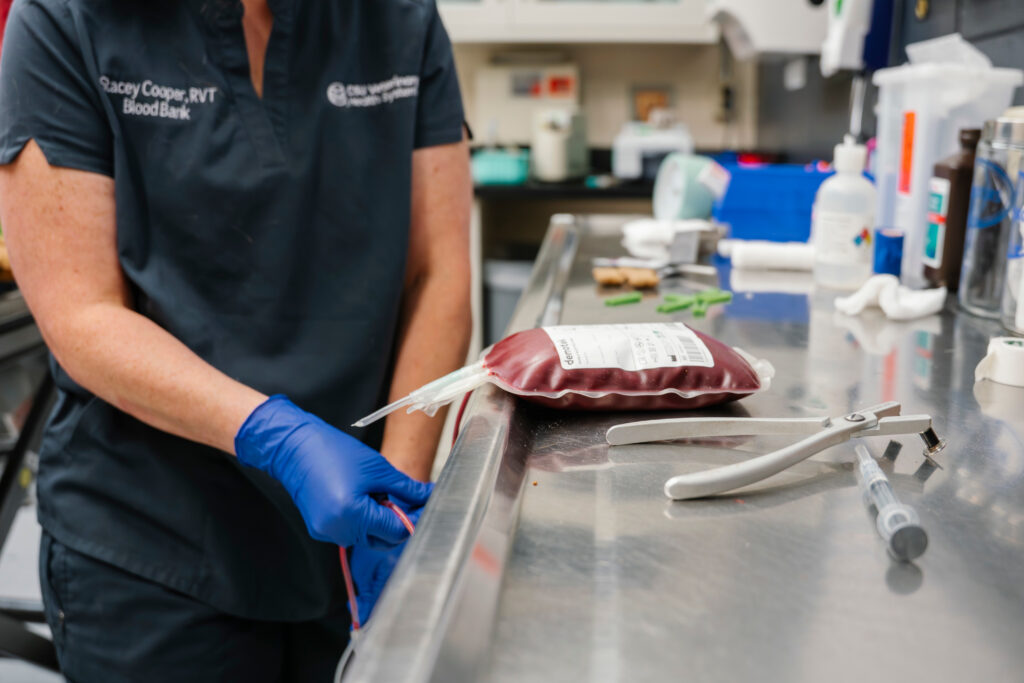
Dogs have more than 12 different blood groups classified by what’s known as the DEA (dog erythrocyte antigen) system. The most common blood type is DEA 1. Dogs can be either DEA 1 positive or DEA 1negative.
- DEA 1 positive dogs can receive blood from other DEA 1 positive dogs or universal negative donors but can only give blood to other DEA 1 positive donors.
- DEA 1 negative donors are considered universal donors. They lack a specific antigen so their blood can be transfused into any other dog without triggering an immune reaction.
Cats have three major blood types: A, B, and AB. There is no universal donor for cats, making blood typing important before any transfusion.
- Blood type A is the most common feline blood type, making up about 96 percent of cats.
- Type B accounts for four percent of cats.
- Type AB is the rarest.
How blood donations work
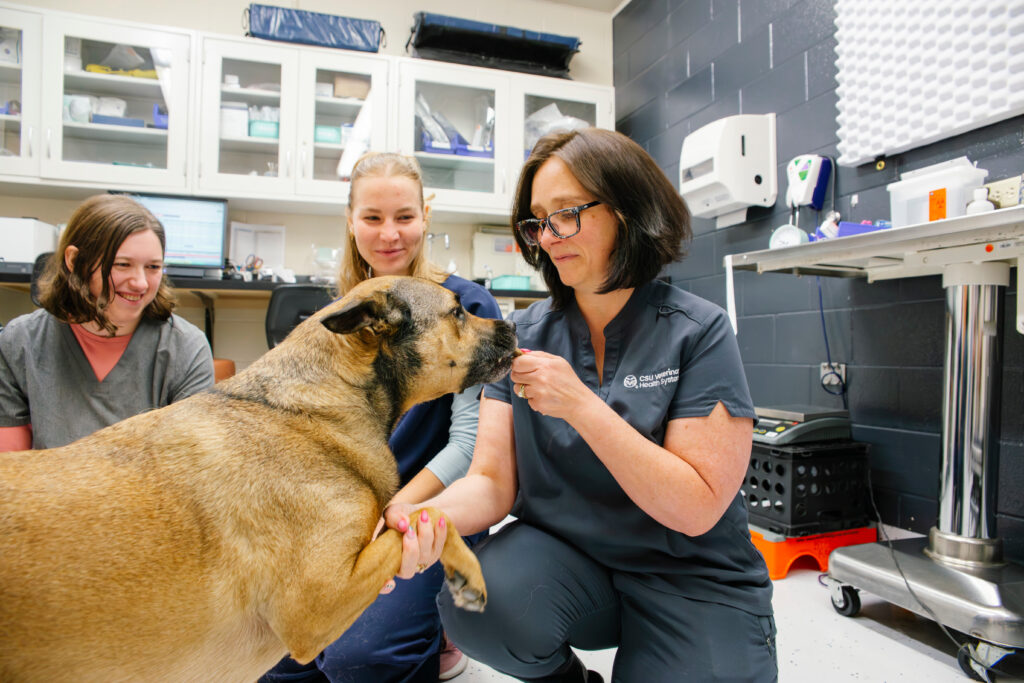
Before a pet is accepted into the program, they undergo a screening process to ensure they are healthy and can safely donate. This typically includes a blood test, a temperament evaluation, and a complete physical exam to confirm that they are in good body condition. Temperament evaluations help predict whether the pet can sit still during the donation.
“We consider a ‘volunteer donor’ a dog that is willing to lay on their side for about five to seven minutes during the donation process,” Cooper says. “We would never want to stress a pet out to the point that they wouldn’t want to come in for their routine checkups with their own veterinarians; therefore, we try to make the visit as positive as possible.”
Once the screening is complete and clear, the pet is scheduled for their first donation. The Blood Bank will happily take all blood types, though canine universal donors and feline donors are in highest demand.
Receiving a badge of honor
On the day of the appointment, owners are welcome to take their pets for a run or long walk before the donation to get some of their wiggles out. A rested dog is easier to work with during the donation.Similar to dogs, cats are typically positioned on their side to collect blood. However, cats are sedated during this process while dogs may either receive a mild oral sedative at home before the visit or no sedative at all depending on how cooperative they are.
Before the donation begins, a small section of their fur is shaved to allow safe access to the vein. This patch of fur is a “badge of honor,” showing how their pet donated blood to help save other animals.
Dogs can safely donate about 450 milliliters of blood (one unit), while cat donors can donate 40-60 milliliters of blood.
The blood donation takes about five to ten minutes. Most dogs and cats return to their normal energy levels within an hour after donating blood. Pet owners can resume activity with their pet during the day but should avoid strenuous activities such as hiking or running for a few days.
How blood is stored
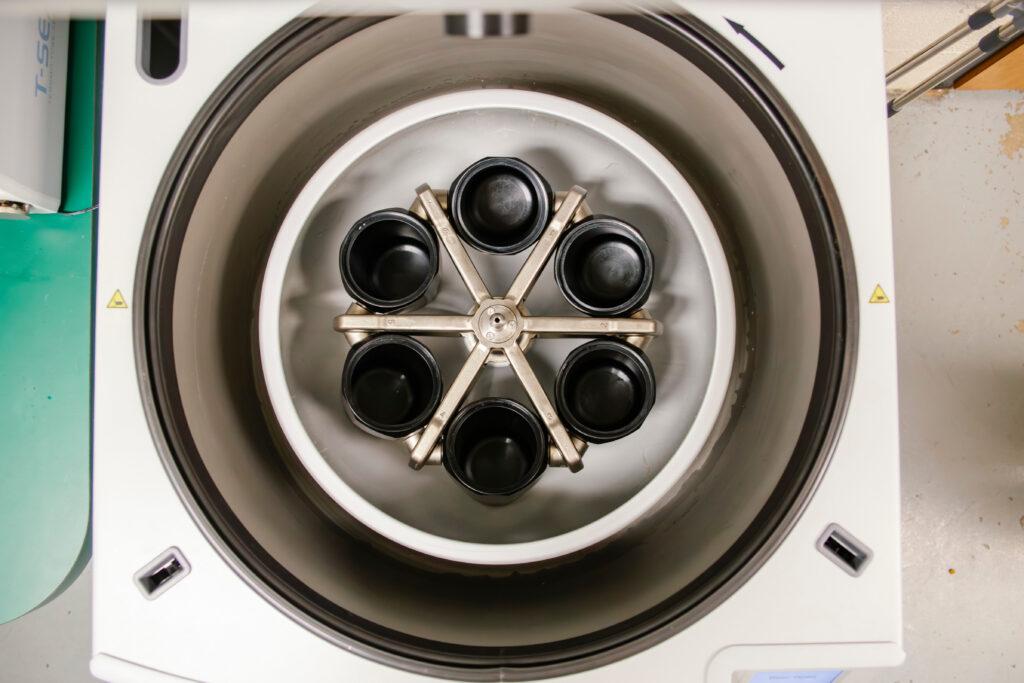
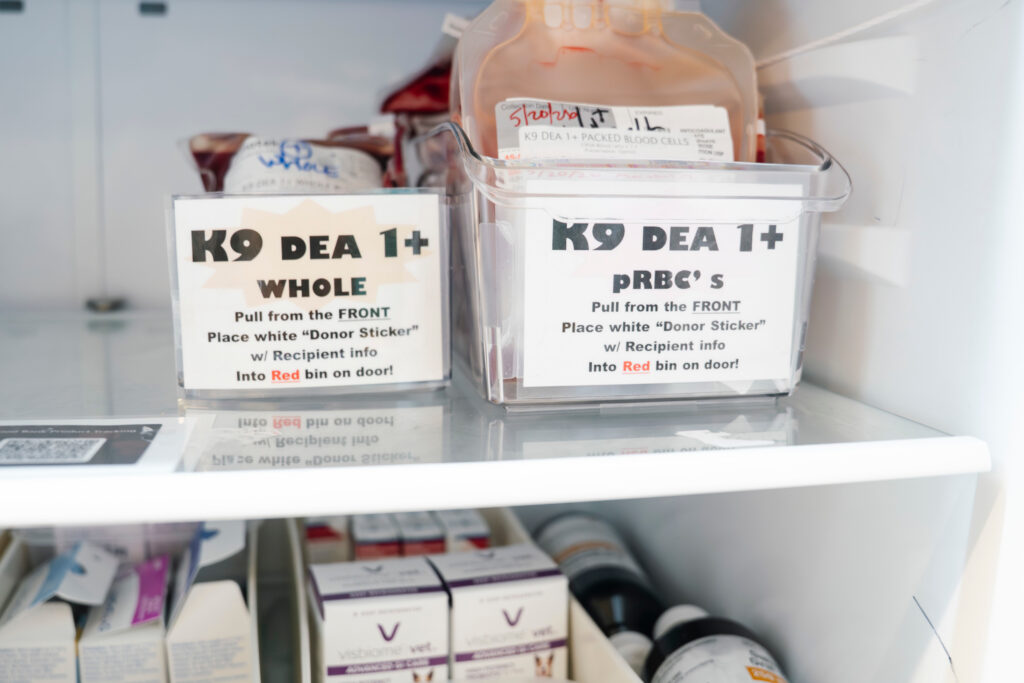
The blood collection bag includes segments that contain small samples of the donor’s blood to allow technicians to crossmatch the blood without having to open the main unit. The blood is placed into a centrifuge where it is spun to separate into components of red blood cells and plasma, which are used for different transfusion needs.
The VHS Blood Bank keeps about 10 to 15 units of canine packed red blood cells and two units of canine whole blood in store at all times. For cats, there are anywhere from four to five units of feline whole blood and one unit of packed red blood cells. Plasma is always stored at a minimum of 30-50 units. The blood has a 30-day shelf life, emphasizing the need for ongoing donors.
“Over the last seven days, we have used more than 20 units of feline and canine blood products (both blood and plasma),” says Cooper. “This has been used for both critical patients requiring stabilization and pets who are currently undergoing a CSU clinical study on immune-mediated hemolytic anemia (IMHA), where their own immune system attacks its red blood cells. The clinical study helps pay for these lifesaving transfusions, saving patients in need.”
Interested in becoming a donor?
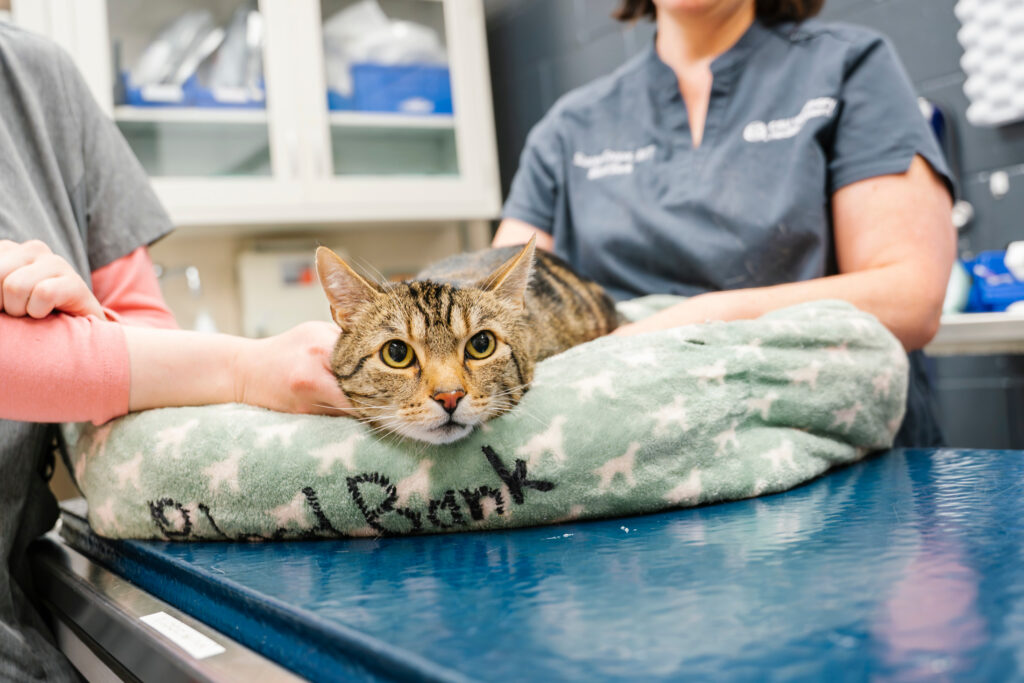
Currently, there are approximately 100 dogs and 30 cats in the blood donor program who are committed to donating blood every couple of months for a minimum of two to three years. As demand continues to rise, the program needs more canine and feline donors to meet this need.
CSU’s Blood Bank service keeps blood products accessible and cost effective for canine and feline patients.
If you are interested in seeing if your pet qualifies to be a donor, email the VHS Blood Bank team. To learn more about the canine and feline donor requirements, visit the Veterinary Health System’s Blood Bank service page .