
Curlicue’s courage: A winding road leads to a healthy foal
Curlicue’s miraculous survival is a testament to the power of preparation, training, and perseverance in equine care.


Link copied!
For horse people, foaling season is a time of hope tinged with uncertainty. In the best case, the baby is born, staggers up on its four spindly legs, and bonds with its mother. But this everyday miracle doesn’t always go as planned.
Splitwater Ranch owner Angella Merriman and breeding manager Brooke Milholland Culwell knew their mare was in trouble with her foal in March of 2024.
“It was an incredibly difficult birth with a very large colt,” Merriman said. “Everything was tangled in there. Every time she had a contraction we would pull the knees to try to straighten the colt out. The foal had punched through the placenta and it was wound around her like a swimming pool ring.”
Luckily, they had attended an equine reproductive management short course at CSU where they learned what to do during a difficult delivery.
Available to horse owners, breeding farm managers, foaling attendants and other interested individuals, the equine reproductive management class enhances understanding of reproductive physiology and breeding management, provides opportunities for hands-on training, enables owners to develop a better working relationship with their regular veterinarian, and promotes health and welfare of the horse.

“Feedback from people that have attended the course indicate that they understand reproductive management of stallions and mares better, are more comfortable with the care of the pregnant mare, and are less stressed about the potential issues associated with foaling and newborn foal care,” said Dr. Pat McCue, professor of equine theriogenology and senior faculty at the Equine Reproduction Laboratory, part of the CSU Veterinary Health System.
It certainly prepared Merriman and Culwell. “The class was instrumental — if we hadn’t been to the class we would not have had the guts to do what we did,” Merriman said. “We owe a huge debt of gratitude to CSU and Dr. McCue and his team for preparing us for such a challenging event.”
“You’re not gonna die on my shift!”
With help from Merriman and Culwell, the mare managed to deliver her foal but it wasn’t breathing.
“After what felt like an eternity, and with one of us each pulling on each leg, the foal finally came out. Our initial elation was immediately dashed when we saw her lifeless body and her blue tongue hanging out. I was trying to save the mare and Brooke was rubbing the foal trying to get her to breathe,” Merriman said.
Using the skills and the confidence they gained from the course, they gave the foal mouth-to-nostril resuscitation and CPR.
“It was like a TV movie. Brooke literally said ‘you’re not gonna die on my shift!’ It kind of felt like war for a while. It was truly a miracle,” Merriman said. “We were hugging, we were crying. “It was like ‘where’s our superwoman suits.’ We felt like superheroes.”
The long-legged Palomino foal had managed the biggest hurdle – birth – but that was just the first of her challenges. They managed to resuscitate her but the mother rejected the foal so they had to find another mare willing to nurse her.
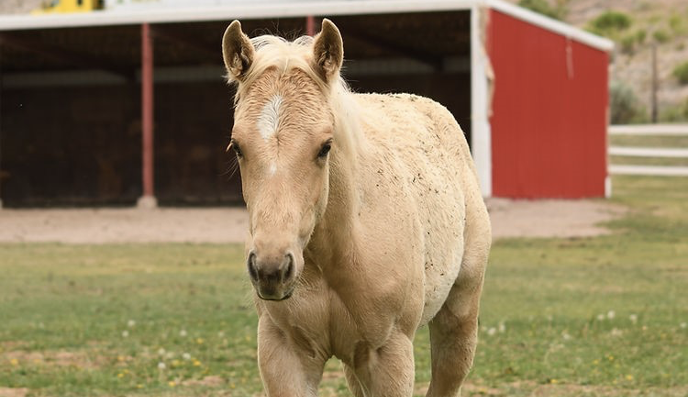
“With an orphan on our hands, we were heartbroken for the little palomino filly who, despite her weakened legs, was determined to get close to her mother,” said Merriman. “But the mare was aggressive, constantly moving away. Meanwhile, another mare, Mizzen, who had foaled just the week before, watched the drama unfold from her stall, her own foal by her side. Mizzen stood, longingly staring, as she sweetly whinnied at the filly.”
Mizzen stepped in and nurtured the orphan foal along with her own biological foal. But within hours, the foal fell seriously ill, likely due to the trauma of the birth, said Merriman. “We raced the new family of three to Roaring Fork Equine, an hour away, through snowy mountain roads. When we arrived, she was practically dead-on-arrival, and Dr. Kari Bevevino immediately began resuscitation efforts.”
The foal was so ill that her ears curled inward, which is partly how she earned her name, “Curlicue” (in addition to her tangled legs). “Dr. Kari’s skilled care and the filly’s incredible fighting spirit pulled her through. After a week of intense treatment, Curlicue began to show signs of improvement and the family got to move back to the ranch,” Merriman said.
“One year later, Curlicue is beautiful, her legs and ears have normalized, and she’s become the official mascot of Splitwater Ranch,” Merriman said. “Curlicue would not be here today if it weren’t for CSU’s thorough teaching and hands-on guidance. We will forever remember our time at CSU’s veterinary school whenever we look at Curlicue, our miraculous filly.”
Keys to a Successful Foaling Season
- Be prepared well in advance
- All ranch/farm personnel involved in management of pregnant should be trained in foaling procedures and newborn foal care
- Farm personnel should meet with their veterinarian to review foaling and foal care protocols
- Foaling equipment and supplies should be readily available
- An emergency plan should be discussed at the beginning of the foaling season in the unanticipated event of a dystocia, retained placenta, compromised foal or other issue
“That little thing fought to stay in this world and we fought so hard to save her. She represents the beautiful melding of science, faith, hope, perseverance, and instinct.”
Veterinary Health System
Colorado State University’s Veterinary Health System is a community of veterinary professionals dedicated to providing exceptional service with passion and purpose. Our experts are animal and public health leaders working together to apply their diverse skills in veterinary care, diagnostics, and education. As a partner of CSU’s top-ranked academic veterinary program, the clinical team works with researchers and educators to advance the future of veterinary medicine.