
Completing the cycle: Equine rehab service provides customized recovery for injured horses
CSU’s Equine Sports Medicine and Rehabilitation provides personalized recovery for injured horses using advanced treatments and a dedicated team.


Link copied!
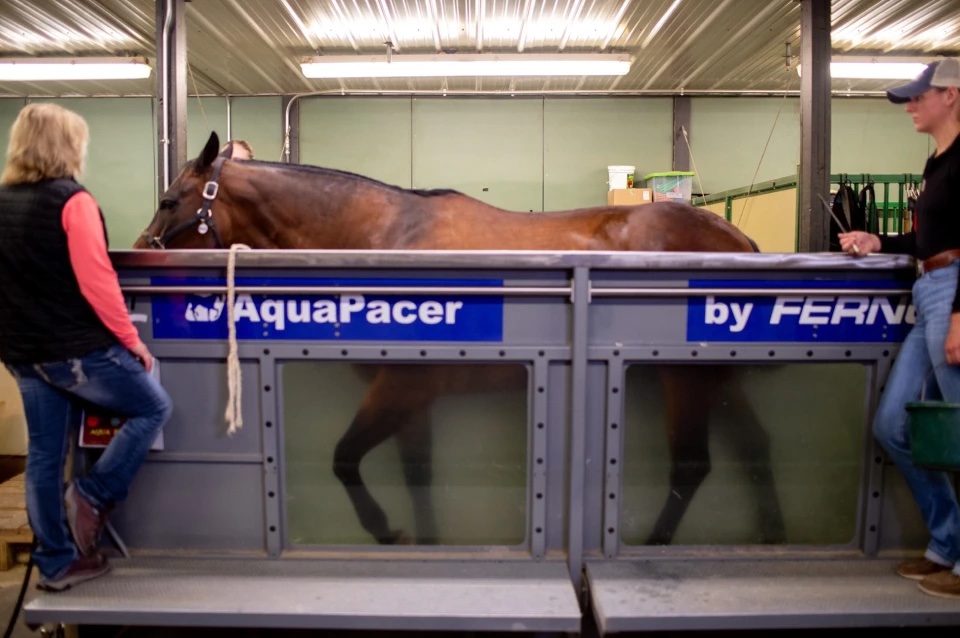
It’s 10 a.m. and Dr. Melissa King is overseeing an underwater treadmill treatment for Dallas, an equine patient in the CSU Orthopaedic Research Center. While she watches the horse run through its paces in the water, she thinks about the teamwork that makes this kind of individual attention possible.
“It takes a village for the extensive nature at which we have horses undergoing rehab here,” King said.
The rehab “village” consists of head technician Anne Shirron, student hourlies Madison Zinni, Samantha Moore, Samantha Humphries, Grace Falkner, Kylie Yancey, and Halley Moak, administrative support coordinator Michelle Alexander, and sports medicine residents Mikala Vig, Keana McCosh, Giuliana Gabassi and Tabitha Sternberg-Allen.
“It’s the day-to-day work that these guys do – they are invested in the horses’ welfare just as much as the owner and just as much as I am,” King said. “They work really hard and tirelessly day in and day out to get these horses back to performance.”
King and her team work with the horses five to six times a day on modality applications, core exercises, range of motion and stretches. In addition to the underwater treadmill, treatments can include therapies like proprioceptive balance pads, laser therapy and a current study of the use of wearable technologies to detect and prevent injury.
CSU’s Equine Sports Medicine and Rehabilitation service is unique due it its proximity to the university’s veterinary teaching hospital and its equine specialists.
“Having an in-house rehab center means we can complete the cycle,” King said. “Your horse comes in for a lameness exam, it gets worked up, it may need surgery. After surgery it can come here for rehab,” King said.
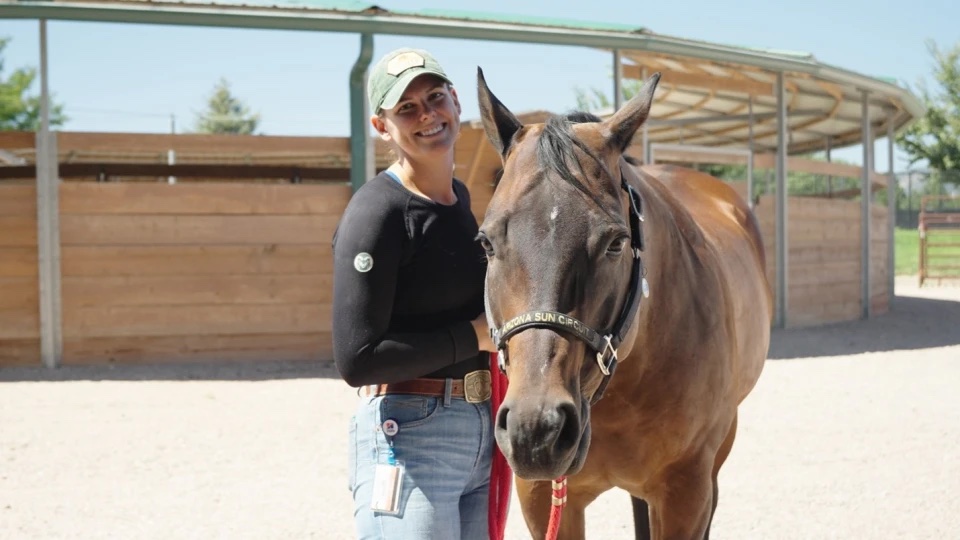
They can host up to five horses, which could be considered small compared to other facilities, but manager Anne Shiron explains this, along with their expertise, allows an in-depth and unique approach for every horse.
Michelle Alexander, who often is the first contact for clients, said that because King is a leader in rehab, she gets calls from all over the globe. She said that clients are often surprised by the sheer number of modalities they offer.
“I think a lot of people try to equate it with human rehab and we have so much at our disposal and then with Dr. King running it, and the absolute brilliance that she brings,” Alexander said.
And where there are no treatments available for her patients, Shiron said she’s seen King create new ones utilizing creative resources. She says this speaks to the amount of care King has for her patients, “she loves them to the point of invention.”
Some of the horses they see are in competitive disciplines such as dressage, hunters and jumpers, cutting, and team pinning.
King says that one of the most rewarding parts of her job is getting updates from clients after their horses have completed the program.
Sometimes clients will send videos or pictures of their horses with their win ribbons, which demonstrates “we took a horse with a significant level of injury and now they are back or even at a higher level of performance,” King explained.
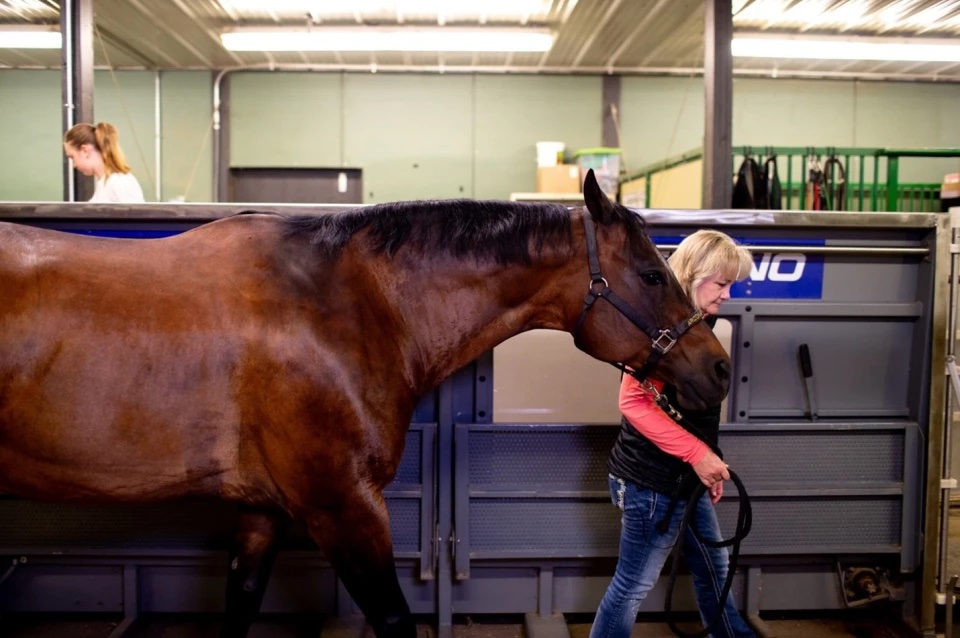
King enjoys watching residents have those “aha” moments in the field, and she appreciates the camaraderie they can establish within their small team.
Because their patients can be there for extensive periods of time, the team says it’s not uncommon to get attached.
“They are my therapy for sure,” King said. “They are very peaceful, gentle, creatures, and so you kind of feed of their energy.”
“There are times when I’ll be in the back stall, and I’ll be having a conversation. It’s one side but it makes me feel better. And my residents or my technician will walk in and be like ‘are you talking to me?’ and I’ll be like ‘no I’m actually therapeutically releasing to the horse,’” King said.
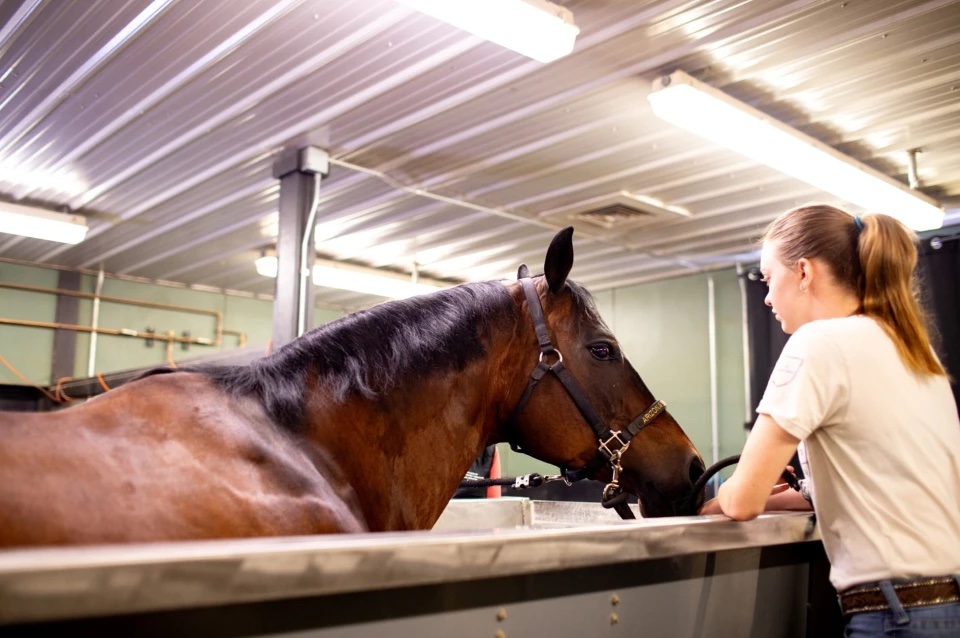
“I get to be the fun aunt because I don’t make them work,” Alexander laughs. “I just go out there and give them scratches and love and give them an apple or a cookie.”
Head technician Shiron says she learns patience from her patients: “I feel like they (the horses) can teach you so much patience if you let them. And they also teach you how to slow down and really appreciate what you’re doing. Because I feel like we’re so go-go-go with everything we do. And sometimes you know, the slower you go, the faster you end up going.”
Veterinary Health System
Colorado State University’s Veterinary Health System is a community of veterinary professionals dedicated to providing exceptional service with passion and purpose. Our experts are animal and public health leaders working together to apply their diverse skills in veterinary care, diagnostics, and education. As a partner of CSU’s top-ranked academic veterinary program, the clinical team works with researchers and educators to advance the future of veterinary medicine.