
The heart of the hospital: Patti Clark retires after nearly 40 years as veterinary technician
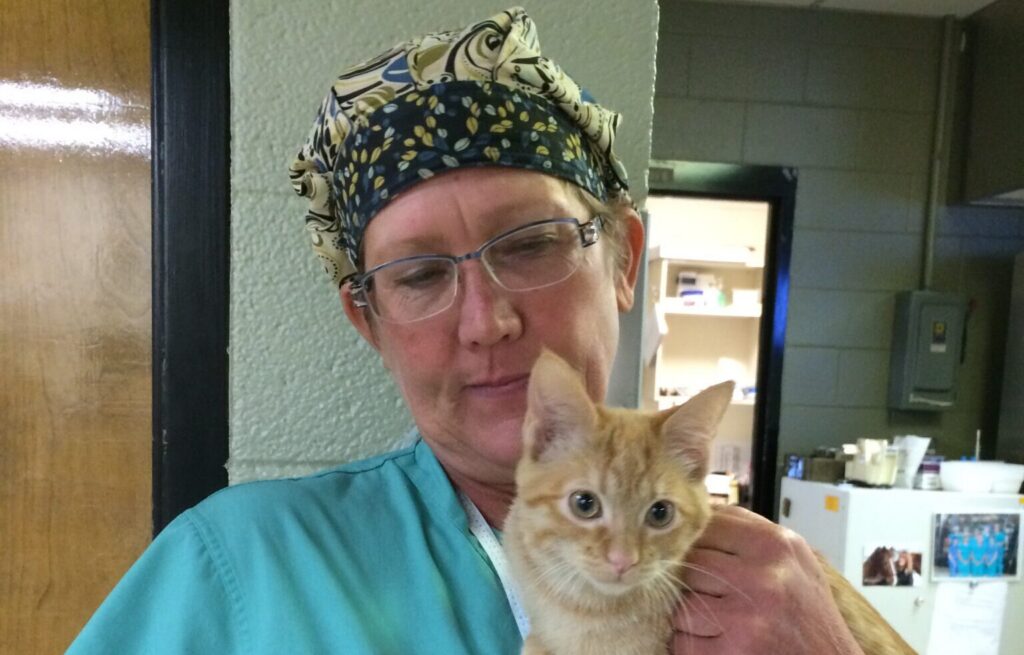
Operating room manager Patti Clark, who rarely sits still, is retiring from the CSU Veterinary Teaching Hospital after nearly four decades of dedicated service.


Link copied!
The operating rooms in the CSU Veterinary Teaching Hospital sit at the very center of the building, and at the center of that maze sits Operating Room Manager Patti Clark. Well, “sits” would be inaccurate. She rarely does that.
Clark, a CSU veterinary technician for 38 years, is the beating heart of the hospital, pumping her life-force into every corner of the building. As she retires at the end of March, she looks back on a career that spans a golden era of CSU veterinary medicine.
Raised on a farm near Lake McConaughy in Nebraska, Clark traded tending cattle and raising barn cats for training at the Bel-Rea Institute of Animal Technology from 1982-84. An externship experience at CSU sparked her desire to work in academic veterinary medicine. “It was exciting, it just kind of grabbed me and I essentially made a career from it,” Clark said.
In 1988, she came to work as a technician with Dr. Ed Gillette, a pioneer in radiation oncology. “I learned an awful lot about being a technician, a very skilled technician,” she said. That led to a post in small animal surgery with supervisor Paddy Shannon. In the 1990s Clark became the operating room supervisor, where she has remained, building an intricate network that resembles the body’s circulatory system.
The hospital director at that time was Dr. Dennis McCurnin, who went on to write “McCurnin’s Clinical Textbook for Veterinary Technicians.” “He was a huge advocate for promoting veterinary technicians, he had the vision for what a true asset that we could be to a practice.” That vision empowered Clark to become a driving force for elevating the role of the veterinary technician within the hospital and the community.
When asked to reflect on her career, Clark’s focus is not on herself, but on the mentors and colleagues she met along the way.
“After Dennis, there was Wendell Nelson, who we all called ‘Tink.’ I have many good memories of him. And then Marty Fettman, first space cowboy (first veterinarian in space, 1993), that was really cool. Dean Hendrickson was always so down-to-earth, one of the realest, nicest guys I’ve ever known. I feel he’s always been my mentor to some degree. Then of course all the equine doctors – Wayne McIlwraith, Ted Stashak, Gayle Trotter and, of course, Simon Turner.”
She learned to be assertive early on. “Don Piermattei was my first chief of surgery, and I was young and I didn’t know a whole lot, but I finally got my nerve up one day to say I could really use a computer back here and at least one more piece of power equipment. So he got them for me. Beyond Don, it was Howard Seim then Eric Monnet and then Dan Smeak, and now Eric Monnet again. So those were my chiefs. Yeah, when I first started here, it was truly a man’s world.”
Back then, the ratio of men to women in vet med was about 80:20, a number that has flipped in the last decade.
“Over nearly four decades, we’ve made progress. Now we have people like Khursheed Mama (clinical sciences department head), Sheila McMullan (Veterinary Health System associate dean), Melinda Frye (D.V.M. Program associate dean), and Sue VandeWoude (college dean),” Clark said.
While her early mentors were all men, she was at the same time a mentor to students, technicians, and residents.
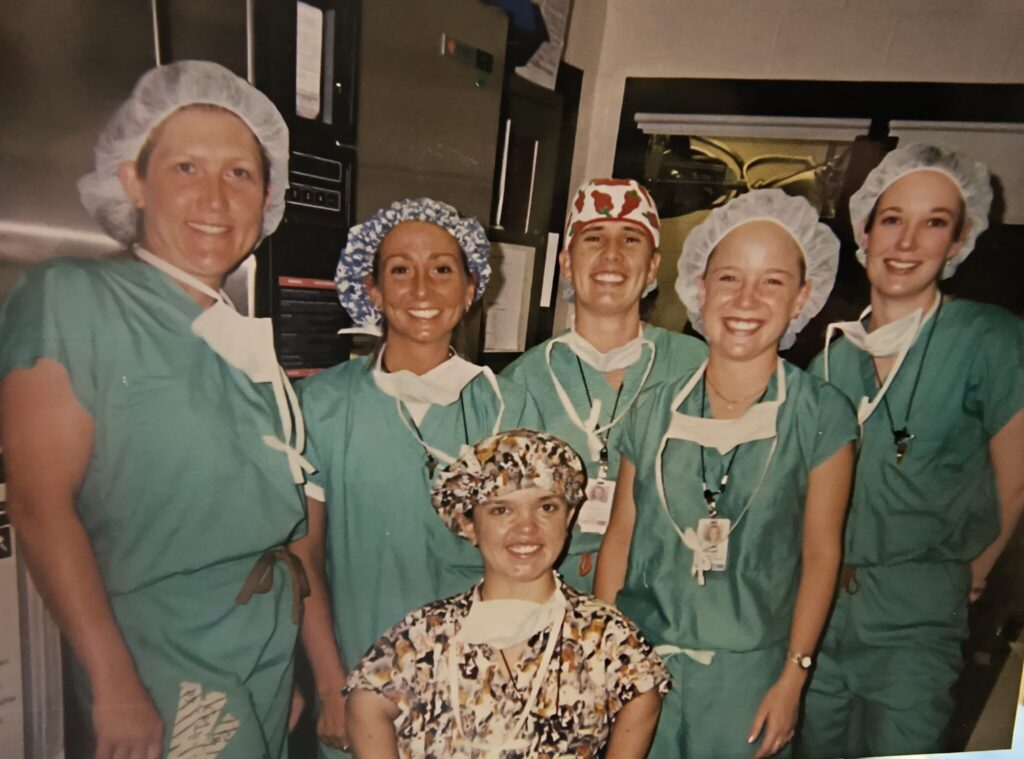
“You get really close to them and then it’s very melancholy when they leave, but sometimes they come back and become your boss. So I always warn people to be nice because you never know,” she says, laughing. “I mean, Eric Monnet came here as an intern and then he was my chief of surgery. He and I started here when we were both pretty young and we kind of grew up together here.”
Another memorable resident was Dr. Tim Hackett, who went on to be interim dean for the Veterinary Health System and is now chair of the Department of Clinical Sciences at Cornell University College of Veterinary Medicine. “Patti was always such a great resource and partner for me as a clinician and director. We navigated some interesting, challenging times. She was always there for me, the hospital, and the staff. I wish her all the best in her retirement with no concerns for the CSU VTH knowing the great people she’s trained up to take over.”
One of those people is Alysha Ducharme, who has worked with Clark for nearly 20 years, and is now the veterinary technician manager for the hospital. “Patti is a force. She has a wealth of knowledge and you cannot help but feel her passion for the for the VTH. It’s infectious – she makes everyone else love it too. She truly embodies the love of being a tech, working in academia, and has just a complete passion for this place.”
Passion at the heart of the work
Sometimes that passion is hard to find, after a tough day in the operating room.
“The surgical area is a hub where people naturally migrate to. People come there when they’re feeling sad, they’re blue or they’re happy, or when they need to cry on somebody’s shoulder,” Clark said.
Ducharme knows that scene well. “It can be hard and there’s a lot of compassion fatigue and burnout. We all have hard days, but at the end I thank Patti for teaching me to always find that passion again because she always has it.”
Clark learned how important that is from Dr. Steven Withrow, the pioneering veterinary oncologist and founding director of the CSU Flint Animal Cancer Center.
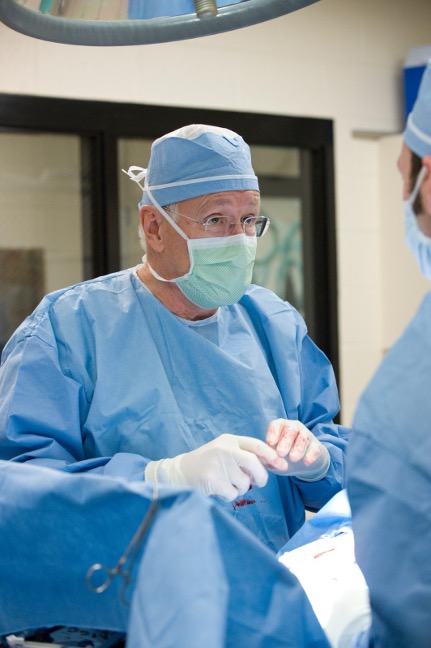
“I learned so much from him. I hope he knows that. He could walk in and tear us all up with his sense of humor, and everybody’s mood would just be lifted. He left us all with a simple sense of purpose about what you did that day. I remember him saying to me one day ‘Patti, I just can’t sweat the small stuff. I’m on a mission. I’m on a mission to cure cancer.’ And it just made me realize that, you know, everybody can have a mission. It gives me chills. I could start crying.”
Clark and Withrow worked together when he was developing the limb-sparing surgical technique to treat bone cancer, now a standard of care in human childhood cases.
“Many surgical innovations were the result of Patti’s collaboration,” said Withrow. “In 1988, a force of nature joined the VTH. That person was Patti Clark. Patti and her team helped train thousands of technicians, students, trainees, and faculty. Her stubborn tenacity for excellence saved many animal lives. Patti will leave a legacy of compassion and professionalism for many years to come. I have been honored to work with her side by side for many years.”
“All those hearts”
Another area Clark pioneered is veterinary cardiovascular surgical nursing, learning the delicate art of heart surgery, and passing that knowledge on to generations of veterinary technicians.
“Both of my parents died of heart disease and that’s the reason why I was pretty passionate about the cardiovascular stuff,” she said. “We were doing all these heart procedures with Chris Orton and Eric Monnet and we taught ourselves how to do a really higher-level skill that they sure didn’t teach us in tech school. I ended up teaching cardiovascular nursing to every technician that has done it under this roof. Every last one of them. All those hearts.”
Interconnected systems
Clark has a talent for making connections among the many units within the Veterinary Health System. She created the hospital’s emergency on-call service and the PRN (from the Latin “pro re nata,” or “as needed”) department.
“It doesn’t end in the OR,” Ducharme said. “She wants to share what she loves, and she wants to inspire that in other technicians. If the OR is doing something cool, she’ll walk down the hallway to central supply and say ‘I’m gonna pull these people to come watch this C-section. Come check this out.’ She just wants to share it with everyone and make them feel a part of this team that we all are.”
The emergency on-call system grew out of a need for after-hours coverage. “We had one beeper, we got paid $3 an hour to carry a beeper, and then we got called back for surgery,” Clark said. “Howard Seim and I figured out, let’s do a student-based, emergency service and hire a senior student that needs to make a little money. The first year, it was kind of a disaster, but after that it smoothed out and we continued to evolve and perfect it.”
It gave the students a chance to form relationships with the surgical faculty and build on their skills. “The camaraderie in the middle of the night was fantastic. You felt like you were on a mission. It was a different feel than during the day.”
She also helped create the PRN department to bring in technicians to fill in so staff could take time off, much like substitute teachers. The system provided much-needed support during COVID, when so many people had to stay home with their kids.
“Gail Gumminger (hospital administrator at the time) said you’re going to start a PRN department, and I said ‘alrighty Gail’ and started hiring my first set of PRNs. I did that while working a 40-hour week on the surgical floor for about 11 or 12 years before handing it off to Ashley Konig. Now they provide service to 17 or 18 different departments in the hospital. It took people a little time to warm up to it, but we proved our worth and now people feel like they can take a vacation because they can get a PRN. We had to open some doors and knock down some walls on that. I’m really proud of what that’s evolved into today.”
So many animals
Tens of thousands of animals have passed through the operating rooms during Clark’s tenure, and a few stand out.
“One of my best memories – I hadn’t been here very long – was a Cesarian section with a very large dog, a Neapolitan mastiff. When she came in they thought she had eight puppies. Well, she didn’t. She had 16! That was the funnest thing I’ve ever done in my entire life because then you’re taking care of each puppy and they all lived.”
Clark is not a fan of snakes, but they certainly make an impression. “I don’t like snakes. I grew up battling rattlers, but I remember the 22-foot python that took eight of us to carry into the operating room.”
And then there was the foreign body. “This snake came in and we took a whole beach towel out of it. Not just a just a beach towel, but a big beach towel. I was like, whoa.”
The hospital has been a veritable Noah’s Ark at times.
“We had parrots coming down the hallway jabbering away. Lions, tigers and bears, penguins, kangaroos hopping down the hallway. A Komodo dragon. One of everything.”
Perhaps from her days tending to barn kittens as a child, Clark has a fondness for felines. “I love when the big cats come in. I love their epic tails and their big ole paws. That always just made my day.”
A legacy of trust
From animal lives saved to humans inspired, Clark has kept her finger on the pulse of the hospital. As she lets go of that responsibility, she trusts in the team she has built, a system that extends from the heart of the OR, throughout the hospital, and around the world through the lifesaving work of the people she met along the way.
“She has contributed to so many people’s journey in this industry. She’s been a part of their story,” Ducharme said. “She’ll always be a part of this place. She has been so supportive in letting me take the steps to grow in my career and I am forever grateful to her.”
After Clark retires at the end of this month, she plans to “be a grandma” to her two granddaughters, and hang out with her two adult kids, daughter Mackenna, an artist, and son Shelby, a pilot. She’s going to garden and pick up fishing again back home on Lake McConaughy. She’s looking forward to “getting up and chasing the sun: we watch the sun rise and set. And happy hour at some place that involves martinis.”
She plans to stay away from the hospital for a while at least.
“I think it’s important that I’m going to hand those reins off to them and say, ‘I have faith in you guys,’” Clark said. “It feels good to know that you’ve got such great people stepping up, like you’re giving them space to grow. I’m very proud of them.”
Veterinary Health System
Colorado State University’s Veterinary Health System is a community of veterinary professionals dedicated to providing exceptional service with passion and purpose. Our experts are animal and public health leaders working together to apply their diverse skills in veterinary care, diagnostics, and education. As a partner of CSU’s top-ranked academic veterinary program, the clinical team works with researchers and educators to advance the future of veterinary medicine.