
Spotlight on Equine Dentistry and Oral Surgery
Equine Dentistry and Oral Surgery at CSU’s Johnson Family Equine Hospital specializes in advanced dental procedures, including complex extractions under standing sedation.


Link copied!
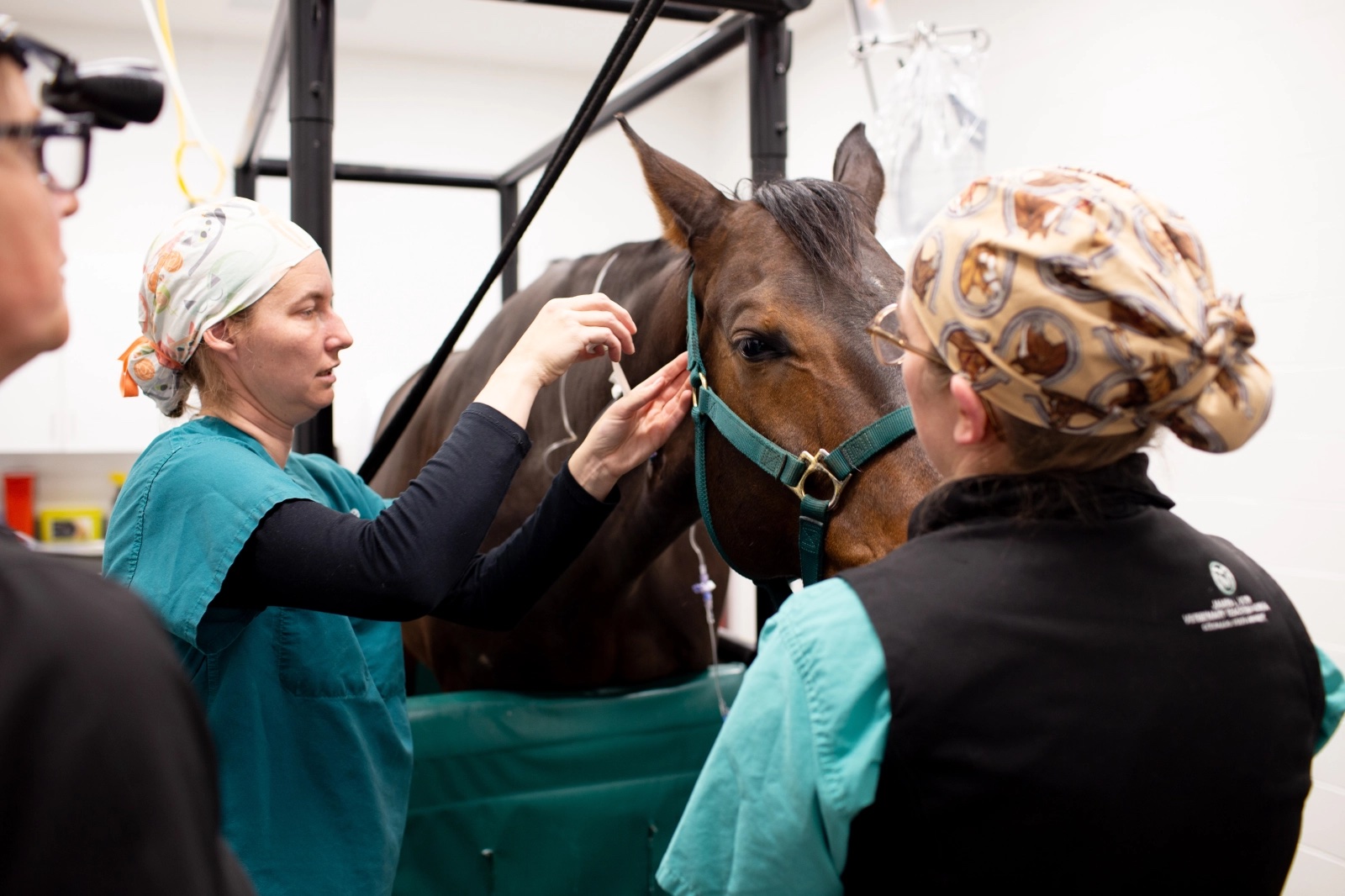
Equine Dentistry and Oral Surgery is one of the many specialties at the Johnson Family Equine Hospital. Associate Professor Dr. Jennifer Rawlinson performs equine dental procedures one week out of every month.
Today, a 9-year-old Warmblood was administered standing sedation for a tooth extraction. Standing sedation is used for most equine dental procedures, in contrast to small animal dentistry, where every patient undergoes general anesthesia.
Standing sedation can add unpredictability to dental procedures because the horse is still awake. Because of this, the anesthesia team closely monitors the patient, which allows the dentistry team to focus on the teeth. “We have a really tight partnership,” Rawlinson said.
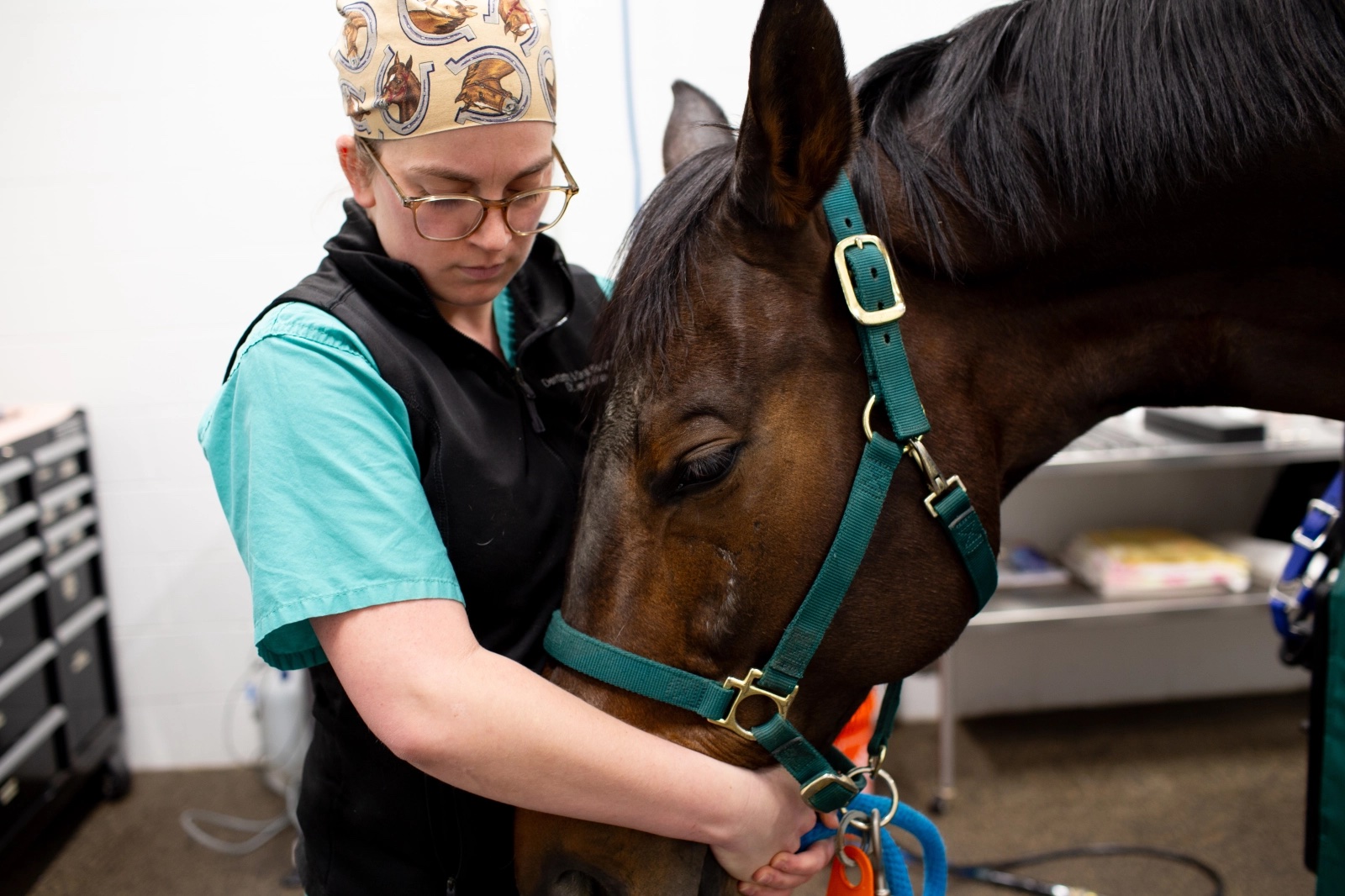
A padded stock hugs the patient’s large frame while anesthesia Assistant Professor Dr. Rachel Hector adjusts the intravenous sedation drugs. Hector rescues horses and mini horses on her farm, where the equine dentistry service makes regular trips for oral exams and dental work.
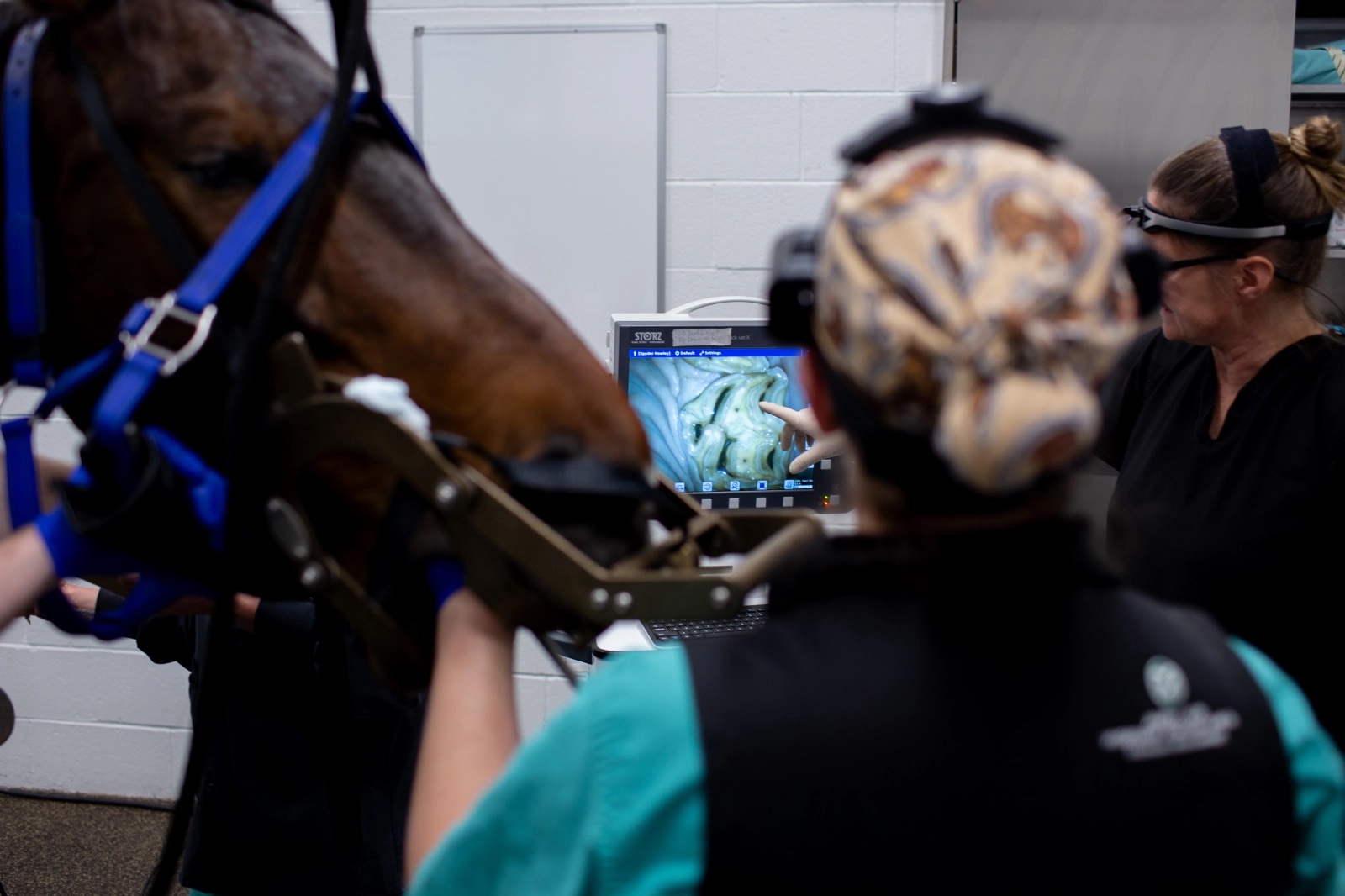
Once the patient is sedated, resident Dr. Jen Kelley administers a regional nerve block to numb the extraction site. She then cleans the breakfast out from the patient’s teeth so they can perform an oral exam with an endoscope and create the treatment plan.
This month, Kelley completes her 4-year dual track residency which means she is trained in both equine and small animal dentistry. CSU is just one of two universities in the country offering dual-track residencies.
Kelley accepted a dentistry faculty position at the University of Minnesota. “We are all so proud of Dr. Kelley as she moves on to start her own dental programs in Minnesota,” Rawlinson said.
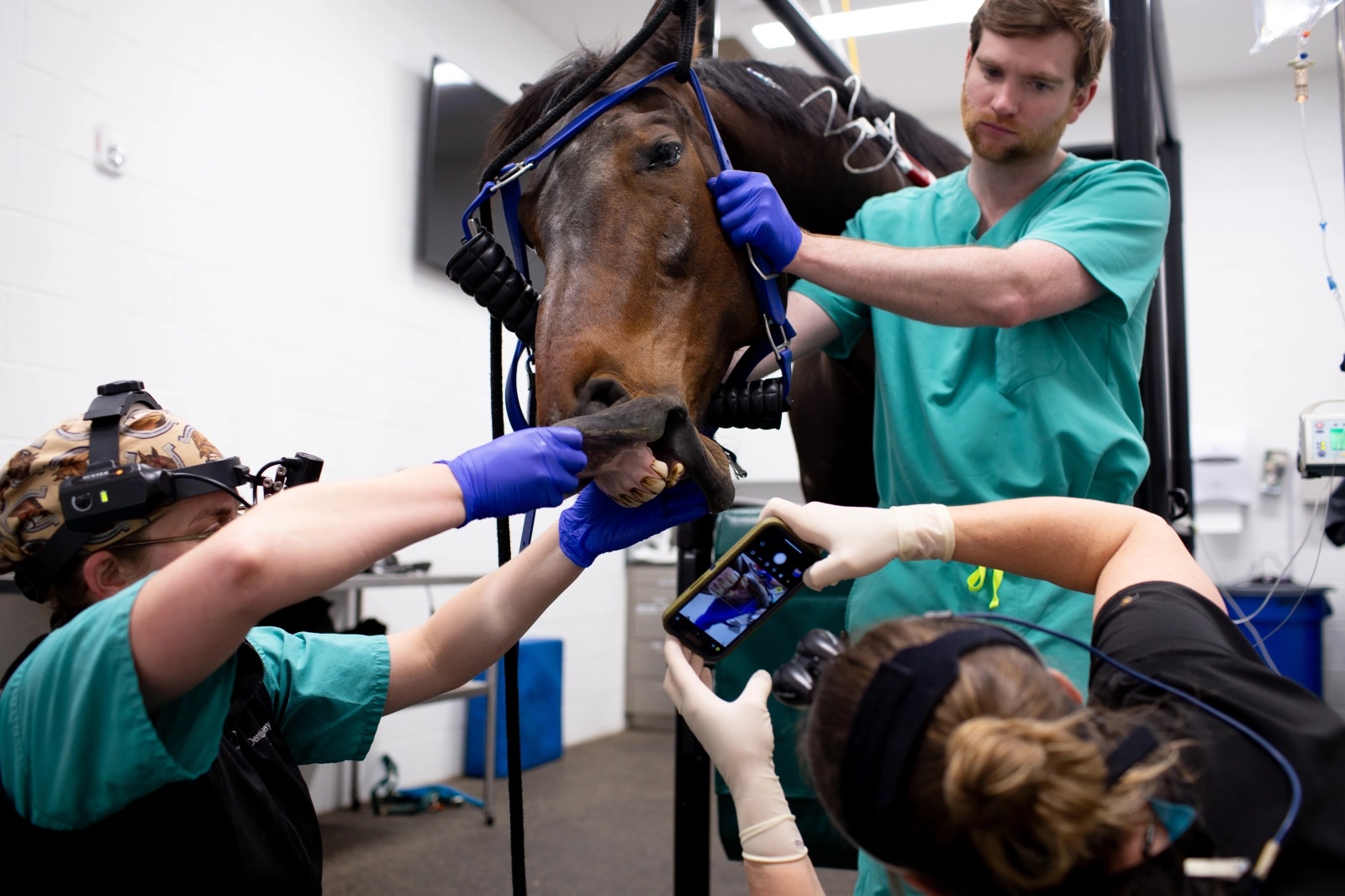
Today’s procedure is one of those challenging cases. The patient needs an extraction of a malpositioned lower molar tooth with severe periodontal disease. Periodontal disease results in the loss of the structures that anchor the tooth into the jawbone, making access and extraction difficult.
Horse teeth erupt continuously throughout the animal’s life. Diet, oral conformation, dental disease, and age can all impact the wear of the teeth over time. If there is uneven wear, sharp, overlong dental structures can develop, which can cause pain and damage to the cheeks and tongue.
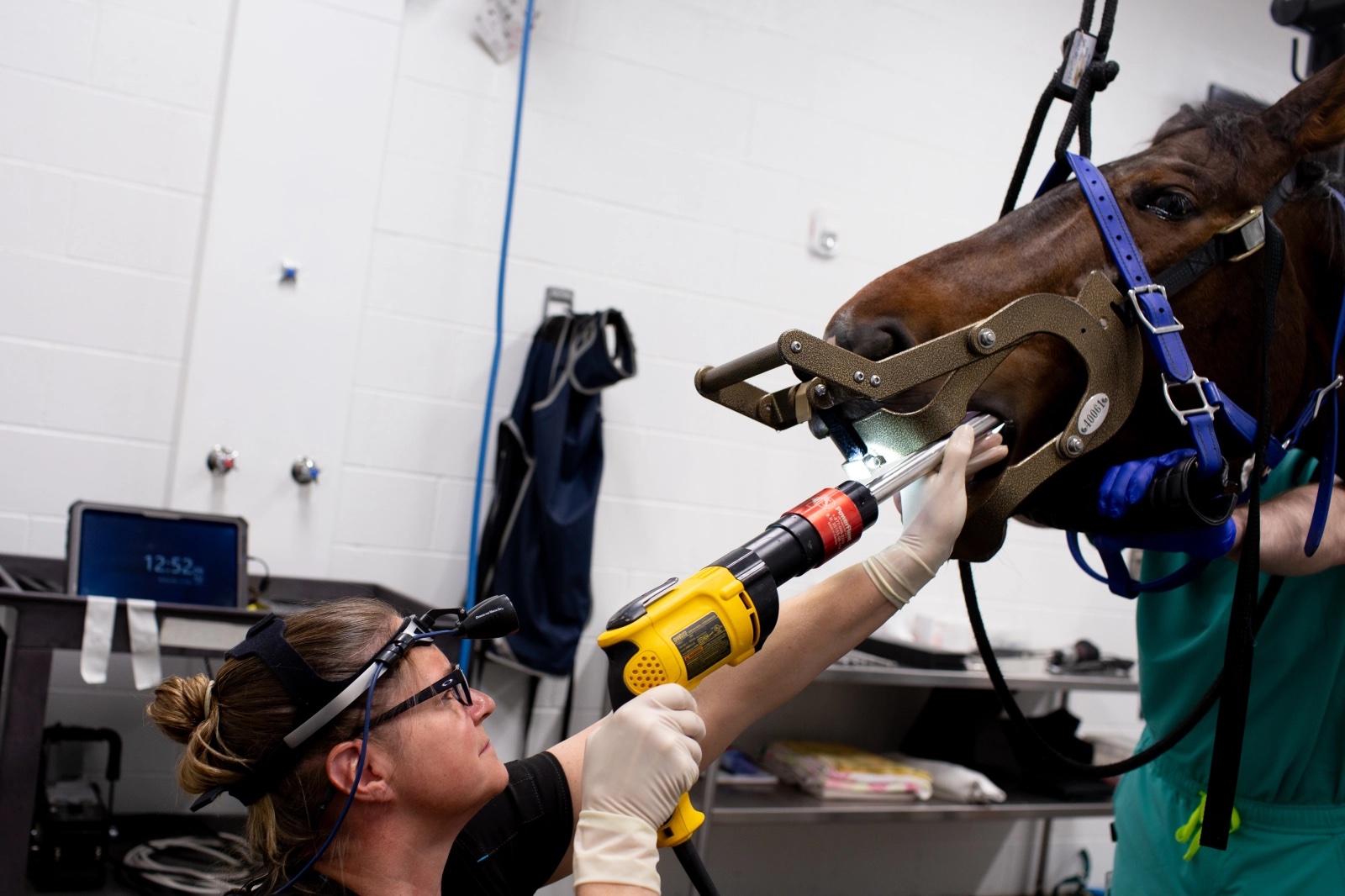
The team planned to do a coronectomy, which utilizes a special drill to remove the overlapping portion of the diseased tooth, but the angulation of the teeth makes this impossible.
Instead, they work through alternative intraoral extraction techniques. The tooth starts to loosen but then breaks in half. The team pivots to a surgical technique and successfully removes the rest of the tooth.
“We had a high degree of suspicion that a surgical technique would be necessary to extract this tooth and communicated that to the owner prior to the procedure,” Rawlinson said.
When Rawlinson and Kelley are not solving complex equine dental cases like this one, they are busy taking care of a myriad of other patients. They perform specialized dental care on dogs, cats, livestock, wildlife, exotics, and zoo animals.
“At CSU, our passion is to utilize our advanced dental skills to help out any animal (except for humans, of course),” Rawlinson said. “We’re not limited to just one species; size doesn’t matter. We are passionate about helping all animals with dental problems.”
Veterinary Health System
Colorado State University’s Veterinary Health System is a community of veterinary professionals dedicated to providing exceptional service with passion and purpose. Our experts are animal and public health leaders working together to apply their diverse skills in veterinary care, diagnostics, and education. As a partner of CSU’s top-ranked academic veterinary program, the clinical team works with researchers and educators to advance the future of veterinary medicine.