
New CT scanner improves imaging options for horses
The Johnson Family Equine Hospital installed a cutting-edge Qalibra CT scanner, allowing for high-resolution, 3D imaging of horses’ head and limbs, often without the need for general anesthesia.


Link copied!
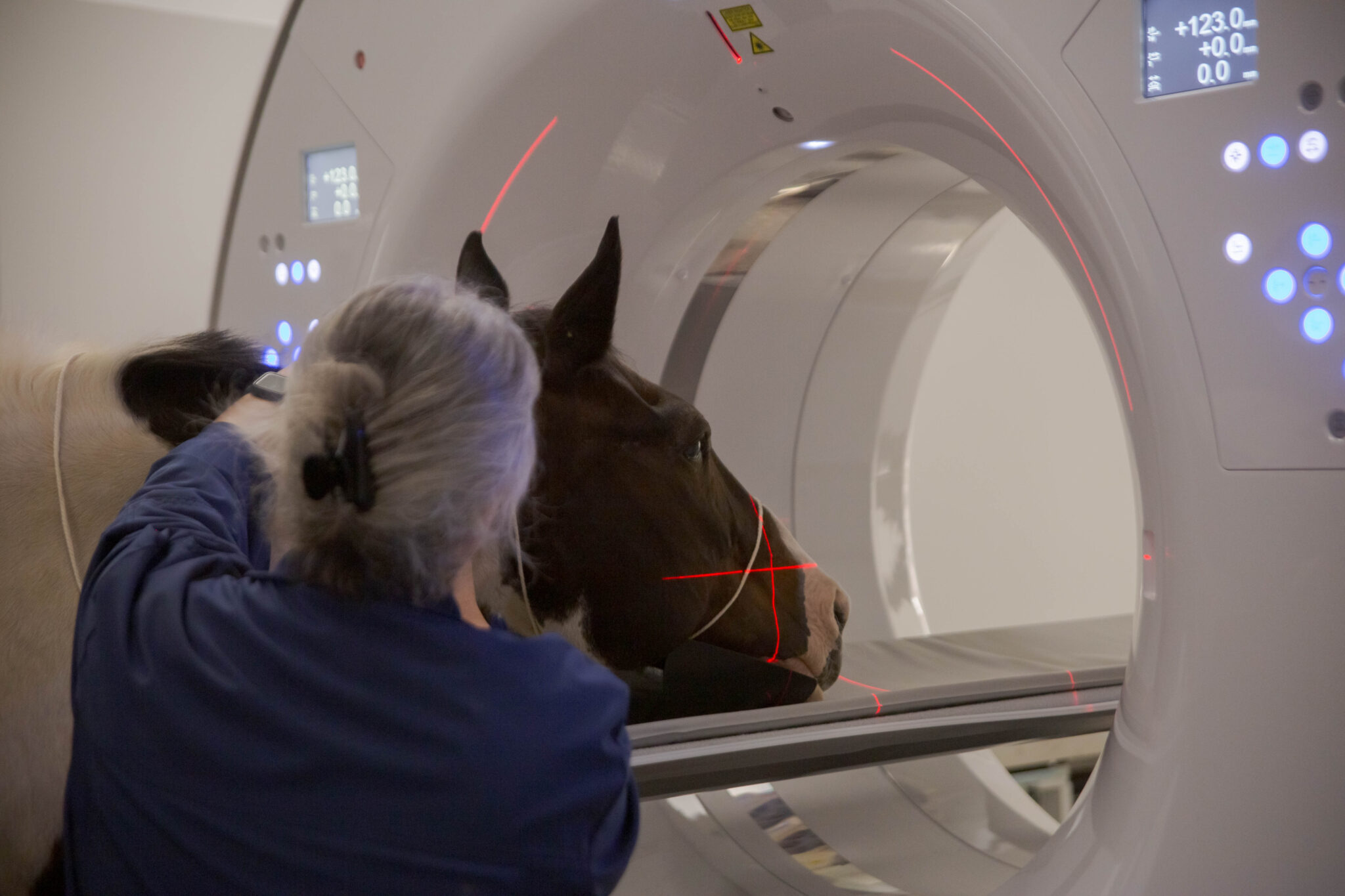
The Johnson Family Equine Hospital at Colorado State University’s Veterinary Teaching Hospital recently installed a state-of-the-art Qalibra CT scanner, a high-end imaging tool that allows veterinarians to perform many standing, high resolution, 3D examinations of the head and lower limbs of horses without requiring general anesthesia. In some horses this includes the carpus and hock regions.
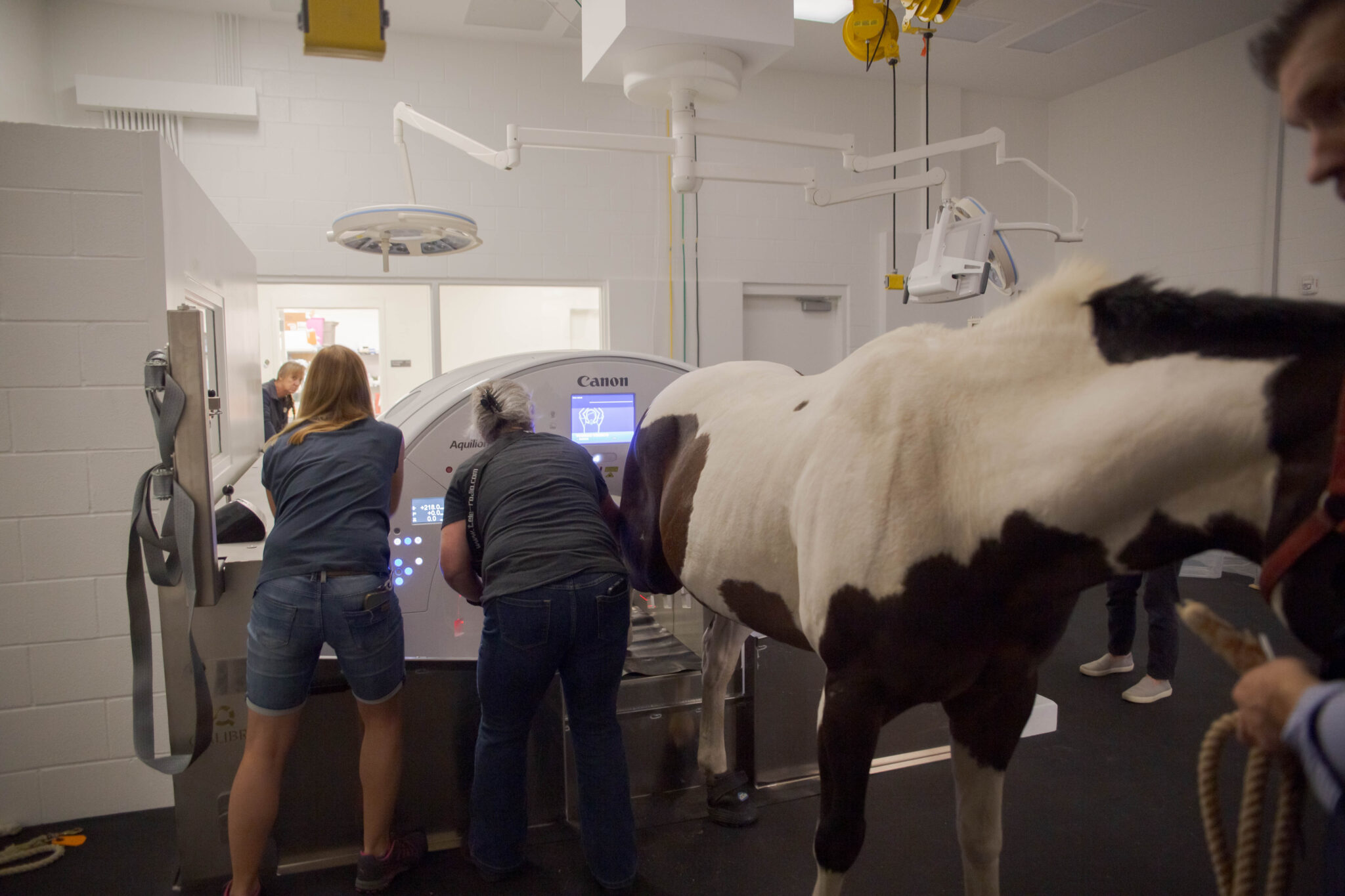
“Horses have complex anatomy, and CT scans can vastly improve what injuries and diseases we can detect over radiographs (X-rays),” said Dr. Brad Nelson, assistant professor of equine surgery in the Department of Clinical Sciences. “While CT scanners are mostly used for bone-related diseases, the quality of this scanner is so high that we may be able to identify some soft tissue injuries (including the deep digital flexor tendon and cartilage) that up until now have required MRI. This exciting CT scanner is not a replacement for MRI, but it does broaden our diagnostic options, especially in the standing horse.”
The Qalibra CT technology also offers the possibility of seeing bone contusions, an injury that has traditionally been limited to MRI and bone scans.

“Before this high-performance scanner, we were unable to clearly image those areas,” Nelson said. “This advanced CT scanner also has dual energy capabilities that we expect will give us more information to provide the highest level of care to our patients. Because we can perform these scans very fast, we are now offering same-day outpatient imaging in some cases that do not require anesthesia.”
Most imaging of the limbs from the carpi and tarsi to the foot will not require general anesthesia and can be done under standing sedation. Depending on horse conformation and temperament, some horses will need to undergo a brief anesthesia, said Dr. Myra Barrett, professor of veterinary diagnostic imaging in the Department of Environmental and Radiological Health Sciences.
A benefit of the CSU scanner is that “once you get the images, you’re not done – specialists here can look at the images and make recommendations, so clients get a quick return on findings and recommendations,” Nelson said. “We will work with you and your referring veterinarian to provide the best imaging scans for your horse, which includes consultation of findings with our board-certified specialists.”
About the Johnson Family Equine Hospital
Built in 2021, the 180,000-square-foot hospital offers expertise in all equine specialties, with outpatient appointments, emergency services, and inpatient care 24 hours a day, year-round.
Services include:
- Anesthesia and pain management
- Dentistry
- Emergency and critical care
- Field service
- Internal medicine
- Ophthalmology
- Podiatry
- Reproduction
- Sports medicine
- Surgery and lameness
Part of the CSU Veterinary Health System, the equine hospital is located at 2230 Gillette Drive, Fort Collins, CO 80523. For appointments, call (970) 297-5000.
Veterinary Health System
Colorado State University’s Veterinary Health System is a community of veterinary professionals dedicated to providing exceptional service with passion and purpose. Our experts are animal and public health leaders working together to apply their diverse skills in veterinary care, diagnostics, and education. As a partner of CSU’s top-ranked academic veterinary program, the clinical team works with researchers and educators to advance the future of veterinary medicine.