
How to prepare your horse in case of wildfire
Wildfire season brings fast‑moving, unpredictable threats, and preparing your horses and large animals ahead of time is one of the most effective ways to keep them safe.


Link copied!
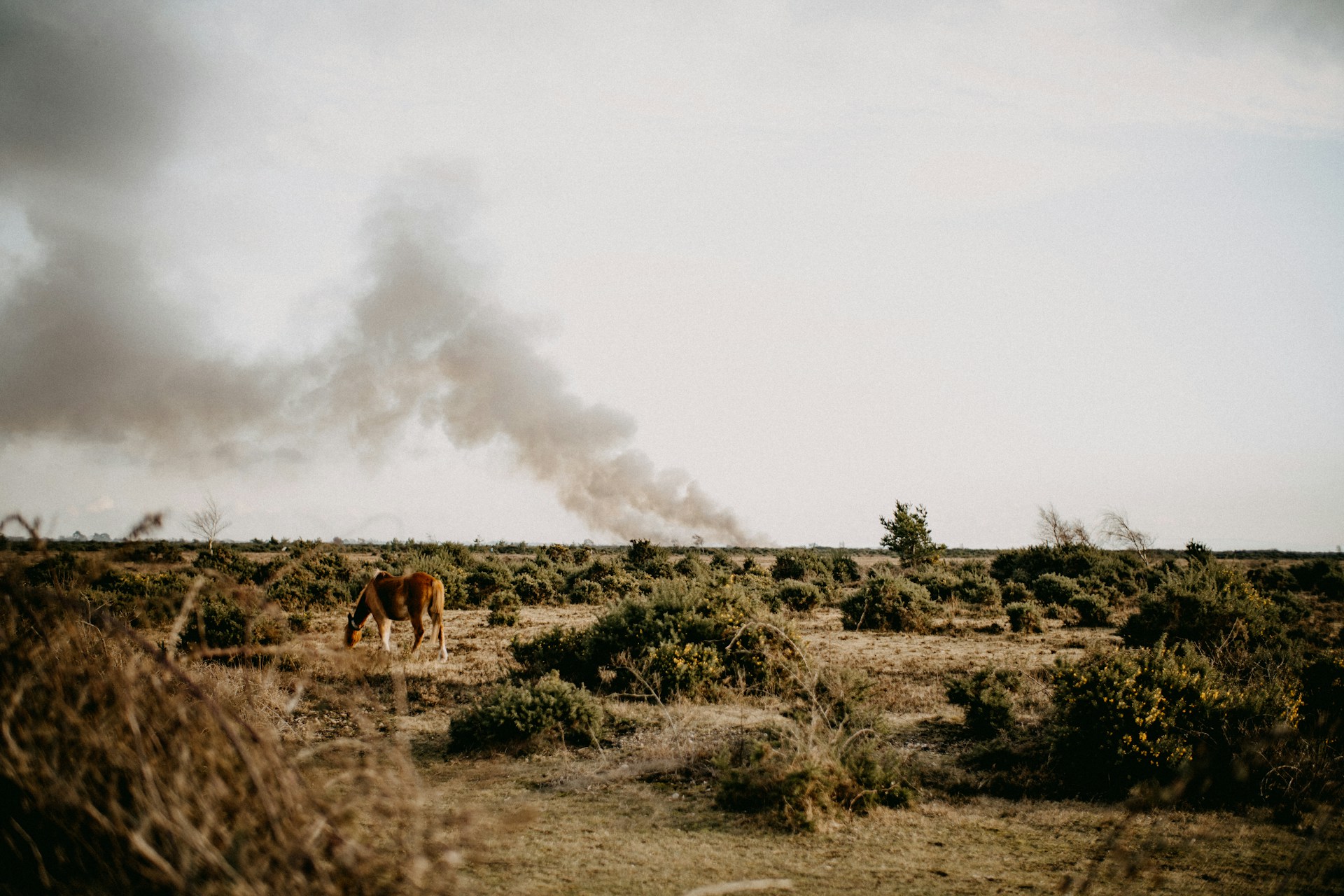
Wildfire season brings fast‑moving, unpredictable threats, and preparing your horses and large animals ahead of time is one of the most effective ways to keep them safe. From assembling essential supplies and medical records to understanding how smoke affects equine health, proactive planning ensures you can act quickly when every minute counts.
This guide outlines the key steps horse owners in high‑risk areas should take to stay ready long before a red flag warning is issued.
Wildfire smoke considerations
Just as humans are warned to limit physical outdoor activity in the event of poor air quality due to wildfire smoke, physical activity for our horses should be limited as well. You know your horse best, so exercise limitations will depend on whatever their typical regimen and physical capabilities are. Intense exercise should be avoided for up to four weeks following smoke inhalation to allow for complete healing of their airways.
It is helpful to keep feed and environment as low-dust as possible during poor air quality alerts. We recommend keeping your environment and feeding area low-dust by wetting down hay or feeding pellets/soaked mashes, minimizing leaf-blowing or sweeping activity as necessary, and wetting down arenas prior to harrowing. Fresh water should be provided near their shelters and where they are fed for easy access.
If your horse exhibits coughing, lethargy, or labored breathing – especially at rest – contact your veterinarian for an exam and further advice.
Red flag warning days
Red flag warnings alert federal land fire managers that environmental conditions are unsafe for prescribed burns and to be on alert for wildfires. Similarly, horse owners should be aware of red flag warnings in their area to be aware of increased wildfire risk and prepare for evacuation if necessary. Always follow fire restrictions in your area!
Preparing your horse for evacuation
There are some key items that you should have on hand and in an easy-to-find location in case of emergency evacuation for your horses.
Each horse should have:
- Halter and lead rope
- Feed/water buckets
- Five- to seven-day supply of feed and supplements
- At least two weeks’ worth of any daily medications
A basic equine first aid kit is great to keep in your trailer or tack room to be able to take with you for emergency preparation.
In addition to these supplies, you need to have certain relevant documents to have with your horse to provide proof of ownership and relevant medical history. These documents include your brand inspection, Coggins (EIA) tests results if available, microchip number and registration if your horse has a microchip, and vaccination records. These are important to have on hand, especially if you are taking your horse to a community evacuation site.
You will also want to have a list of relevant emergency contacts in case of an emergency. These include your veterinarian, contacts for trailering (if not yourself), and an emergency contact for you that has animal care choice authorization in case you are unreachable.
We strongly recommend regularly practicing trailer loading with your horse, ideally in different types of trailers and with different handlers, especially if you do not own a horse trailer.