
CSU clinical trial studies ketamine therapy to help horses with chronic arthritis pain
The long-term effect of ketamine on horses with chronic pain has yet to be studied. Learn more about how this CSU clinical trial explores ketamine therapy for horses with coffin and pastern joint osteoarthritis.


Link copied!
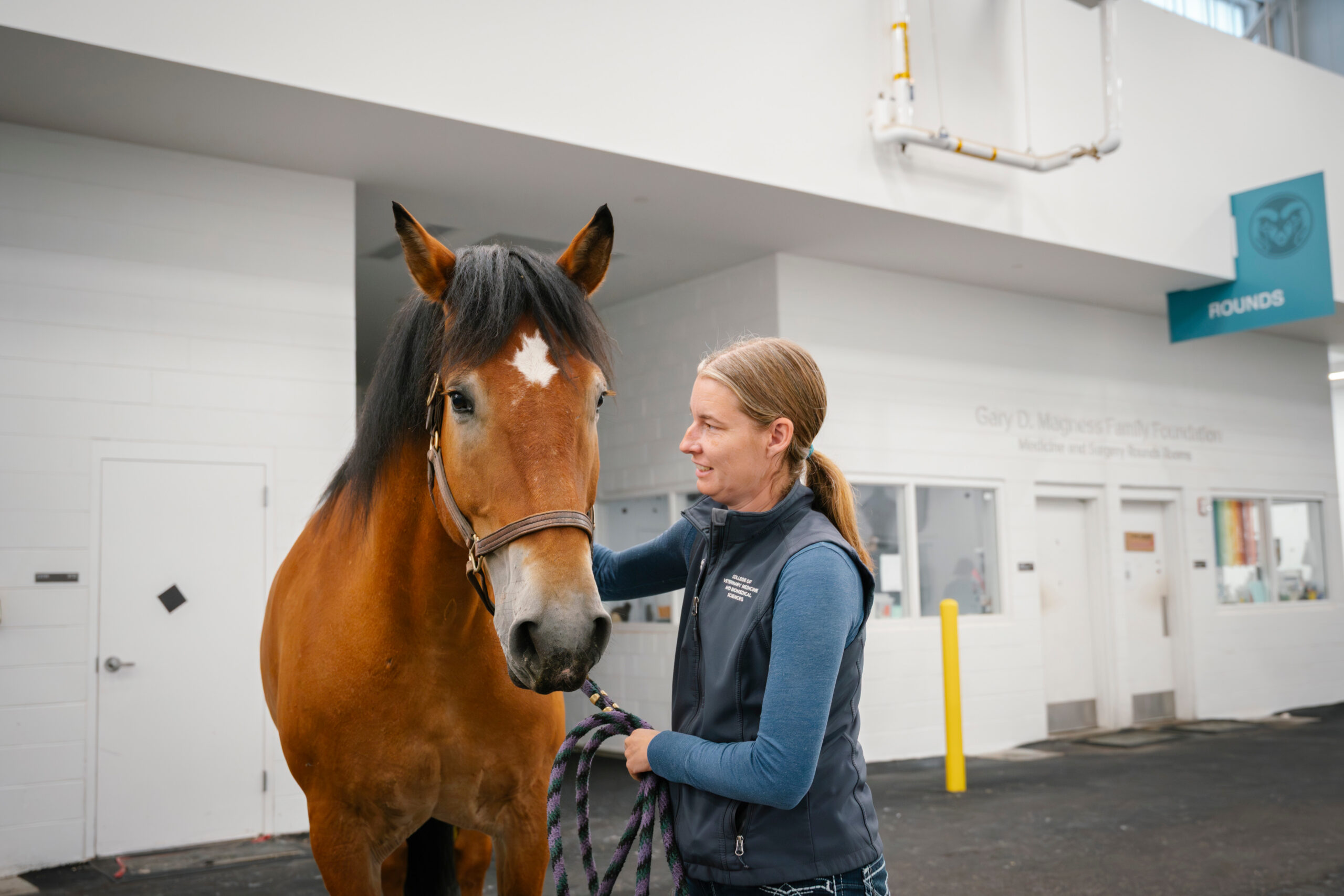
To find out if ketamine can help horses with chronic pain, a CSU team is studying the effects of ketamine infusion therapy in horses diagnosed with coffin and pastern joint osteoarthritis. This type of arthritis is a common equine diagnosis that leads to lameness, severe pain, and discomfort. Dr. Rachel Hector, assistant professor of equine anesthesiology and pain management and her team are collaborating with Dr. Melissa King, associate professor of equine sports medicine and rehabilitation to run a veterinary clinical trial to learn more about the condition as it serves as a broader model for understanding painful conditions in horses.
Ketamine is a medication that has been successfully used in human medicine to improve the quality of life for those who suffer from persistent pain. It helps stop short-term pain from turning into a long-term problem by temporarily “unplugging” the specific nerves that cause the pain, giving the body long-term relief even after the medicine wears off.
“Ketamine is a drug that has been used in horses for many years, but we are studying its use for a slightly different purpose,” said Hector.
Ketamine infusions are commonly used at CSU to treat acute, traumatic or post-surgical pain in horses, but the long-term effect in horses with chronic arthritis pain has yet to be studied.
About the ketamine therapy clinical trial
To qualify for this study, horses must be systematically healthy and diagnosed with coffin or pastern joint arthritis and chronic (more than six weeks) lameness in at least one limb. In this clinical trial, horses are evaluated for lameness prior to, during, and one month after a course of three five-hour ketamine infusions they receive once every seven to 10 days.
Champ, a horse with chronic pastern arthritis, is a patient in this clinical trial. He recently arrived at the Johnson Family Equine Hospital for his first session.
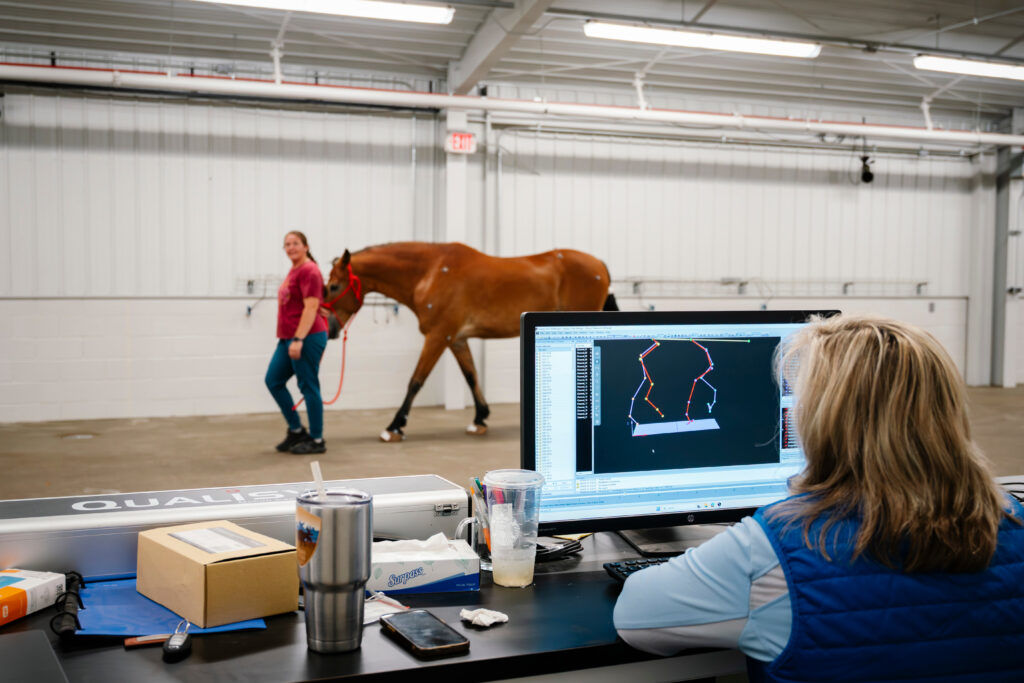
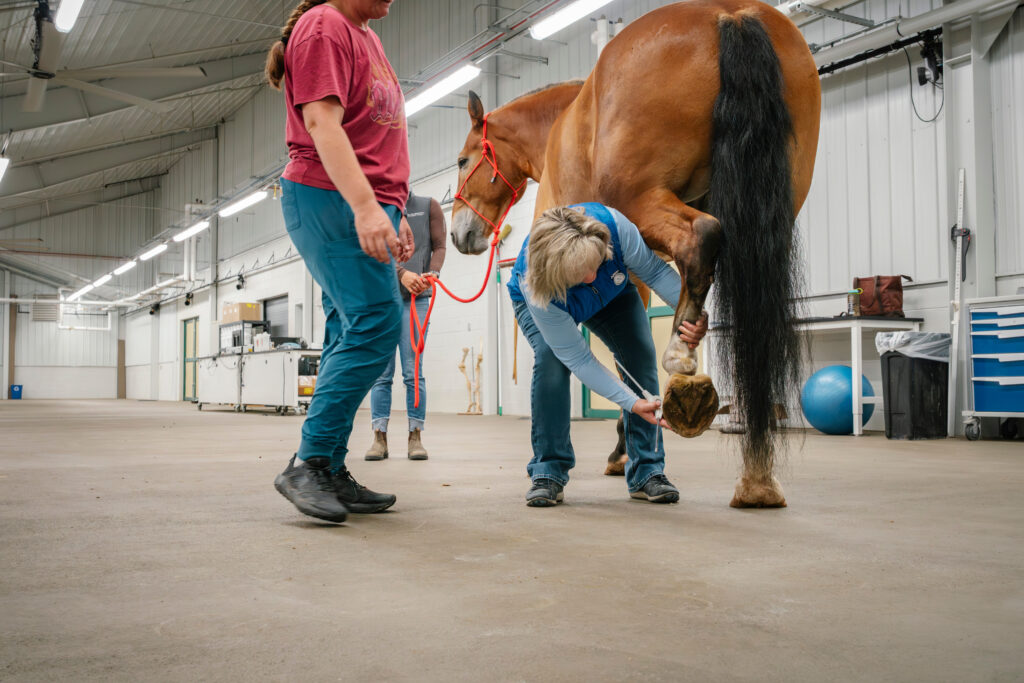
Upon his arrival, Champ’s range of motion is assessed, and he is led across a pad where gait analysis software and force plate tracks how his body moves and measures the weight distribution on each hoofprint. These baseline values quantify the severity of lameness before he receives treatment.
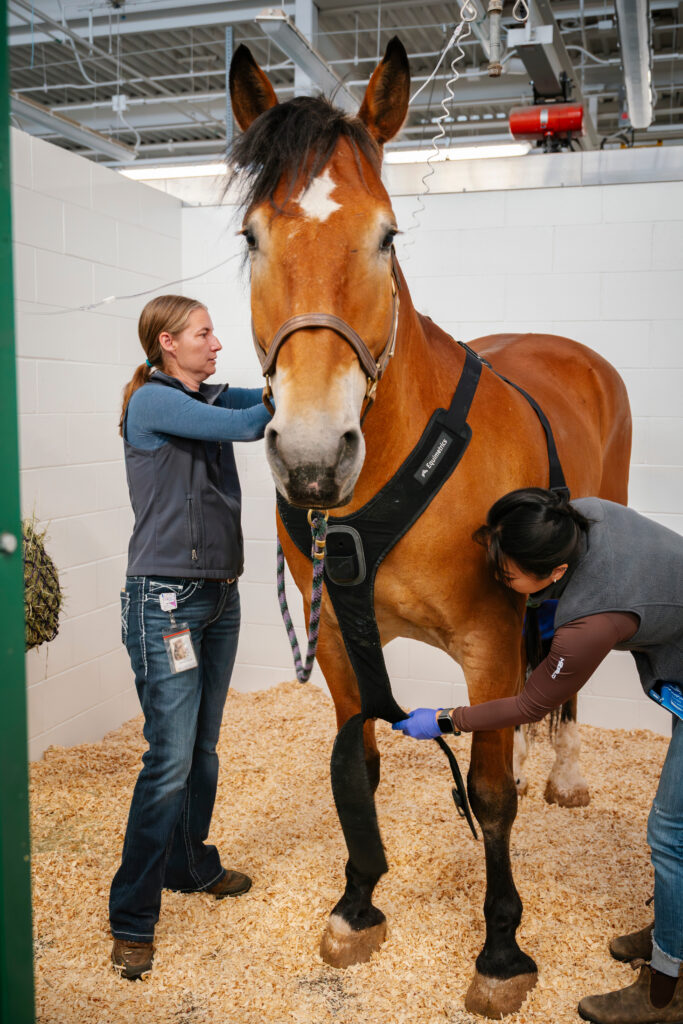
After his assessment, Champ is taken to the barn where the equine team places an intravenous catheter to administer the ketamine infusions. The infusions last for five hours and an ECG monitor is used to collect study data and monitor his heart rate and rhythm during this process. During the infusion, Champ quietly eats from a haynet.
Once his infusions are complete, Champ goes home that same day. He will return to receive two additional infusions each one week apart, and his lameness will then be evaluated via the same process immediately after each infusion series, and one month after infusions are complete. All trial participants undergo this process during the study. The data is then compared to his pre-treatment values to determine whether his lameness improved. Champ’s owner will also complete a pre-study, mid-study, and three-month follow-up survey to measure his comfort level at home.
A future option for equine pain management
This clinical trial explores whether horses with chronic arthritis respond to ketamine infusions to relieve joint pain at no cost to the owner. “This treatment won’t fix the underlying problem but can hopefully manage the associated pain alongside treatments that target the joint disease itself,” said Hector.
Although this study focuses on arthritis in the coffin and pastern joints, the hope is that these findings can be extrapolated to other sources of pain horses might be experiencing. “If this proves successful, this type of treatment may be able to act as an adjunct to other modalities in extending a horse’s comfortable lifespan,” said Hector.
Learn more about the ketamine clinical trial and find out if your horse is eligible to participate.