
Diagnostic detectives: CSU Parasitology Lab safeguards public health
The Parasitology Lab is more than just fecal floats; it’s a hub of discovery where parasites are meticulously identified to inform treatment decisions and safeguard animal and public health.


Link copied!
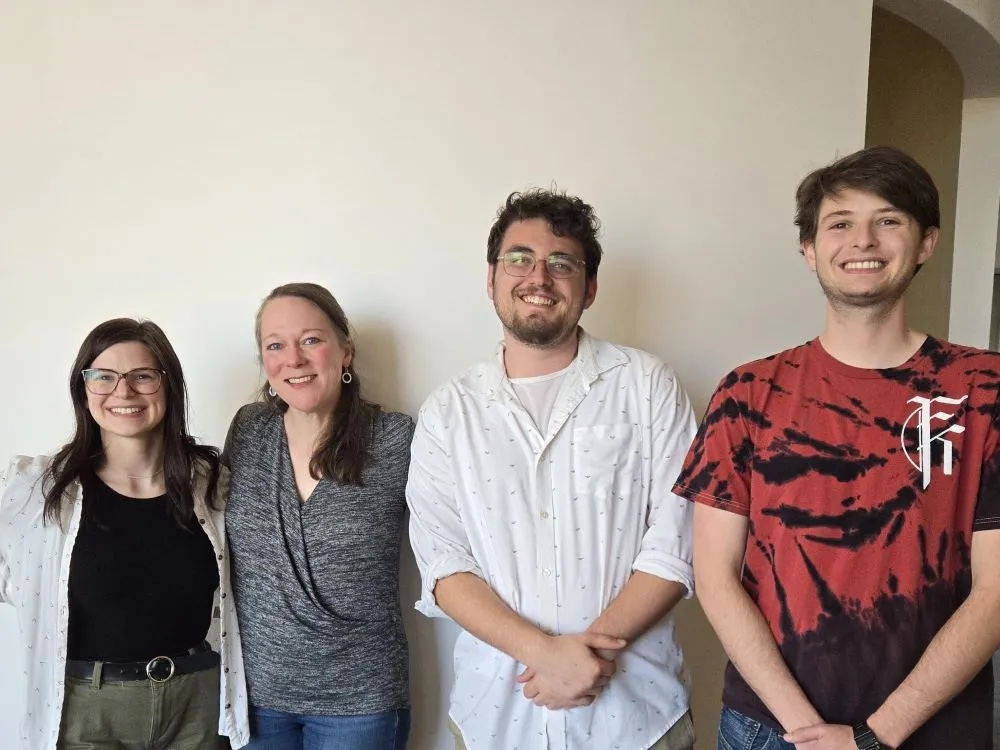
Parasites are everywhere—the good, the bad, and the ugly. Fortunately, the growing team in the CSU Veterinary Diagnostic Laboratories Parasitology Lab uses its skills and expertise to detect these creatures, helping to inform treatment, improve animal health, and safeguard public well-being.
Section Head Dr. Ashley McGrew fell in love with parasitology as an undergrad, which led her to pursue a Ph.D. and D.V.M. at CSU.

“I enjoy being a faculty member, blending my interest in diagnostics and service with teaching and research,” said McGrew. It’s all very synergistic—the things that come through the door lend nicely to teaching cases and research questions.”
The section has traditionally been very small, with one person and some helpers, but the team has grown over the last year.
Laboratory Technician Ibrahim Aboellail met McGrew as a student in the World of Parasites class in 2018. His interest in the class led to an invitation to attend McGrew’s lab meetings, and then Aboellail started helping with the third-year parasitology rotation. About a year ago, Aboellail joined the Parasitology Lab in his technical role.
Lab Manager Naomi Gertschitz was hired after working on human SARS-CoV-2 testing at the VDL and had experience as an undergrad in Tissue Trimming. Though she doesn’t have a background in parasitology, she’s drawn to diagnostic work, and the more time she’s spent with the lab, the more her interest has grown.
Parasitology’s student hourly Zane Wilson has long-standing ties with the section as another former student of McGrew.
More than fecal floats
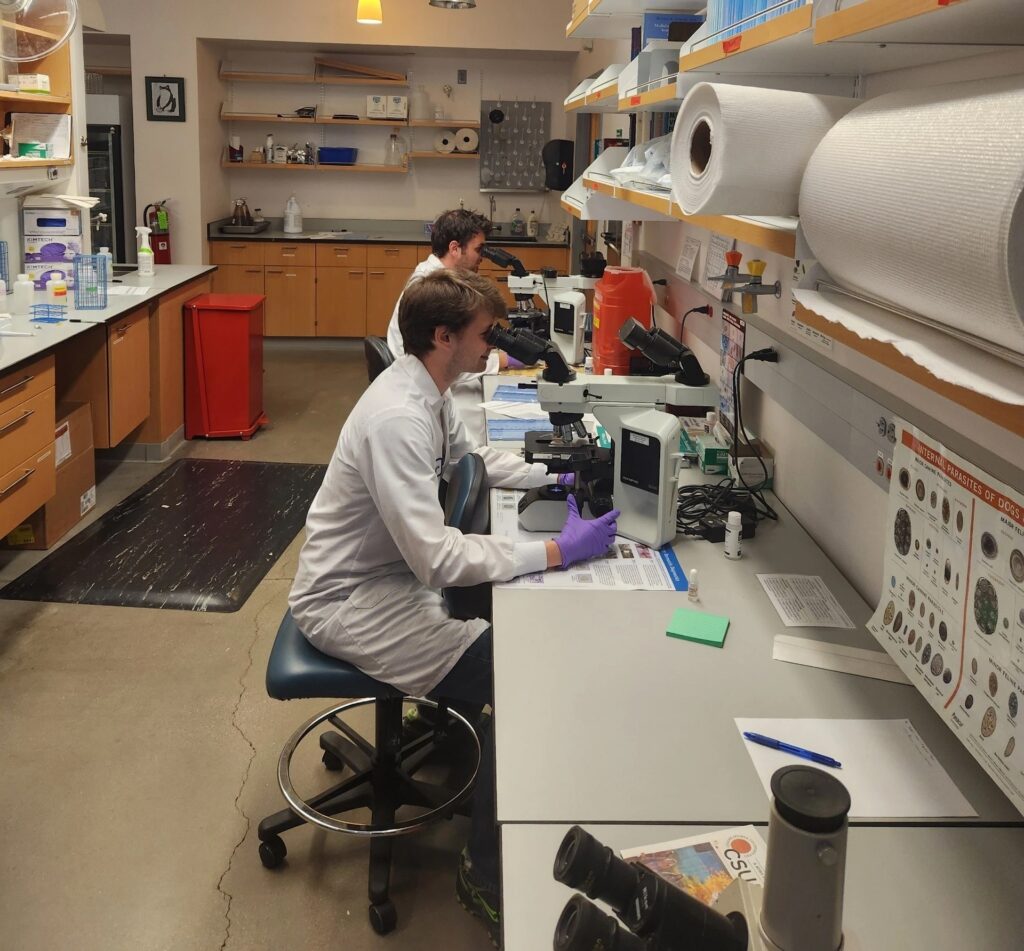
Flotation procedures are done daily in the lab, but the team wants everyone to know there’s so much more to their work. The Parasitology Lab detects and identifies domestic and wild animal parasites from all kinds of sample types, including tissues, bodily fluids, environmental samples, etc.
“We do a lot of routine diagnostic testing with blood, serum, and fecal samples,” said Aboellail.
Some parasites give rise to microfilariae in blood. The section also performs external parasite identifications on fleas, lice, mites, and other ectoparasites. Regardless of the sample, every parasite has a different set of characteristics used in its identification.
“Our attention to detail and ability to identify something to the species level can provide information that helps clinicians decide whether to treat,” said McGrew. “If something is simply passing through their system, after being accidentally ingested, that may be really important information so that we are not treating animals unnecessarily.”
Gross IDs
While some might say the entire job of the Parasitology Lab is gross (as in disgusting), the team agrees that identifying parasites by studying the morphologic characteristics is their favorite part of the job.
“I love the collaboration we have when something comes in, and we’re like, ooh, what is it?” said Gertschitz. Whether we get only one specimen, a few specimens, or many, it allows us to learn and work together.”
Sometimes, that means putting their investigative skills to the test.
“We may have to dig into the literature to find original species descriptions and what’s been reported in a given wildlife host, and so we’ll dig up papers from the 1930s or the 1940s and look at measurements and key features,” said McGrew.
Comparing what they see in the lab to historical information and perspectives from the field makes their work both art and science. Finding clues and paying attention to detail are critical to help identify a specimen.
“I love those oddball cases, those rare cases that come through our door, and it’s kind of like a mystery to solve,” said Aboellail. “Sometimes there will be minute differences between parasites or between hosts, and finding answers in those cases is always really fun.”
Making a difference
Discovering and identifying parasites plays a critical role in animal and human health.
“The parasites we look for directly impact animal health,” said Aboellail.
“We’re talking about things like heartworm. We’re talking about the difference between animal health for commercial operations and individual pet owners wanting to know what’s wrong with their dog or cat.”
The team takes their responsibility seriously, priding itself on quick turnaround times and accurate identifications to help inform treatment.
“The more we know about the biology of these organisms, the more it can help with husbandry and management decisions, and it can help with treatment and control in general,” said McGrew.
Their work is also impacted by several external factors that need to be considered, including changing climate and the movement of animals through interstate adoption.
“We have animals moving into Colorado from other places, and we are seeing things under the microscope that we did not see five or six years ago,” said McGrew.
“And so, we need to understand that the landscape is changing, that we need to pay attention to shifts in prevalence, and the ‘why’ behind those changing trends.”
For Gertschitz, knowing that their work contributes to a greater good keeps her focused. “I’ve always wanted to help animals and humans. It’s fulfilling to know that we are making a difference.”
Veterinary Health System
Colorado State University’s Veterinary Health System is a community of veterinary professionals dedicated to providing exceptional service with passion and purpose. Our experts are animal and public health leaders working together to apply their diverse skills in veterinary care, diagnostics, and education. As a partner of CSU’s top-ranked academic veterinary program, the clinical team works with researchers and educators to advance the future of veterinary medicine.