
There’s no such thing as a “bad” horse
Melinda Story, the inaugural Leslie A. Malone Presidential Chair in Equine Sports Medicine, investigates the equine axial skeleton – which includes the neck, back and pelvis – and nerve pain.


Link copied!
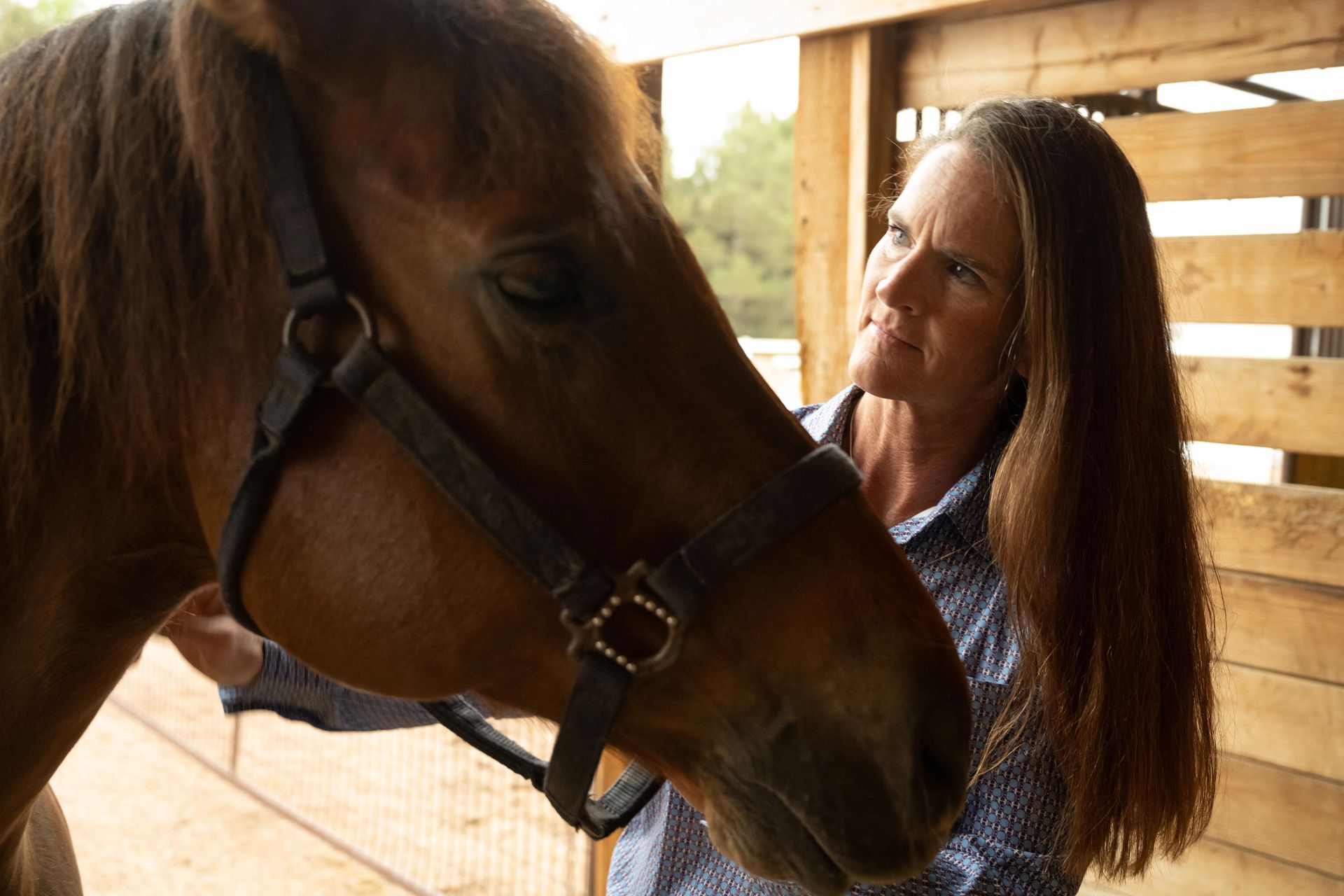
Melinda Story doesn’t believe in bad horses. Even when they are behaving poorly, she doesn’t chalk it up to a bad attitude, but rather her research into the equine axial skeleton supports the idea that horses act out when they are experiencing pain; they’re trying to tell us something.
Often, when a horse exhibits behavioral issues, it’s because they’re experiencing lameness, or an inability to stand or move normally. When a horse’s attitude changes without an underlying diagnosis of lameness, the go-to industry explanation is often that they’re just behaving badly. Story is actively working to alter this perception.
“I passionately believe that horses are rarely born with mean personalities, and they don’t just become bad horses later in life. There’s a reason.” Story said. “Horses are trying to tell us something they can’t use words for. There is almost always something else going on.”
Story, the inaugural Leslie A. Malone Presidential Chair in Equine Sports Medicine, came to CSU in 2013 and has been investigating the equine axial skeleton – which includes the neck, back and pelvis – and nerve pain ever since. She has been around and working with horses her whole life, and years spent as a veterinarian in private practice is what clued her into the idea of neuropathic pain as a potential explanation of behavioral changes in the first place.
“I would have horses come for evaluation for poor performance or behavioral concerns, and it was difficult to understand why the horse might be presenting that way if they weren’t lame, which is the obvious sign of musculoskeletal pain in a horse,” Story said. “We have now evaluated some horses at a deeper level and found evidence of chronic, neuropathic pain.”
A literal pain in the neck
Part of a burgeoning – but still small – group of researchers from across the country, Story is actively working to collaborate with peers and get the word out to the greater equine community about neuropathic pain as an alternative explanation to behavioral issues. When described as “back pain” (sometimes known clinically as “kissing spines”), there is general acceptance of the condition among owners, riders, and veterinarians, but “neck pain” has not yet been embraced on the same level.
“The neck is my greatest passion because it is the least understood region of the axial skeleton,” Story said. “We’re really trying to help the greater good by seeing these horses in a different way.”
Story was involved in starting a working group made up of clinicians and researchers from around the world focused on improving the understanding of cervical pain. She is also part of a team of researchers at CSU, with expertise in neurology, surgery, sports medicine, imaging, and pathology, working towards developing a center for excellence focused on the equine axial skeleton. Many of these researchers – including Story – also see equine patients at the equine hospital of the CSU Veterinary Health System, and are able to not only increase awareness of cervical pain to peers and clients, but also offer services informed by their research.
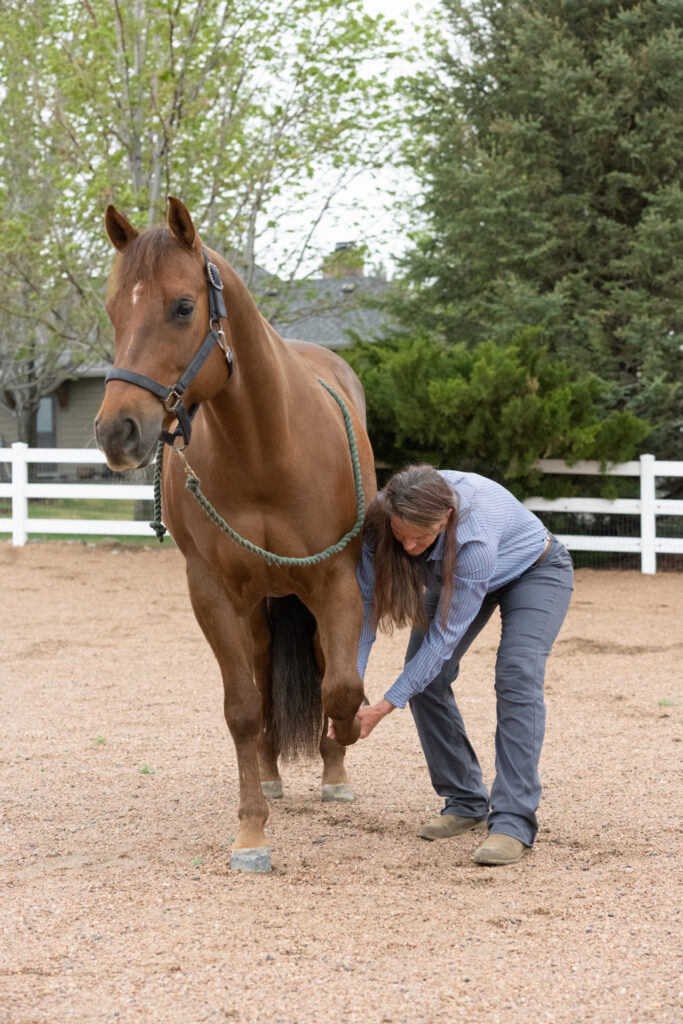
“Story’s work on pain stemming from the neck and back in the horse comes at a pivotal point where there is both an increased awareness of this problem globally, and where we will start offering streamlined services for horses with neck and back disorders at CSU,” said Dr. Yvette Nout-Lomas, an associate professor of equine internal medicine at CSU and one of Story’s colleagues.
Better for horses and humans
Not only does Story’s work mean potential future benefits for horses, but because neck and back pain in horses closely mirrors similar conditions in humans, there is great potential for translational impacts, as well.
“If you talk to someone who has really bad back or neck pain, it’s difficult to diagnose and treat,” Story said. “It’s a debilitating problem in human medicine and is similar in horses.”
Story and her peers have high hopes that this work is just the beginning of increased awareness and positive outcomes for horses and potentially people.
“We hope that future work will uncover critical inflammatory and immune-mediated mechanisms that contribute to the development of chronic pain syndromes that is translatable to humans and other animals,” said Dr. Kevin Haussler, an associate professor in the equine sports medicine service at the Johnson Family Equine Hospital at CSU and another of Story’s colleagues.
Carving out a neck pain niche at CSU is just one part of Story’s efforts toward helping equine enthusiasts and veterinarians understand an alternative, underlying reason for behavioral issues in horses. At the end of the day, she just wants horses to be able to live a good life.
“I love to be able to help horses be better,” Story said. “I want them to be comfortable and happy so they live a better life and enjoy their job.”
About the Malone Chair
The Leslie A. Malone Presidential Chair in Equine Sports Medicine was established in 2013 to support the research and study of equine sports medicine at CSU.
“We are grateful to the Malones for their gift to support such an outstanding clinician and her groundbreaking work,” said Dr. Sue VandeWoude, dean of the College of Veterinary Medicine and Biomedical Sciences. “Dr. Story’s insights hold great promise for improving the health of humans and horses.”
As the inaugural chair holder, Story is, above all else, grateful for the opportunity. “I want to make [the Malones] proud and make a difference enough to justify what they’ve done,” Story said. “I’ve seen how Leslie looks into a horse’s eye, and she just wants them to live a good life, too.”