
CSU hires medical director for new veterinary Primary Care Center
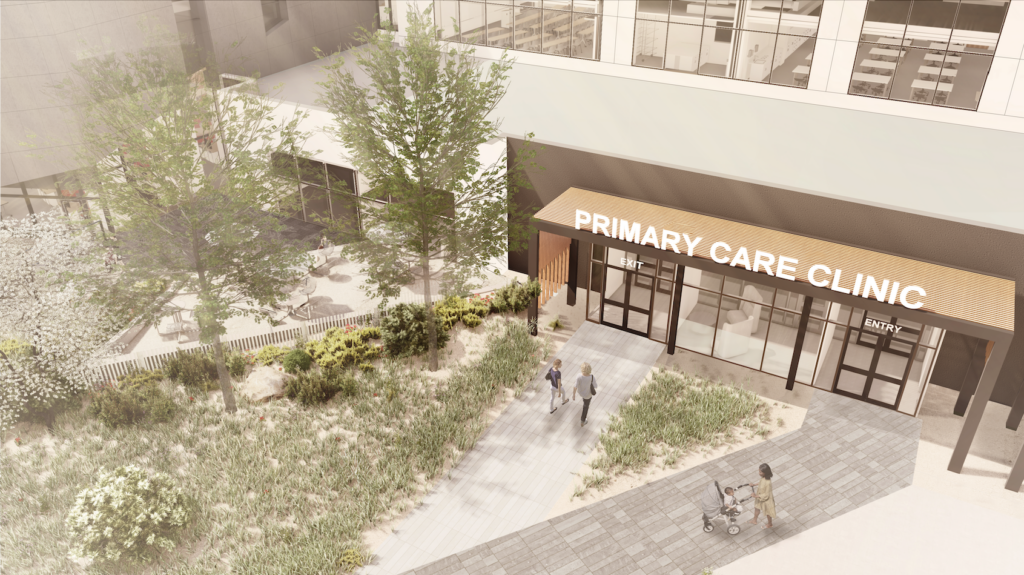
Dr. Andrew Ciccolini joins Colorado State University as the medical director of a new student-focused Primary Care Center that will eventually be housed in the University’s Veterinary Health and Education Complex, or VHEC.


Link copied!
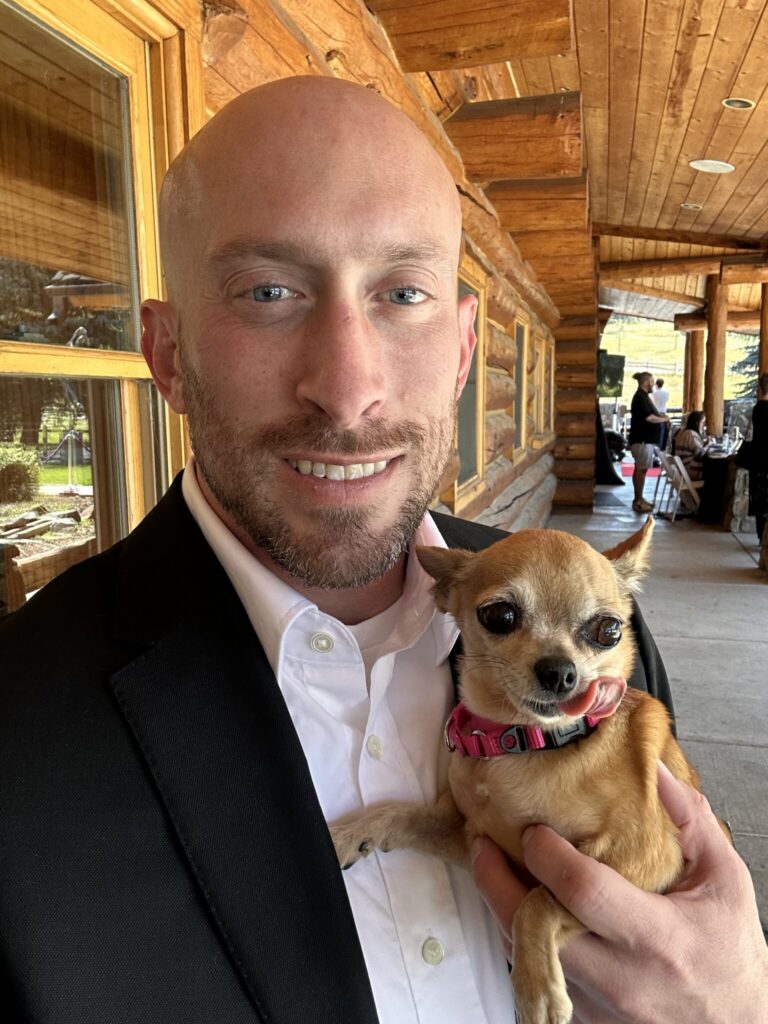
At an early age, Dr. Andrew Ciccolini decided he wanted to be a veterinarian. Growing up south of Cleveland, Ohio, Ciccolini spent a lot of time with his grandmother, and she was passionate about pets and helping animals in her local community. “I was really close to her; I think that had a big impact on me,” Ciccolini said. “As I got older, I just had more and more of an appreciation for the human-animal bond. I wanted to contribute to preserving that in whatever way I could.”
Ciccolini attended veterinary school at The Ohio State University. After graduation, he joined the military as a member of the U.S. Army Veterinary Corps, caring for military working dogs and helping run veterinary clinics on military bases. In addition to being stationed at times in Washington state and Colorado, he also traveled the world — Afghanistan, Africa, Eastern Europe, South Korea — working in leadership roles and on public health and food security efforts.
Following nine years in active-duty military, Ciccolini settled in Colorado Springs, where he’s served for the past five years as the medical director of the National Mill Dog Rescue, located east of the city. In January, Ciccolini will join Colorado State University as the medical director of a new student-focused Primary Care Center that will eventually be housed in the University’s Veterinary Health and Education Complex, or VHEC. The project is currently under construction and slated for completion in 2026.
SOURCE spoke to Ciccolini about his career as a veterinarian and what excites him most about joining Colorado State University.
Do you remember the moment you decided you were going to be a veterinarian?
I don’t remember a specific moment; I just remember there was no Plan B. It was just, “This is what I’m doing.” Many veterinarians have experiences of people being a little bit discouraging along the way, whether that’s how hard it will be to get into school or how difficult the profession can be. I certainly experienced some of that along my path, but, if anything, that just reinforced my decision and made me more determined.
What was your time working as a veterinarian in the military like?
If I went back in time I would 100% do it again. It was the best decision I made to join the Army — and the second-best decision I made to leave when I did. I really liked that my job changed every few years, it provided a lot of opportunities. I had a lot of different jobs of increasing responsibility and traveled all over the world.
Share a little more about your role working with the National Mill Dog Rescue?
It’s not a traditional open intake shelter. We’re taking care of dogs rescued from puppy mills all across the country. It’s a lot of work, but it’s really rewarding. One of the things that’s happened during the past four or five years is the changing demand. During the pandemic, adoptions were through the roof. We had a hard time keeping up, having enough dogs for people to come in and adopt. It was a good problem to have. We’ve seen a return to a more manageable number, although we’re still very fortunate in terms of our adoptions. A number of these mills are going out of business, increasing the number of dogs that need our help. What these puppy mills have historically done is if they can’t use a dog for breeding anymore, they just get rid of them. We’ve stepped in and said, “Hey, you don’t have to do that.” So, it’s provided an alternative for these dogs and gives them a chance at a happy life.
That sounds like difficult and challenging work.
I don’t find it difficult. I find it rewarding. We take dogs that have barely had any human interaction and probably have not had much health care beyond vaccines, and we get to help them and see them adopted and learn how to just be a dog. Certainly, some of the dogs we get are in pretty rough shape. Doing rescues on the farms can be really challenging for some of our people when the dogs are in poor conditions. A puppy mill is a commercial breeding operation. It happens a lot in the Midwest. They’ll just have however many dogs — 20, 100, 150 — out in kennels, and they’re basically just there for breeding. They hardly interact with the dogs. Some are better than others. For the most part we get to work more on the happy side of it — helping fix them up and seeing videos of the adopters and the dogs on social media.
What excites you about working in this new role at CSU?
I really enjoy mentoring other veterinary professionals and helping them become the best versions of themselves. I’m really looking forward to that aspect of this, developing a program that will really help students be more prepared for private practice or just being a veterinarian in general. That’s really appealing to me. Teaching more spectrum of care is one of the main goals of this clinic, helping educate veterinarians on alternative options when finances are a challenge so that pets can receive quality care. This has been a real struggle in the industry, so developing a training platform for vets to be more ready to do that is really a passion of mine. There’s such a big need for that in the vet community; there’s no practice that exists out there where you can avoid it completely. Even in the richest ZIP codes, you’re going to have clients who either don’t want or can’t afford the top end of care. The more training we can have to make our students comfortable with that, the better off they’ll be.
Where do you see the veterinary medicine profession headed over the next five to 10 years?
Over the past 10 years I think we’ve seen a push toward more referrals of patients to see specialists, that’s been the trend in veterinary medicine. I think you’re going to see that reversing a bit. A lot more of those cases are going to be managed at a general practice level. Veterinarians are going to have to enhance their skills. I think you’re going to see a lot of them almost kind of sub-specialize. At a larger general practice maybe there’s someone who really likes doing dentistry or someone who likes working with diabetic patients. Some of those specialty type cases are going to go back to the general practice, in my opinion. It’s a cost thing — it’s more affordable to get that care at a general practice as opposed to a specialist. It’s also an availability thing — demand for specialists is through the roof, and it’s hard, depending on the case, to get in. Specialists aren’t going away. That need will still be there. But I see a lot more cases coming back to the general practice.
College of Veterinary Medicine and Biomedical Sciences
Improving the health of animals, people and the planet has been central to CSU’s land-grant mission since its founding, and that vision remains at the heart of the College of Veterinary Medicine and Biomedical Sciences today. The College offers bachelor’s degrees in biomedical sciences and neuroscience and has a robust graduate student program, which includes the renowned Doctor of Veterinary Medicine program. CVMBS faculty explore a variety of pivotal issues in infectious disease, orthopedics, neuroscience, cancer biology, animal reproduction and translational medicine.